


Your construction loan draw schedule isn’t just a lender’s checklist; it’s your most powerful tool for managing project risk and keeping contractors on task. You already know that momentum is the lifeblood of any successful build. A single documentation error or a rejected draw request can stall a site for weeks, causing interest carry costs to spike while your crew sits idle. It’s a frustrating bottleneck that can turn a profitable venture into a financial headache if you aren’t prepared for the administrative side of the job site.
We’ve designed this 2026 guide to help you master the mechanics of construction draws so your build stays funded and on track from groundbreaking to final inspection. You’ll learn how to navigate the current lending landscape, including updates from the 21st Century ROAD to Housing Act, and avoid common pitfalls like holdback confusion or milestone disputes. We’ll provide a clear roadmap for predictable cash flow, faster inspection-to-funding turnarounds, and the exact documentation requirements you need to ensure every draw is approved without friction. From understanding retainage to optimizing your inspection timeline, this is your blueprint for a smoother, more profitable project.
Key Takeaways
- Understand how a structured roadmap keeps your project funded and your contractors motivated throughout the entire build.
- Master a standard 5-stage construction loan draw schedule to ensure capital releases align perfectly with milestones like foundation and framing.
- Learn the exact steps to navigate inspections and documentation requirements for a faster turnaround from work-in-place to cash-in-hand.
- Discover strategies to optimize cash flow, such as front-loading soft costs and negotiating more frequent disbursements for high-speed projects.
- Leverage the expertise of investor-focused partners who prioritize efficiency and transparent communication over traditional banking bureaucracy.
What is a Construction Loan Draw Schedule?
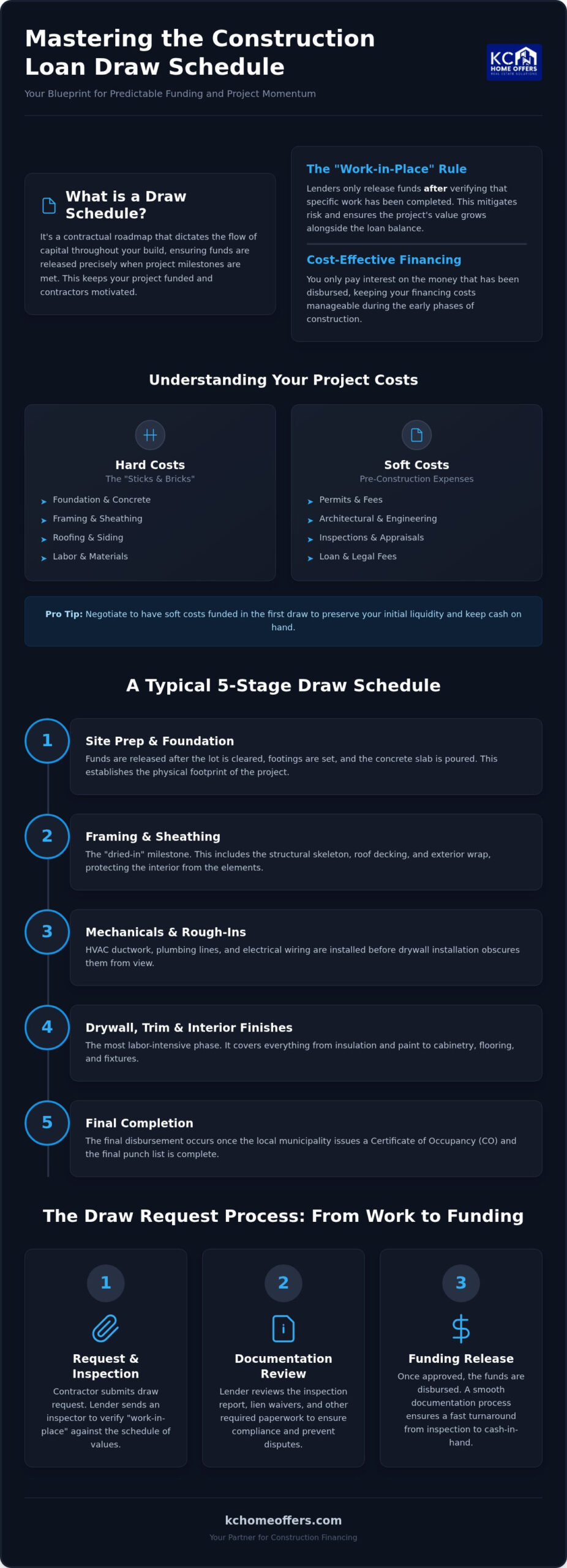
A construction loan draw schedule is more than a simple document; it’s the contractual roadmap that dictates the flow of capital throughout your build. It serves as the project’s heartbeat, ensuring that funds are available exactly when milestones are met. Efficiency is the priority. When you understand the mechanics of how money moves, you can better manage your general contractor’s expectations. A predictable funding cycle keeps crews on-site and motivated. If the money is slow, the work slows down too. High-integrity lenders focus on transparency here to ensure you aren’t guessing when the next disbursement will arrive.
Lenders don’t fund 100% of a project upfront because they need to mitigate risk. They operate on the “work-in-place” rule, meaning they only release funds after verifying that specific work has been completed. This structure aligns with broader project finance principles where the progress of the physical asset justifies the disbursement of capital. This approach also benefits your bottom line. Since you only pay interest on the amount of money actually disbursed, a well-structured construction loan draw schedule keeps your new construction financing costs manageable during the early phases of development. You avoid paying for capital that is still sitting in the lender’s account.
Hard Costs vs. Soft Costs in Your Draw
Hard costs represent the “sticks and bricks” of the project, including the foundation and framing. Soft costs include permits, architectural designs, and engineering fees. Savvy investors negotiate to have soft costs funded in the first draw. This strategy preserves your initial liquidity, ensuring you aren’t tied up in pre-construction expenses before the first shovel hits the dirt. Distinguishing between the two is vital for maintaining a healthy cash position from day one.
The Role of the Schedule of Values (SOV)
The Schedule of Values (SOV) acts as an itemized menu for your entire construction budget. Each line item in the SOV corresponds to a specific milestone in your construction loan draw schedule. A detailed SOV is your best defense against budget creep. It provides a transparent framework that prevents funding disputes, as everyone knows exactly what work must be verified before the next check is cut. This creates a system of accountability that protects your capital and project timeline.
Standard Draw Milestones: A Typical 5-Stage Template
Executing a successful build requires a clear understanding of the physical milestones that trigger funding. A standard construction loan draw schedule typically breaks a project down into five distinct phases. Each phase represents a tangible increase in the asset’s value. If you’re asking, What is a construction loan?, it’s a financial tool that releases capital only after work is verified. This ensures the lender’s collateral grows alongside the debt. Most residential projects follow this sequence:
- Stage 1: Site Prep and Foundation. Funds are released after the lot is cleared, footings are set, and the concrete slab is poured.
- Stage 2: Framing and Sheathing. This is the “dried-in” milestone. It includes the structural skeleton, roof decking, and exterior wrap.
- Stage 3: Mechanicals and Rough-Ins. HVAC ductwork, plumbing lines, and electrical wiring are installed before the drywall obscures them.
- Stage 4: Drywall, Trim, and Interior Finishes. This is the most labor-intensive phase. It covers everything from insulation and paint to cabinetry and flooring.
- Stage 5: Final Completion. The final disbursement occurs once the local municipality issues a Certificate of Occupancy (CO) and the punch list is finished.
The Milestone Structure vs. Percentage of Completion
Investors often have two ways to structure their draws. Milestone-based schedules pay out fixed amounts for specific finished tasks. This is straightforward and works well for smaller or mid-sized builds. Percentage-based schedules are more common in ground up construction loans for larger developments. In this model, the lender releases funds monthly based on the total percentage of work completed across all line items. This provides more granular cash flow but requires more detailed reporting from your contractor.
Handling Retainage and Holdbacks
Retainage is a standard industry practice where the lender holds back 5-10% of each approved draw. These funds aren’t lost; they’re simply reserved until the very end of the project. This “holdback” ensures that the contractor has a financial incentive to finish the final, often tedious, punch list items. You must factor this into your contractor agreements. If your contract says you’ll pay 100% of a milestone but the lender only releases 90%, you’ll face an out-of-pocket gap. A transparent partner like KC Home Offers can help you align these terms so your liquidity stays intact while your project moves toward the finish line.
The Draw Request Process: From Inspection to Funding
Once your project hits a milestone defined in your construction loan draw schedule, the administrative process begins. This isn’t just about asking for money; it’s about proving the value added to the property. Efficiency here is the difference between a crew that stays on-site and one that leaves for a different job because they haven’t been paid. A transparent, step-by-step workflow ensures that capital moves as fast as your contractors do.
- Step 1: Submission. You submit a formal Draw Request form. This must include an itemized update to your Schedule of Values (SOV), showing exactly what percentage of each line item is complete.
- Step 2: The Inspection. The lender dispatches a third-party inspector for an “eyes-on” verification. They aren’t checking for code compliance; they’re verifying that the work you claimed is actually in place.
- Step 3: Title Date-Down. Before releasing funds, the title company performs a date-down search. This confirms no new mechanic’s liens or encumbrances have been filed since your last disbursement.
- Step 4: Approval and Disbursement. Once the inspection report and title search clear, the lender approves the draw. Funds are typically sent via wire transfer directly to your account or the general contractor.
Essential Documentation for a Smooth Draw
Clean paperwork prevents delays. You must collect lien waivers from every sub-contractor and material supplier before issuing payments. These documents protect you and the lender by waiving the sub-contractor’s right to file a lien against the property for the work paid. Digital evidence is equally vital. High-resolution, timestamped progress photos provide an undeniable record of completion and can often help an inspector clear a draw faster. Keep a meticulous paper trail of all invoices and receipts. This organization isn’t just for the lender; it’s your primary defense during audits or tax season.
Managing the Inspection Timeline
Proactive scheduling is your best strategy for maintaining liquidity. You should schedule your inspections at least 48 hours before you actually need the capital. This buffer accounts for the time the inspector needs to visit the site and file their report. Common “fails” that stall funding include missing permits or claiming a milestone that isn’t 100% finished. If an inspector sees unfinished rough-ins when you’ve claimed they’re done, the entire draw might be rejected. The inspection turnaround time is the most critical metric for maintaining project speed and momentum.
Optimizing Your Schedule for Maximum Cash Flow
Maximizing your project’s profitability requires a strategic approach to your construction loan draw schedule. It’s not just about getting paid; it’s about timing. One of the most effective tactics for preserving capital is front-loading soft costs. By getting reimbursed for permits, architectural plans, and engineering fees in the very first draw, you keep your cash reserves liquid for unexpected field expenses. For high-speed projects, such as those utilizing fix and flip funding, you should negotiate for bi-weekly instead of monthly draws. This maintains momentum by ensuring your crew never waits more than ten days for their next check.
The math on interest carry is equally compelling. Since you only pay interest on the capital you’ve actually drawn, keeping your disbursements lean during the early stages can save thousands in monthly costs. Change orders are another area where optimization is key. If you decide to upgrade a kitchen package mid-build, don’t wait for the final draw to adjust your numbers. Document every shift in scope immediately and update your Schedule of Values (SOV) to reflect the new costs. This ensures your next inspection covers the actual work performed, preventing funding gaps that you’d otherwise have to cover out-of-pocket. Investors who need to close quickly on a new lot or acquisition while their current build is still underway often turn to bridge loan real estate financing to keep capital moving between projects without stalling either timeline.
The Danger of ‘Over-Drawing’
It’s tempting to pull as much cash as possible, but over-drawing creates significant project risk. If a contractor gets paid too much too early, their motivation to finish the punch list often drops. This is known as contractor complacency. From a lender’s perspective, over-funding a project that might later face difficulties is a major liability. You must balance your contractor’s need for capital with the long-term security of the build. Releasing funds only as value is added protects the equity of all stakeholders.
Budget Contingencies and Reallocations
A robust construction loan draw schedule always includes a 10-15% contingency fund. This isn’t a slush fund; it’s a safety net for material price spikes or unforeseen site conditions. If you manage your costs effectively and a phase comes in under budget, you can often move those funds to another line item. This process of reallocation allows you to improve the property’s final value without increasing the total loan amount. Budget flexibility requires proactive lender communication. If you’re ready to partner with a team that understands the nuances of developer cash flow, explore our construction loan options today.
Why KC Home Offers is the Preferred Partner for Construction Financing
Choosing the right lender is just as critical as selecting your general contractor. Traditional banks often treat residential builds with a level of detached bureaucracy that can kill a project’s momentum. At KC Home Offers LLC, we operate differently. We provide deep expertise in investor-focused new construction financing, meaning we understand that a delay in funding is a delay in your profitability. Our team has stripped away the layers of red tape to create a streamlined construction loan draw schedule management process that mirrors the speed of the real estate market. We don’t just fund deals; we facilitate growth for ambitious investors who need a partner as motivated as they are.
Our “straight shooter” approach ensures you never have to guess about the status of your capital. We provide transparent terms, reliable inspection timelines, and a commitment to follow through on our promises. Whether you are managing a ground-up development or looking for heavy fix and flip loans, our funding is designed to be flexible. We recognize that the job site is a dynamic environment where needs can change in an instant. This localized accessibility allows us to act as a strategic ally rather than a cold corporate entity. If you’re evaluating your options, understanding how to work with construction loan lenders Kansas City investors rely on can make the difference between a stalled project and a profitable one.
Fast Approvals and Reliable Funding
We know that the reality of a job site doesn’t wait for a loan committee to meet once a month. Our team is structured to provide quick capital when milestones are hit. You get direct access to decision-makers who can resolve draw issues in real-time, preventing the administrative bottlenecks that stall crews. Transparency is our baseline. You won’t find hidden draw fees or surprise holdbacks in our agreements. When you hit a milestone in your construction loan draw schedule, we focus on getting the inspection cleared and the wire sent as fast as possible. This efficiency allows you to keep your contractors paid and your project moving toward completion.
Scaling Your Portfolio with a Strategic Ally
Our partnership doesn’t have to end when the final inspection is signed off. We help you look beyond the initial build to the long-term success of your investment. Many of our clients transition their finished projects into long-term DSCR loans, allowing them to pull out equity and move on to the next acquisition. This full-lifecycle support is designed to help you scale your portfolio with operational efficiency. We value results and integrity, building a relationship that lasts across multiple projects. Scale your build project with KC Home Offers LLC today.
Master Your Build Momentum
A robust construction loan draw schedule is the foundation of a successful, profitable build. By mastering the sequence of milestones and the nuances of the inspection process, you eliminate the friction that stalls most projects. You’ve learned how to optimize cash flow by front-loading soft costs and maintaining a meticulous paper trail to ensure every disbursement is approved without delay. This proactive approach protects your capital and keeps your contractors focused on the finish line.
Success in 2026 requires more than just a blueprint; it demands a financial partner who understands the urgency of ground-up development. KC Home Offers specializes in New Construction and Fix & Flip loans, providing fast approvals for investment property loans and national lending expertise. We’ve removed traditional bank bureaucracy to offer a transparent, direct-to-investor experience that helps you scale your portfolio with confidence.
Secure Your New Construction Financing with KC Home Offers and turn your next project into a streamlined success. We’re ready to help you build with speed and integrity.
Frequently Asked Questions
How many draws are typical for a residential construction loan?
Typical projects utilize 5 to 7 draws. A standard 5-stage template covers foundation, framing, rough-ins, finishes, and final completion. Complex ground-up builds might require more frequent disbursements to maintain contractor momentum. The specific number is usually negotiated during the underwriting phase to align with your project’s unique timeline and cash flow requirements. This ensures the funding pace matches the physical progress on the job site.
Do I pay interest on the full loan amount or just the drawn amount?
You pay interest only on the funds that have been disbursed from your loan. This interest-only structure during the build phase is designed to keep your monthly carry costs manageable. As you progress through your construction loan draw schedule, your monthly interest payment will increase because the outstanding balance grows with each new disbursement. This model rewards efficiency, as finishing the project faster reduces your total interest expense.
What happens if my construction budget changes mid-project?
Budget shifts require immediate documentation through formal change orders. If costs for one phase increase, you’ll need to reallocate funds from your contingency or cover the gap out-of-pocket. Most lenders allow for budget reallocations within the Schedule of Values if you provide a clear explanation. Proactive communication is vital here. Keeping your lender informed about material price spikes or scope changes prevents funding delays during your next draw request.
Can I get reimbursed for materials delivered but not yet installed?
Most lenders adhere to the “work-in-place” rule, meaning they only pay for materials once they are permanently installed. However, some private financing agreements allow for “stored materials” draws if the items are securely housed on-site and covered by insurance. You should verify this policy before ordering expensive items like cabinetry or HVAC units. Ensuring your draw requests align with these rules prevents unexpected rejections during the inspection phase.
What is a ‘lien waiver’ and why is it required for every draw?
A lien waiver is a legal document signed by a contractor or supplier confirming they’ve received payment for specific work. By signing, they waive their right to file a mechanic’s lien against the property. Lenders require these for every disbursement to ensure the title remains clear. Collecting waivers from every sub-contractor is a non-negotiable step for maintaining a clean title and protecting your equity during the build process.
How long does it typically take to receive funds after a draw request?
Funding typically arrives within 3 to 5 business days after the site inspection is finalized. This window accounts for the inspector filing their report and the lender’s internal review of your documentation. Investor-focused lenders often move faster than traditional banks because they understand the urgency of the job site. You can speed up this process by ensuring all lien waivers and progress photos are organized and submitted correctly the first time.
What is the difference between a hard cost and a soft cost draw?
Hard cost draws fund physical construction elements like concrete, lumber, and labor. Soft cost draws reimburse you for intangible expenses such as permits, architectural designs, and engineering fees. Savvy investors often negotiate to include soft costs in the initial phase of their construction loan draw schedule. This strategy allows you to recoup your pre-construction capital early, keeping your cash reserves available for the more expensive phases of the physical build.
Is a third-party inspection always required for every draw?
Yes, an independent third-party inspection is a standard requirement for every disbursement. The lender needs an objective verification that the work claimed in your request has actually been completed to a professional standard. These inspections protect both the lender and the investor by ensuring the project is moving according to the agreed-upon timeline. Clear site access and organized progress photos help the inspector complete their report quickly and accurately.