

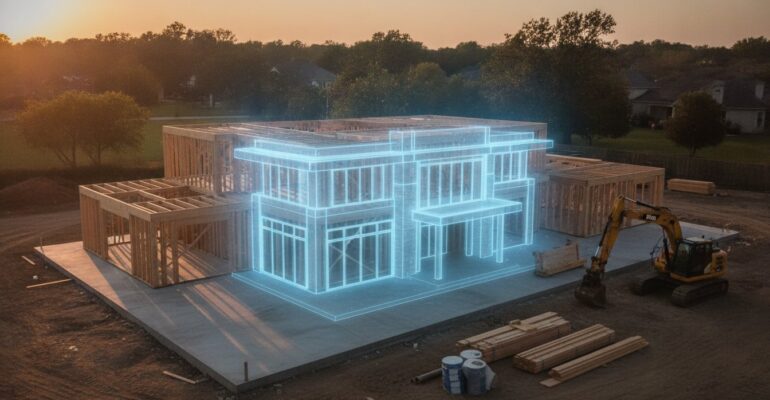
The biggest threat to your next ground-up development isn’t the cost of materials or a shortage of labor. It’s a lender that treats your build like a standard 30-year mortgage. If you’re tired of watching your site sit idle while a bank’s bureaucratic draw process stalls your contractors, you aren’t alone. Securing new construction financing shouldn’t feel like fighting an uphill battle against your own financial partner.
We believe that successful developers win by prioritizing draw speed and capital flexibility over rigid, outdated banking models. You need high Loan-to-Cost (LTC) ratios and a funding structure that recognizes the unique demands of a construction timeline. This guide is designed to help you master the complexities of ground-up loans and capital structures so you can scale your portfolio with confidence. We’ll explore how to navigate draw schedules, avoid hidden fees, and secure the reliable capital necessary to move from foundation to finish without the traditional delays that kill project ROI.
Key Takeaways
- Learn why new construction financing focuses on the project’s future value rather than current assets, allowing for higher leverage on ground-up developments.
- Identify the critical differences between Loan-to-Cost (LTC) and Loan-to-Value (LTV) to ensure you’re securing the maximum capital needed for vertical construction.
- Understand how to leverage your builder’s resume and liquidity to bypass the rigid debt-to-income requirements typically found at traditional banks.
- Manage project momentum by aligning your draw schedule with physical milestones to keep contractors paid and the build site moving without delays.
- Plan your exit strategy early by comparing the immediate profits of a build-to-sell model against the long-term cash flow of a build-to-rent DSCR loan.
What is New Construction Financing for Investors?
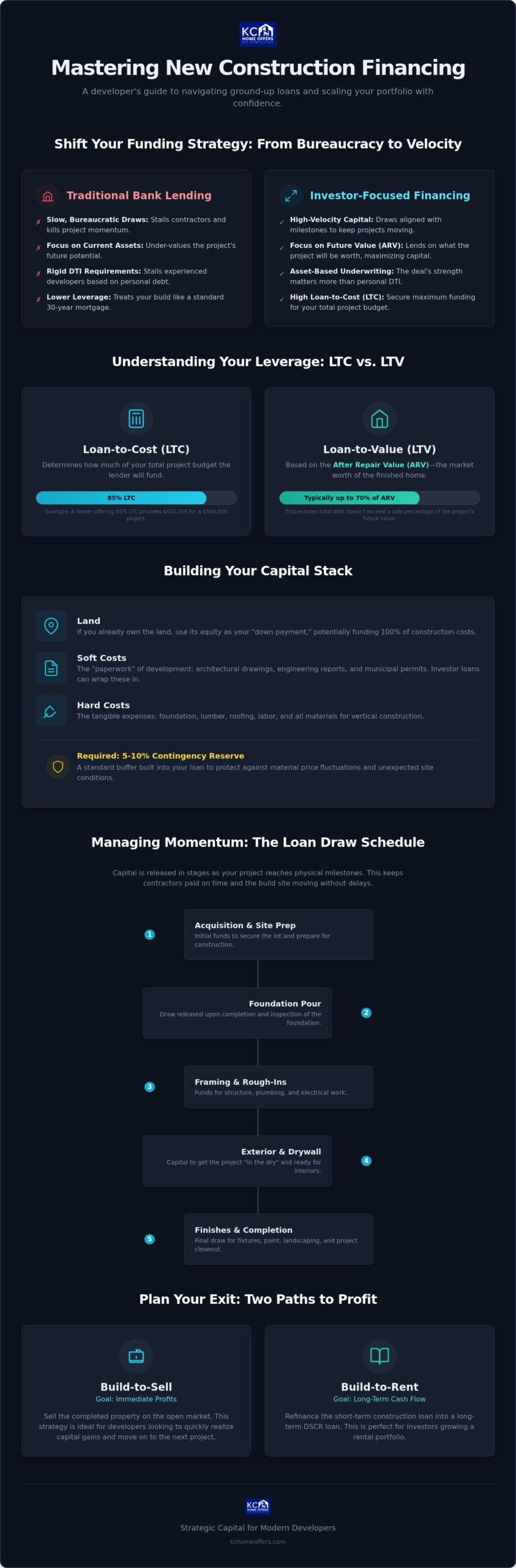
New construction financing is a specialized, short-term capital solution designed to bridge the gap between land acquisition and the completion of a vertical build. Unlike a standard mortgage, this funding isn’t a lump sum payment. It’s a dynamic credit facility that releases capital in stages as your project reaches physical milestones. The fundamental shift in 2026 is the focus on the project’s future value. While traditional institutions look at what a vacant lot is worth today, investor-focused lenders prioritize the After Repair Value (ARV). They fund the future potential of the site, which allows you to secure more capital for the actual build.
The 2026 market is defined by two dominant trends: the rise of build-to-rent (BTR) communities and speculative infill projects. High demand for single-family rentals has pushed developers to move away from individual flips toward entire subdivisions designed for long-term portfolios. Simultaneously, speculative builds on urban infill lots are providing much-needed density in land-constrained markets. These projects require high-velocity capital that can keep up with tight timelines and aggressive growth strategies.
Ground-Up Construction vs. Major Renovation
Ground-up construction means starting from zero. This typically involves a vacant lot or a “scrape” where an existing structure is completely demolished to make way for a new foundation. If you’re keeping the existing foundation or working within the current footprint, a fix and flip funding loan is often the more efficient choice. New builds involve higher complexity, including site plan approvals, utility tap fees, and specific permitting requirements that must be satisfied before vertical construction begins. Understanding these distinctions ensures you don’t over-leverage a simple renovation or under-fund a complex new build.
The Role of Private Capital in 2026 Development
Speed is the primary currency in modern development. In a competitive land market, the ability to close in days allows you to secure prime lots before they ever reach the open market. Private capital facilitates new construction financing by using asset-based lending models that prioritize the deal’s strength over the builder’s personal financial history. If you want to understand exactly how do hard money loans work within these asset-based frameworks, it’s essential reading for any developer looking to move faster than traditional banks allow. This removes the friction of rigid debt-to-income (DTI) requirements that often stall even the most experienced developers. It’s about finding a strategic ally that understands the momentum of a job site. Loan-to-Cost (LTC) is the primary metric for investor leverage in 2026, representing the percentage of the total project budget that the lender is willing to fund. Developers who need to secure a site quickly before transitioning into vertical construction often use bridge loan real estate strategies to close on land in under 14 days while their permanent construction capital is being finalized.
Key Components of Ground Up Construction Loans
While retail banks often obsess over personal debt-to-income ratios, new construction financing for investors centers on the mathematical viability of the project itself. The two most critical metrics you’ll encounter are Loan-to-Cost (LTC) and Loan-to-Value (LTV). LTC determines how much of your total project budget the lender will fund. For instance, if your total budget is $500,000 and the lender offers 85% LTC, they provide $425,000. LTV, however, is based on the After Repair Value (ARV). Lenders use this to ensure that even if costs rise, the total debt doesn’t exceed a safe percentage of the finished home’s market worth.
To keep your cash flow healthy while you aren’t yet generating rental income or sales proceeds, these loans typically feature interest-only payments. You only pay interest on the capital you’ve actually drawn, not the total loan commitment. Additionally, a 5-10% contingency reserve is a standard requirement in 2026. This buffer protects both you and the lender from the inevitable price fluctuations in raw materials or unexpected site conditions. Working with a strategic ally who understands these nuances, such as KC Home Offers LLC, ensures your capital stack is optimized for maximum ROI from the first shovel in the ground.
The Capital Stack: Land, Soft Costs, and Hard Costs
Your capital stack is the layers of funding that make the build possible. If you already own the land, many lenders allow you to use that equity as your “down payment,” potentially reaching 100% of the construction costs. Soft costs include the “paperwork” side of development: architectural drawings, engineering reports, and municipal permits. While some lenders restrict funding for these, specialized investor loans often wrap them into the total package. Hard costs are the tangible expenses, covering everything from the foundation pour to the final roof shingle.
Interest Reserves and Carry Costs
Managing carry costs is where many novice developers stumble. Most sophisticated new construction financing includes an interest reserve. This is a portion of the loan set aside specifically to cover the monthly interest payments during the build phase. It means you don’t have to write a check out of pocket every month, keeping your operating capital free for other needs. In the 2026 rate environment, budgeting for these carry costs, alongside property taxes and builder’s risk insurance, is essential for maintaining project momentum and preventing a mid-build liquidity crunch.
Qualifying for Construction Capital: What Lenders Look For
While retail lenders obsess over your personal credit score or debt-to-income ratio, professional new construction financing providers look at your track record. They want to know you can actually finish what you start. Your builder’s resume is your most valuable asset during the underwriting process. It should detail your past projects, their budgets, and completion timelines. If you’re a first-time developer, lenders often require you to partner with an experienced General Contractor (GC) to mitigate risk. This experience-based approach allows for more flexibility than traditional banking models.
You must also demonstrate strong liquidity. Lenders look for “cash to close” and an operating reserve to handle initial costs before the first draw. This isn’t just about having the down payment. It’s about showing you can float the project if a material delivery is delayed or an inspection takes an extra day. Most professional construction loans require you to close in a business entity, such as an LLC or S-Corp. This structure protects your personal assets and aligns with the commercial nature of the investment. It also signals to the lender that you’re operating as a professional developer rather than a hobbyist.
Project feasibility is the final hurdle. Lenders will vet your timeline and budget against local market data to ensure they’re realistic. If your projected build time is six months but the local permitting office is backed up for three, they’ll flag the discrepancy. They want to see a plan that accounts for the practical realities of the 2026 development landscape. A well-prepared project plan proves you’re a low-risk partner capable of managing a complex vertical build from start to finish.
The Importance of a Detailed Line-Item Budget
A ballpark estimate is a fast track to a loan denial. Professional lenders expect a comprehensive, line-item budget that accounts for every nail and permit fee. Using standardized CSI (Construction Specifications Institute) codes provides the level of clarity underwriters need. It shows you’ve done the homework on current market rates. Transparency here builds trust. When your budget aligns with local development costs, it proves the project is feasible and that you aren’t undercapitalized for the build ahead.
Vetting Your General Contractor (GC)
Your GC is the engine of your project. Lenders will vet them as thoroughly as they vet you. They’ll require proof of licensing, general liability insurance, and builder’s risk coverage. They also look for references from previous successful builds. If you plan to be your own GC, expect higher scrutiny or stricter liquidity requirements. Your contractor must also be prepared for the administrative side of the deal. They need to understand the lender’s draw process to ensure they aren’t caught off guard when inspections are required before funds are released. A GC who is comfortable with new construction financing requirements is a massive asset to your timeline.
The Construction Loan Draw Schedule: Managing Project Momentum
The draw schedule is the operational pulse of your build. It’s a predefined roadmap that dictates exactly when and how capital is released throughout the project. Unlike a standard loan where you receive a lump sum, new construction financing relies on a series of “draws” tied to physical progress. This structure protects the lender’s interest while ensuring you have the liquidity to pay subcontractors and purchase materials at the right time. Mismanaging this schedule is the fastest way to stall a job site, making it essential to treat your draw requests with the same professional rigor as your architectural plans. For a comprehensive breakdown of how to structure and manage this process, review our construction loan draw schedule guide and template to ensure your documentation is airtight from day one.
Before any capital moves, a third-party inspector will visit the site to verify that the work you’re claiming is actually complete. They aren’t there to judge your design; they’re there to confirm that the foundation is poured or the roof is dried-in. To protect the property from legal encumbrances, you must also manage lien waivers. These documents prove that your subcontractors have been paid for the work performed, preventing them from filing claims against the title later. Most lenders also implement “retainage,” holding back the final 5-10% of the loan until the local municipality issues a Certificate of Occupancy. This ensures every detail is finished to code before the project is officially closed out.
Standard Construction Milestones for Funding
Capital release typically follows four major stages. The first is the foundation and slab, providing the initial injection of funds once the site is stabilized. Next is the “dried-in” phase, which occurs when the framing, roof, and windows are installed, protecting the interior from the elements. The third milestone covers mechanical rough-ins, including plumbing, HVAC, and electrical systems. Finally, the finishes and landscaping draw covers the aesthetic and functional completion of the home. Aligning your contractor’s payment schedule with these milestones prevents out-of-pocket friction.
How to Request a Draw and Avoid Delays
Speed is everything on a job site. To maintain a 48-72 hour turnaround for funding, your draw request must be impeccable. This includes a clear summary of completed work, dated photos of the progress, and signed lien waivers from your primary subs. Common delays happen when developers submit vague invoices or lack photographic proof of “hidden” work like electrical wiring behind walls. If you want a partner that understands the urgency of a development timeline, you should apply for a New Construction Loan that prioritizes efficiency over bureaucracy.
Finishing the Build: Exit Strategies and Permanent Financing
The final nail in the trim work doesn’t signal the end of your project. For a professional developer, the real finish line is the successful execution of an exit strategy that protects your margins. Whether you’re building to sell or building to hold, your new construction financing needs a clear path to retirement. A build-to-sell strategy relies on a clean retail sale to pay off the construction debt, leaving you with the profit needed to roll into your next land acquisition. However, the 2026 market has seen a massive shift toward long-term holds.
Strategic investors are increasingly utilizing the build-to-rent model. This involves transitioning from short-term construction capital into a long-term DSCR loan for rental property. This transition allows you to stabilize the asset, place a tenant, and leverage the property’s cash flow rather than your personal income to qualify for permanent financing. Using bridge loan real estate structures ensures you aren’t left scrambling when the build wraps up and you need short-term capital to cover the gap between construction completion and permanent financing. KC Home Offers LLC provides a seamless bridge between these phases, acting as a single-source capital partner that understands the entire lifecycle of your development.
Refinancing Out of Construction Debt
There’s a common myth that you must wait through a six-month seasoning period before you can refinance a new build. In reality, once you have a Certificate of Occupancy (CO) and a tenant in place, professional lenders can often trigger a refinance immediately. The key is the final appraisal. This is your opportunity to capture the equity you’ve built through the development process. We recommend starting your permanent financing application at least 60 days before construction finishes. This proactive approach prevents you from paying unnecessary extension fees on your construction loan while waiting for a traditional bank’s slow underwriting department.
Why Strategic Investors Choose KC Home Offers LLC
We’ve built our reputation by being a straight shooter in a market filled with bureaucratic hurdles. Our draw process is defined by transparency. You won’t deal with hidden inspection fees or surprise delays that keep your crews from getting paid. We combine local market expertise with high-level professional standards, ensuring your project has the momentum it needs to succeed. We don’t just provide a loan; we act as a strategic ally that vets your project’s viability and follows through on every commitment. Ready to break ground? Get your custom new construction financing quote today!
Scale Your Development Portfolio with Precision Funding
Success in the 2026 development market is won or lost in the gaps between construction milestones. You’ve navigated the complexities of new construction financing, from mastering the draw schedule to planning a high-yield exit strategy through Build-to-Rent models. By prioritizing transparency and speed over the rigid bureaucracy of traditional banks, you protect your project’s ROI and maintain the momentum necessary to scale your business. The difference between a stalled site and a completed asset is the strength of your capital partnership.
We provide the specialized support serious developers need to thrive. Our model is built on fast draw turnarounds that keep your crews on-site, competitive LTC ratios for maximum leverage, and a transparent, asset-based approach that removes personal financial friction. We aren’t just a lender; we’re a strategic ally committed to the successful completion of your vision. It’s time to trade bank delays for professional efficiency.
Secure Your Ground-Up Construction Funding with KC Home Offers LLC
Your next project deserves a funding partner that moves as fast as you do. Let’s start building your legacy today.
Frequently Asked Questions
What is the typical interest rate for new construction financing in 2026?
Interest rates for ground-up development generally track higher than traditional mortgages because of the increased risk associated with vertical builds. In 2026, these rates are influenced by broader market conditions and the borrower’s track record. Investors with a history of successful completions often secure more favorable pricing compared to first-time developers. Pricing is typically interest-only, ensuring your monthly carry costs remain manageable while the project is in the vertical phase.
How much of a down payment is required for an investor construction loan?
Most investor-focused lenders require a down payment ranging from 15% to 25% of the total project cost. This is often calculated using a Loan-to-Cost (LTC) model, which covers land acquisition and construction expenses. Experienced developers who have completed several projects may qualify for higher leverage, reducing the initial capital required at closing. This allows you to preserve liquidity for other opportunities while maintaining enough skin in the game to satisfy underwriting requirements.
Can I use the land equity as my down payment for a construction loan?
You can absolutely use the equity in land you already own to satisfy the down payment requirement. Lenders look at the current appraised value of the lot and credit that equity toward your capital contribution. If the land is owned free and clear, it’s possible to secure 100% of the construction costs through new construction financing. This strategy is a powerful way for developers to scale without constantly depleting their cash reserves for every new site.
How long does the approval process take for new construction financing?
Approval timelines for private construction capital typically range from 10 to 21 days, depending on the complexity of the project. This is significantly faster than traditional banks, which often take months to navigate committee approvals. The speed of the process depends on how quickly you can provide your builder’s resume, a detailed line-item budget, and site plan approvals. Having a complete loan-ready package ensures the underwriting team can move at the speed of the market.
What happens if my construction project goes over budget?
If a project exceeds the initial budget, the lender typically looks to the 5-10% contingency reserve established during the closing. This buffer is specifically designed to absorb fluctuations in material costs or labor. If the overages exceed this reserve, the developer is generally responsible for covering the difference out of pocket before the next draw is released. Maintaining transparent communication with your lender helps you pivot quickly and keep the project moving without a funding freeze.
Do I need a signed contract with a builder before I can get financing?
Lenders generally require a signed construction contract or a detailed letter of intent with a licensed General Contractor before issuing a final loan commitment. They need to vet the GC’s credentials, insurance, and experience to ensure the project is in capable hands. If you are an experienced owner-builder, you may be exempt from this requirement, but most professional new construction financing structures rely on a clear agreement between the developer and the builder of record.
What is a ‘draw’ and how often can I request one?
A draw is a partial release of loan proceeds used to pay for completed work and materials already on-site. Most developers request draws monthly or upon reaching specific milestones, such as the completion of the foundation or framing. The process involves an inspection to verify progress and the submission of lien waivers from subcontractors. Efficient draw management is the key to keeping your contractors paid and your project momentum high throughout the build.
Can I get a construction loan for a multi-family property?
Multi-family projects are eligible for ground-up construction funding, though they often require more extensive site plan reviews and experience. Lenders look at the projected rental income and the local demand for multi-unit housing to determine the deal’s viability. These loans are structured similarly to single-family builds but may have different liquidity requirements. Successfully building a multi-family asset is a great way to build long-term wealth through a build-to-rent strategy with a permanent exit. Developers exploring short-term capital options for these projects should also understand how do hard money loans work as a flexible funding alternative when speed and asset value take priority over conventional qualification criteria.