Guides › Private lending
Selling a House With a Lien Against It: What Happens at Closing

Planning on selling a house with a lien against it? Discover what happens at closing, how proceeds pay debts, and your options to clear title successfully.
A lien doesn’t automatically stop a home sale. Selling a house with a lien against it is possible, but the lien generally must be paid, negotiated, or otherwise resolved before clear title transfers. At closing, sale proceeds can pay the mortgage and lien, and you receive any remaining funds.
It’s understandable to worry that a creditor’s claim means the deal is over, especially if you’re counting on the sale to settle the debt. The key factors are how much is owed, what the property may sell for, and whether the proceeds cover the required payoffs. This guide explains how to calculate that and what may happen if the sale price falls short.
You’ll also learn how different liens affect closing, what changes when a family member or cash buyer is involved, and how payoff and release work. This context can help you weigh your options and understand who may help move the sale forward without assuming that a lien automatically prevents a sale.
Key Takeaways
- A lien doesn’t automatically prevent a sale, but it generally must be paid, negotiated, or otherwise resolved before clear title transfers.
- A title search can help identify the lien, the creditor, and the amount that needs to be addressed at closing.
- Sale proceeds typically pay the mortgage and lien first; your remaining equity depends on what’s left after those payoffs.
- If the sale proceeds won’t cover the debt, possible paths include bringing funds to closing, negotiating a payoff, or seeking approval for a short sale.
- Real estate investors considering a rental property can explore KC Home Offers’ DSCR Loan, subject to the lending partner’s approval.
Table of Contents
- Can you sell a home with a lien on it?
- Working with a title company, attorney, and real estate agent
- What a property lien is
- How home equity and sale proceeds affect lien repayment
- How long does lien removal take, and what documents are needed?
- KC Home Offers: DSCR Loan
Can you sell a home with a lien on it?
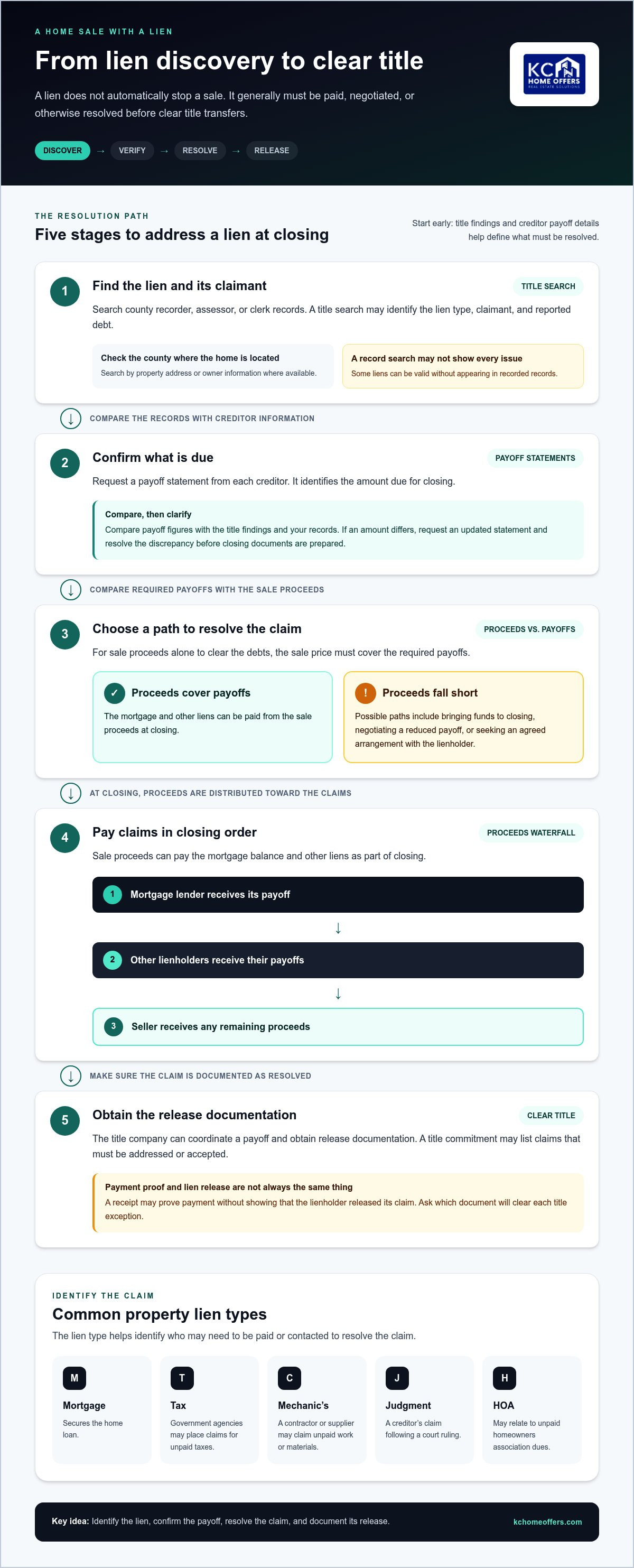
Yes. A lien doesn’t automatically block a sale, but it generally must be paid, negotiated, or otherwise resolved before clear title transfers. A title search can identify the lienholder and amount owed, helping you determine what needs attention before closing.
Common Property Lien Types
A property lien is a creditor’s legal claim against real estate for an unpaid debt. Common examples include mortgage, tax, mechanic’s, judgment, and homeowners association liens. The lien type matters because it helps identify who must be paid or contacted to resolve the claim.
A mortgage lien secures the home loan. Government agencies may place tax liens for unpaid taxes, while an HOA may claim unpaid dues. A judgment lien follows a court ruling that allows a creditor to pursue a debt. Generally, a court judgment becomes a lien on a person’s real property in the county where it is officially docketed, attaching to current and subsequently acquired property for a specified statutory period from the date of entry.
Paying Liens From Sale Proceeds
At closing, sale proceeds can pay the mortgage balance and other liens. The mortgage lender receives its payoff, followed by other lienholders, and the seller receives any remaining proceeds. This can allow the sale to proceed while resolving claims against the property.
The sale price must cover the required payoffs for proceeds alone to clear the debts. A payoff statement from each creditor identifies the amount due for closing. If proceeds fall short, the seller may need to bring funds, negotiate a reduced payoff, or seek an agreed arrangement with the lienholder. An IRS subordination application is IRS Form 14134, according to the Internal Revenue Service.
Mechanics Liens
A mechanic’s lien is a claim that a contractor or supplier may file for unpaid work or materials provided to a property. For example, a contractor with an unpaid renovation bill may assert a claim against the home. The debt may surface during a title search and affect closing.
Across the country, contractors and suppliers typically have a set timeframe after their last day of work or delivery of materials to file a mechanics lien, depending on local regulations. A disputed bill or unclear payment record can complicate resolution. Identify the claimant and amount, then address the claim through payment, negotiation, or a documented dispute rather than assuming the sale will remove it.
Finding Liens in Records and Searches
County recorder, assessor, or clerk records may show liens recorded against a property. Search the county where the home is located, using the property address or owner information where available. Records may include a judgment, tax claim, mortgage, or mechanic’s lien. Some liens can be valid without appearing in recorded records, so a public-record search may not reveal every issue.
A title search reviews property records and may identify the lien type, claimant, and reported debt. Start early so you have time to compare the findings with creditor statements and resolve discrepancies before closing. If a lien appears, note the recording details and contact the named lienholder about payoff or release. Disclose the issue to prospective buyers as the sale progresses.
Working with a title company, attorney, and real estate agent
A title company searches property records, identifies title issues, and coordinates lien payoffs for closing. Failing to disclose a lien can lead a buyer to cancel the sale or later file a lawsuit if they believe they were misled.
Title Commitments and Exceptions
A title commitment outlines the conditions for issuing title insurance and lists exceptions that must be addressed or accepted. A recorded judgment or unpaid contractor claim may appear as an exception, indicating that the title company needs proof of payment, a release, or another resolution.
Review each exception with the title officer and compare it with creditor records. If payment resolves a claim, the title company can coordinate the payoff and obtain release documentation. Ask which document will clear each exception: a receipt may prove payment without showing that the lienholder released its claim. An unresolved exception can affect the buyer’s title and delay closing.
Title Searches and Clear-Title Requirements
A title search examines public records for ownership claims, liens, and other recorded interests. Most buyers and lenders require clear title, with claims settled before ownership transfers. The title company uses its findings to identify the lienholder, determine payoff requirements, and track necessary releases.
Ordering a title search early can reveal a missing release or unexpected judgment before closing preparations are complete. A real estate attorney can interpret a disputed claim and explain resolution options. Keep the report and the attorney’s written guidance with the transaction documents.
Preventing Title Problems and Delays
Start the title search early, then give the title company mortgage statements, lien notices, and payment records. If a creditor’s payoff differs from your records, request an updated statement and resolve the discrepancy before closing documents are prepared.
A real estate agent can coordinate sale communications and relay buyer questions, while the title company handles title work. For example, an old mortgage may appear without a recorded release. Provide payment records so the title officer can investigate. Early coordination gives the title company and attorney time to identify missing documents, contact the lienholder, and clarify which release is needed for closing.
Risks of Undisclosed Liens
Failing to disclose a known lien can lead to disputes over who must pay it and whether the buyer received the title promised. A buyer who believes the seller concealed the claim may cancel the transaction or later bring a lawsuit.
Share lien notices and title findings with the professionals handling the sale rather than relying on the buyer’s search. If you dispute a claim, preserve relevant invoices, payment receipts, and creditor letters. Those records can help explain the issue and support its resolution. If you’re weighing another sale route while addressing title questions, review available home-sale options.
What a property lien is
A property lien gives a creditor a legal claim against real estate for unpaid debt. The claim matters because it can affect title, repayment, and a later transfer to a family member.
Lien Definition and Effect
A lien uses property as security for a debt, such as a mortgage, tax bill, or contractor invoice. If the obligation remains unpaid, the creditor may pursue the property through the applicable process. The claim doesn’t simply disappear when ownership changes, so a transfer or home sale must account for it.
For example, a parent who transfers a home to an adult child doesn’t automatically remove an existing mortgage or judgment lien. The family member receives the property with the claim still attached unless it is properly resolved. Before signing a deed, identify each creditor, the debt connected to the lien, and any release needed to clear title.
A lien differs from the debt that led to it. A contractor’s unpaid bill is the debt; a mechanic’s lien is the property claim tied to that bill. Paying the bill may resolve the underlying obligation, but get written evidence of satisfaction and confirm that the release is recorded. This record helps show the claim is resolved and supports a later home sale.
Credit effects require a separate distinction. A lien affects the property’s title, while the underlying unpaid debt may have separate consequences for the owner’s credit history. A county property record alone doesn’t explain what appears in a credit file. Identify whether the claim relates to a mortgage, tax debt, judgment, or contractor account, then review the related creditor records.
Property-Tax Lien Priority
A property-tax lien is a government claim for unpaid real estate taxes. Tax liens often take priority over other liens, including a primary mortgage lien, so the order of claims can affect which creditor receives sale proceeds first.
State and local tax claims can affect how much remains to satisfy a mortgage or other creditor. For a specific property, identify the taxing authority and recorded claim, then include its payoff in the closing figures. For example, an unpaid county tax balance may need to be addressed alongside the lender’s mortgage payoff. Overlooking either can leave a title issue unresolved.
Priority matters even when a family member plans to receive the property instead of an outside buyer. A deed transfer doesn’t erase a government claim, and a creditor’s rights may remain tied to the home. Confirm which liens exist and their status before transferring ownership. The practical question isn’t just who owes the debt, but whether the property can be conveyed with the claim still attached.
How home equity and sale proceeds affect lien repayment
Home equity is the property’s estimated value minus the mortgage and other debts secured by it. Sale proceeds are the funds available after the buyer pays, before mortgage and lien payoffs, transaction expenses, and any remaining seller funds are calculated.
At closing, the mortgage lender and lienholders are paid from the proceeds according to the required payoff amounts. The seller receives what remains after those obligations and transaction costs. A payoff statement matters because the balance may differ from an earlier account figure. Request current payoff amounts and compare the total with expected proceeds, not just the home’s estimated equity.
A lien doesn’t automatically prevent a home sale. The practical question is whether the sale can pay the required debts or whether creditors agree to another resolution. If proceeds cover the mortgage and lien, closing can direct payments to the relevant holders. If a creditor accepts a reduced payoff, get the agreement in writing and make sure it addresses any remaining balance.
Consider a homeowner with $50,000 in equity and a $150,000 debt tied to a lien. The equity alone cannot cover that debt, so the seller may need to negotiate a lower payoff or bring additional funds. Some creditors may accept less when a sale is their only route to payment. The creditor’s written settlement terms determine whether the unpaid difference is forgiven or remains due.
If the mortgage balance exceeds the home’s value, a short sale may be an option. The lender must approve accepting less than the full mortgage payoff, because the sale proceeds won’t satisfy the loan. A traditional sale requiring lender-approved short-sale terms may involve 60-120 days of lender approval delays. That timing can affect a buyer’s plans and the seller’s next housing arrangements.
In Florida, a home with a lien can still be sold, but the claim must be resolved to transfer clear title. A lien may be paid from the proceeds, settled with the lienholder, or addressed through another agreed arrangement. For a Florida property, calculate the mortgage payoff and each lien separately. That breakdown shows whether the proposed sale can clear all claims or leaves a shortfall to resolve.
A real estate agent can help communicate offers and sale terms, while the lender’s approval remains central to a short sale. Before accepting an offer, compare its price with the mortgage payoff, lien balances, and closing expenses. This calculation shows whether the sale leaves funds for the seller or requires a negotiated payoff to proceed.
How long does lien removal take, and what documents are needed?
The time it takes to remove a lien depends on the creditor, lien type, and processing of required documents. Paying the debt is only part of the process. The creditor’s release must also be documented and filed with the county so the title record reflects the resolved claim.
Start with a current payoff statement from each creditor. Keep payment confirmation, the creditor’s letter stating the lien is satisfied, and any release or satisfaction document. The title company can use these records to match payment to the recorded claim. For example, a contractor’s receipt alone may not show that the county record has been updated.
After a mortgage is paid, mortgage releases typically post within 30-90 days. A judgment lien typically releases 30-60 days after payment, though a creditor may take longer to file the satisfaction document. These timeframes matter if a buyer needs clear title promptly. Ask the creditor for release paperwork and provide it to the title company as soon as it arrives.
Federal tax liens follow a separate process. According to the Internal Revenue Service, the IRS Certificate of Discharge application is IRS Form 14135. A discharge addresses the lien’s effect on a specific property; it differs from paying the entire tax debt. An IRS Certificate of Discharge application may take 30-60 days from filing, so include that process in the sale timeline.
After full payment, the Internal Revenue Service releases a federal tax lien within 30 days. Keep proof of payment and the IRS release notice with the closing file. If a sale requires a discharge rather than full payment, the application must support that request with information about the property and proposed transaction. Missing or inconsistent records can slow review.
A practical file for the title company includes the recorded lien notice, creditor contact details, payoff statement, proof of payment, and signed release or satisfaction. Add county recording information when available. If the claim is disputed, keep relevant invoices, canceled checks, court documents, and correspondence. These records help distinguish a paid claim from one that is incorrect or unresolved.
Share payoff and release documents with the title company before closing, not after the buyer’s title review. A recorded release may take time to appear in county records, even after payment. If you’re weighing a property sale while resolving a lien, discuss your property sale options and keep creditor documentation organized for the closing file.
KC Home Offers: DSCR Loan
KC Home Offers LLC connects real estate investors with lending partners and offers Investor Deals for investment opportunities. If a lien affects a property you’re evaluating, first account for its payoff or resolution when assessing the deal. A lien doesn’t replace the need to understand the property’s title and costs.
For investors planning a ground-up project, KC Home Offers LLC also offers a New Construction Loan through lending partners. These are business-purpose loans, not traditional home-purchase financing, and approval rests with the lending partner. The right next step depends on whether you’re evaluating an investment property, planning construction, or resolving a lien before a transaction.
If you’re an investor assessing a property with a lien, contact KC Home Offers LLC to discuss investment opportunities or a New Construction Loan.
Choose a Clear Path for Your Property
Selling a house with a lien against it requires a decision that accounts for both the property and the debt. Before committing to a transaction, consider what matters most: resolving the claim through a sale, protecting remaining equity, or moving on from a property that no longer fits your plans. Keep lien records and creditor communications organized as you evaluate your next move.
If you’re considering a direct cash sale, KC Home Offers buys homes for its own account. Real estate investors exploring a separate investment can also ask about DSCR Loans, Fix & Flip Loans, and New Construction Loans, which are connected through lending partners and subject to their approval.
A practical conversation can help clarify which path fits your goals. Talk with KC Home Offers about your property options, then take the next step with a clearer plan.
Frequently Asked Questions
What happens if you don’t pay the lien?
If a lien remains unpaid, the creditor may pursue collection or enforce its claim against the property. The outcome depends on the lien type and applicable process. For example, an IRS lien can allow the federal government to foreclose to collect the debt. An unresolved claim can also complicate a sale or refinancing. Contacting the creditor and understanding the claim’s status can help clarify what may happen next.
Can I use my sale proceeds to pay the lien?
Yes, proceeds from a home sale can pay a lien when the available funds cover the required payoffs. For example, closing figures can account for the mortgage payoff, a tax claim, and a judgment lien before calculating any remaining funds for you. Request current payoff statements, since an older balance may not reflect the amount due on the closing date. If proceeds fall short, discuss resolution options with the lienholder.
Can You Have a Lien on Your House From a Previous Owner?
A lien can remain attached to a property after ownership changes if it wasn’t properly resolved. For instance, a buyer may discover an earlier owner’s unpaid property-related debt during a title search. The name on the debt and the status of the claim both matter. Compare the recorded lien with the transfer and closing documents, then determine whether a release was filed or the claim still needs resolution.
Can a lien be removed without paying?
Yes, a lien filed in error or after its applicable limitation period may be challenged without paying the claimed amount. Gather supporting documents, such as payment records or evidence that the claim is incorrect, and send a formal dispute to the lienholder. If the dispute remains unresolved, a property owner may pursue a court process, such as a quiet-title lawsuit, with help from a real estate attorney.
Do All Liens Need to Be Paid Before Closing?
Not necessarily, but most standard transactions require liens to be addressed before ownership transfers. A lienholder may agree to a reduced payoff, or a buyer may accept the property subject to a lien under an agreed arrangement. Document these options clearly, since open claims can affect buyer financing. Confirm how each lien will be handled in the purchase agreement and closing instructions.
How do I find out if there are any liens of record against my name or the property?
Search the county recorder’s, assessor’s, or clerk’s records where the property is located, using the property address and owner details. A title search can also review public records for recorded claims. Check tax authorities for relevant tax balances. Not every valid lien appears in recorded records, so compare search results with creditor notices and other property documents to identify potential gaps.
How long does it take to clear a lien?
The timing depends on the lien type, creditor, and county recording process. Mortgage releases typically post within 30-90 days after payoff, while judgment lien releases typically take 30-60 days. The Internal Revenue Service releases a federal tax lien within 30 days after full payment. Keep payment proof and the creditor’s release letter, then confirm the release is recorded so the public title record reflects the resolution.
Can you sell a house with a lien against it?
Yes, a home can be sold with a lien, but the claim generally must be resolved before clear title transfers. A title company can identify the recorded claim and coordinate the documents needed for closing. For example, a seller may use proceeds to pay a creditor or negotiate a documented payoff if the proceeds are insufficient. Clearly document any unresolved arrangement so the buyer understands how the lien will be handled.
Frequently asked
What happens if you don’t pay the lien?
If a lien remains unpaid, the creditor may pursue collection or enforce its claim against the property. The outcome depends on the lien type and applicable process. For example, an IRS lien can allow the federal government to foreclose to collect the debt. An unresolved claim can also complicate a sale or refinancing. Contacting the creditor and understanding the claim’s status can help clarify what may happen next.
Can I use my sale proceeds to pay the lien?
Yes, proceeds from a home sale can pay a lien when the available funds cover the required payoffs. For example, closing figures can account for the mortgage payoff, a tax claim, and a judgment lien before calculating any remaining funds for you. Request current payoff statements, since an older balance may not reflect the amount due on the closing date. If proceeds fall short, discuss resolution options with the lienholder.
Can You Have a Lien on Your House From a Previous Owner?
A lien can remain attached to a property after ownership changes if it wasn’t properly resolved. For instance, a buyer may discover an earlier owner’s unpaid property-related debt during a title search. The name on the debt and the status of the claim both matter. Compare the recorded lien with the transfer and closing documents, then determine whether a release was filed or the claim still needs resolution.
Can a lien be removed without paying?
Yes, a lien filed in error or after its applicable limitation period may be challenged without paying the claimed amount. Gather supporting documents, such as payment records or evidence that the claim is incorrect, and send a formal dispute to the lienholder. If the dispute remains unresolved, a property owner may pursue a court process, such as a quiet-title lawsuit, with help from a real estate attorney.
Do All Liens Need to Be Paid Before Closing?
Not necessarily, but most standard transactions require liens to be addressed before ownership transfers. A lienholder may agree to a reduced payoff, or a buyer may accept the property subject to a lien under an agreed arrangement. Document these options clearly, since open claims can affect buyer financing. Confirm how each lien will be handled in the purchase agreement and closing instructions.
How do I find out if there are any liens of record against my name or the property?
Search the county recorder’s, assessor’s, or clerk’s records where the property is located, using the property address and owner details. A title search can also review public records for recorded claims. Check tax authorities for relevant tax balances. Not every valid lien appears in recorded records, so compare search results with creditor notices and other property documents to identify potential gaps.
How long does it take to clear a lien?
The timing depends on the lien type, creditor, and county recording process. Mortgage releases typically post within 30-90 days after payoff, while judgment lien releases typically take 30-60 days. The Internal Revenue Service releases a federal tax lien within 30 days after full payment. Keep payment proof and the creditor’s release letter, then confirm the release is recorded so the public title record reflects the resolution.
Can you sell a house with a lien against it?
Yes, a home can be sold with a lien, but the claim generally must be resolved before clear title transfers. A title company can identify the recorded claim and coordinate the documents needed for closing. For example, a seller may use proceeds to pay a creditor or negotiate a documented payoff if the proceeds are insufficient. Clearly document any unresolved arrangement so the buyer understands how the lien will be handled.
Need financing on a deal like this?
DSCR, fix & flip and new construction loans, underwritten on the deal rather than your tax returns. Soft credit pull only.
Apply in 5 minutes