Guides › Private lending
Residential Construction Loans: Requirements, Draws and Costs
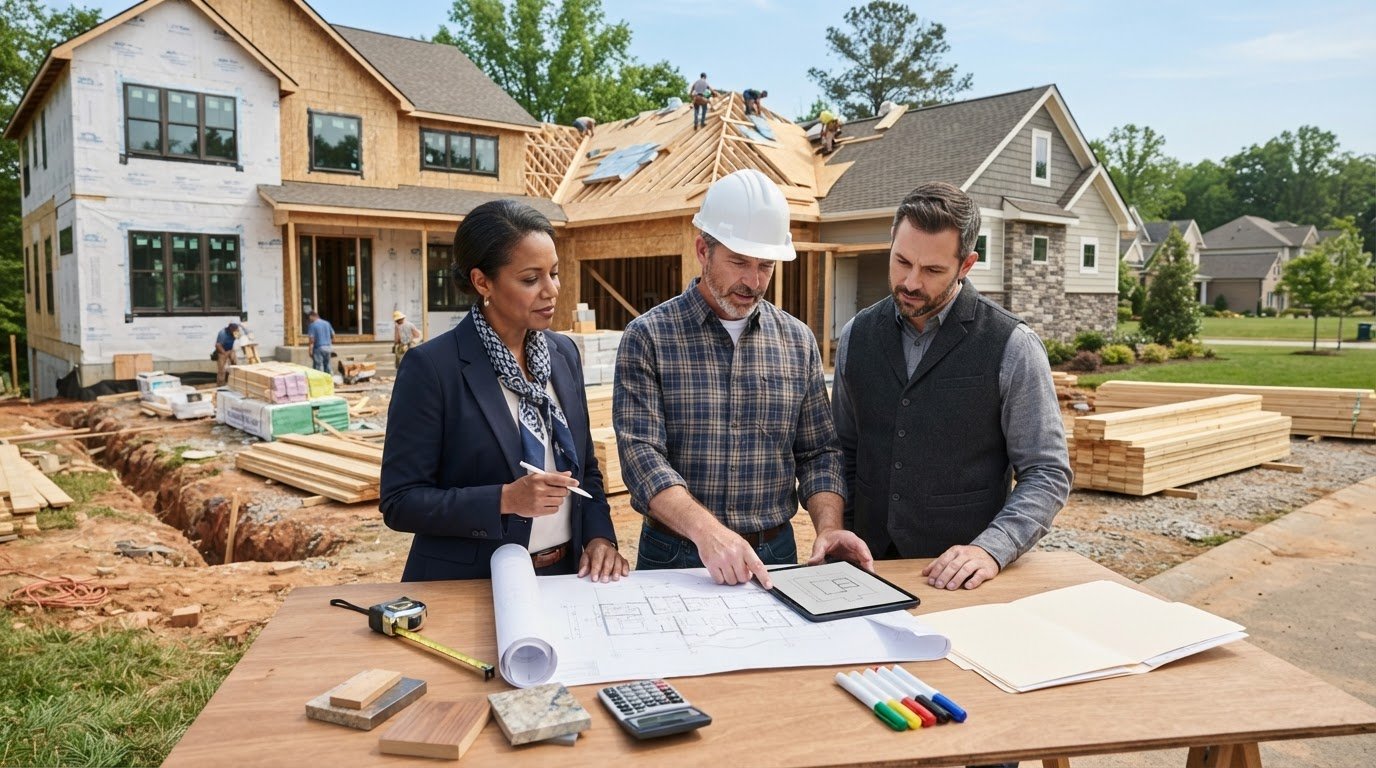
Learn how a residential construction loan works, from draw schedules to requirements and costs. Plan your build and explore smart financing options today.
The right residential construction loan depends on more than the plans and budget. A personal home build and an investment project can look similar on paper, yet the financing path may differ based on how you’ll use the property. Because construction funds are typically released in draws as work progresses, the loan’s structure matters from the start.
Before committing to a build, get clear on what lenders review, which documents to prepare, and how you’ll cover the project through completion. This guide explains how construction draws work, what may shape qualification, and how costs and financing options can vary. You’ll also learn how construction-to-permanent financing compares with a stand-alone construction loan, and why investors may consider business-purpose financing. KC Home Offers LLC connects real estate investors with construction financing through lending partners. Financing is subject to the lending partner’s approval.
Key Takeaways
- Match the financing approach to the property’s intended use, since personal builds and investment projects serve different purposes.
- Understand how a residential construction loan may release funds in stages, and why a clear draw schedule helps organize the build.
- Compare construction-only and construction-to-permanent structures to see whether separate long-term financing may be needed.
- Prepare borrower details alongside project plans, a budget, and a timeline so lenders can review the full scope of the build.
- Investors can explore business-purpose construction financing through KC Home Offers’ lending partners; financing is subject to the lending partner’s approval.
Table of Contents
- What Is a Residential Construction Loan, and Who Is It For?
- How Residential Construction Loans Work: From Approval to Draws
- Which Residential Construction Loan Structure Fits the Project?
- What to Prepare Before Applying for a Residential Construction Loan
- Explore Investor Construction Financing Through KC Home Offers LLC
What Is a Residential Construction Loan, and Who Is It For?
Building a home creates a financing challenge that a purchase loan on a finished property doesn’t address: construction costs come due as work moves forward, before there’s a completed residence to buy or occupy. A residential construction loan helps finance the build phase, with funds generally tied to project progress. The structure, lender review, and terms depend on the financing program.
Rather than funding the entire project as one purchase of an existing home, construction financing may release money in stages as the build advances. The plans, budget, timeline, and intended use help show what the financing will cover and how the request may be assessed.
How a construction loan differs from a traditional mortgage
A traditional mortgage generally finances the purchase or refinancing of a completed property. Construction financing covers an active build, when the residence is still taking shape. That difference affects when funds are needed and how the financing is organized.
Some structures combine construction financing with long-term financing in one arrangement. Others cover construction only, which can mean arranging separate financing after the build is complete. These structures don’t have identical terms across programs, so compare how each handles the building phase and the transition afterward.
Personal home build or investment property?
For an owner-occupied build, the borrower plans to live in the completed home. That personal-use purpose creates a different financing scenario from building a property as an investment. The borrower’s situation and program requirements help shape what lenders review.
An investor build has a business purpose. The financing discussion may focus on the project’s scope and intended investment use, alongside borrower qualifications and the overall plan. Neither route is automatically preferable. The fit depends on what you’re building, why you’re building it, and how you plan to finance the property after construction.
Intended property use shapes the financing conversation: a home you plan to occupy and a property built for investment can call for different financing paths.
KC Home Offers LLC connects real estate investors with business-purpose construction financing through lending partners. This gives investors a way to explore financing aligned with a build project while distinguishing investment financing from personal-use borrowing. Applications and funding are subject to the lending partner’s approval.
Before comparing loan structures, define the property’s intended use and your plan for the finished home. That context gives the financing review a clear starting point and helps identify which details matter for the project.
How Residential Construction Loans Work: From Approval to Draws
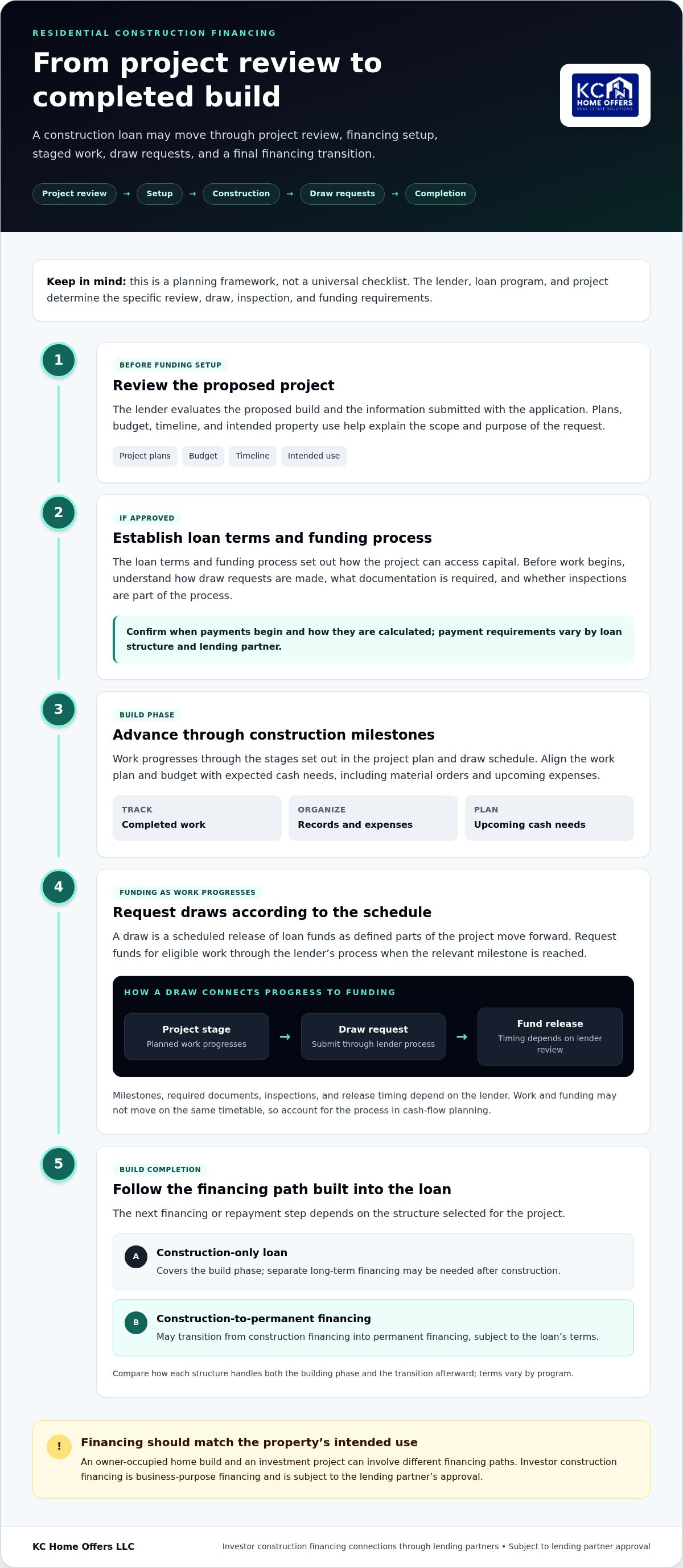
A residential construction loan typically moves through project review, financing approval, construction, and staged funding. The process depends on the lending partner and loan program, so treat this sequence as a planning framework rather than a universal checklist. Before work begins, understand what documents support each funding request and how the draw review and payment process work.
A typical process may include:
- Project review: The lender evaluates the proposed build and the information submitted with the application.
- Approval and setup: If approved, the loan terms and funding process establish how the project can access capital.
- Construction milestones: Work advances through the stages set out in the project plan and draw schedule.
- Draw requests: The borrower requests funds as eligible work progresses, following the lender’s process.
- Completion: The build reaches completion, and the next financing or repayment step follows the loan structure.
A construction-loan draw is a scheduled release of loan funds as defined parts of the building project move forward. The Consumer Financial Protection Bureau’s overview of construction loans also explains how this financing differs from a standard home loan.
What a draw schedule means during construction
A draw schedule maps planned funding requests to project stages. Instead of assuming all funds arrive at once, use the schedule to coordinate expected cash needs with the progress of construction and material orders. For example, a project plan may tie a request to a completed phase. The specific milestones, required documents, inspections, and release timing depend on the lender’s process. Include those steps in cash-flow planning because work may progress on a different timetable from funding.
Before construction starts, align the project budget and work plan with the draw process. Keep records of completed work and anticipated expenses organized so you can prepare a request when a milestone is reached. This can help reveal a gap between an upcoming payment and the next expected release. Inspection requirements and approval timelines vary by loan.
Payments and the transition after construction
Payment requirements during the building phase vary by loan structure and lending partner. Review the terms to understand when payments begin and how they’re calculated. A construction-only loan covers the build phase, so the borrower may need separate long-term financing afterward. A construction-to-permanent structure may transition into permanent financing, subject to its terms.
Investors planning a build can explore business-purpose construction financing through KC Home Offers LLC’s investor financing connections. KC Home Offers connects investors with lending partners, and applications and funding are subject to the lending partner’s approval. Clarifying the draw process and post-construction plan early can help shape a complete financing approach.
Which Residential Construction Loan Structure Fits the Project?
Choose a structure by looking beyond the build itself. Consider how long the financing is intended to cover, whether it includes a transition to long-term financing, and whether it covers the lot, construction, or both. Availability and terms vary by program, so use these distinctions to frame the comparison rather than assume one structure will fit every borrower.
Structure | Main purpose | Financing period | Later mortgage may be needed?
Construction-only: Funds an eligible building project. Covers the construction phase. Often, yes. Plan for how the construction balance will be paid off.
Construction-to-permanent: Combines construction financing with long-term mortgage financing. May extend from the build phase into permanent financing. The structure may avoid arranging a separate mortgage, subject to program terms.
Land or lot financing: Finances the purchase of land, rather than necessarily funding the full build. Covers the land purchase; construction financing may be separate. A later loan may be needed to fund construction.
That distinction matters: a loan to acquire a lot doesn’t automatically finance plans, labor, or materials for the residence. If you already own land or intend to buy it as part of the project, specify whether the financing need is for the site, the build, or both. The requested financing scope should match the project budget.
Construction-only versus construction-to-permanent financing
With construction-only financing, the borrower needs a plan for the balance at the end of the build. That may involve obtaining separate permanent financing, which can mean another application and closing process. A combined structure may connect the build phase to a long-term mortgage under one program, but the transition depends on the lender’s terms.
Compare more than the number of loans. Consider when the construction period ends, what triggers the next phase, whether payment obligations change, and what happens if the build timeline shifts. Those details affect cash-flow planning. Neither structure is inherently simpler or more suitable without considering the project and its terms.
How investor construction financing differs
An investment build is a business-purpose real estate project, not simply a personal home purchase with construction added. Compare options against the project scope, budget, and intended investment plan, including how you expect to use or exit the completed property. Those factors clarify what the financing needs to cover and what happens after construction.
KC Home Offers LLC connects real estate investors with business-purpose construction financing through lending partners. Investors can explore financing in the context of the project, distinct from consumer mortgage financing. Applications and funding are subject to the lending partner’s approval.
Before settling on a structure, map the land cost, build expenses, financing period, and post-construction plan. A guide to new construction financing for investors can also help frame the funding needs against the project’s intended use.
What to Prepare Before Applying for a Residential Construction Loan
An organized application helps a lending partner understand both the borrower and the build. Before starting a residential construction loan application, assemble a clear picture of who will own or use the property, what the project includes, how much it may cost, and how the work is expected to progress. Review criteria and required documents vary by program, so use this preparation list as a starting point, not a universal underwriting checklist.
For an investment project, connect the financing plan to its business purpose. A build intended for rental, resale, or long-term ownership may call for different project details and a clear explanation of the intended outcome.
Project documents and budget readiness
Bring the project into focus with the planning materials you have. These commonly include architectural plans, a cost breakdown, a proposed construction schedule, and contractor information. A lending partner may request additional documents or use different standards, so organize available materials without assuming every program requires the same package.
A detailed budget does more than show a total. Break out major project costs and connect them to the work sequence. This makes it easier to compare expected expenses with the timing of construction funds and identify where a cash-flow gap could arise. Include a contingency in your planning for unexpected costs or delays, but don’t rely on a standard reserve amount that may not fit the project or lender’s requirements.
Keep versions of the budget and schedule consistent. If the scope or timing changes, update the materials so the financing discussion reflects the current plan rather than an outdated estimate.
Borrower and exit-plan readiness
Organize borrower information alongside the project file. Depending on the program, review may consider financial qualifications as well as the build’s scope and supporting documentation. For investment borrowers, be ready to explain what happens after completion: do you plan to sell, rent, or hold the property? A defined exit or ownership plan helps frame the project and financing need.
Before a lending-partner discussion, use this checklist to spot gaps:
- Borrower: Gather relevant financial and ownership information.
- Scope: Summarize what you intend to build and the property’s planned use.
- Budget: Organize estimated costs and note assumptions or contingency needs.
- Timeline: Map expected stages of work and major cash needs.
- Team: Prepare available contractor details and project plans.
- Investment plan: State whether the completed property is intended for sale, rental, or holding.
Use the checklist to make your project easier to explain, not to predict approval. KC Home Offers LLC connects real estate investors with business-purpose construction financing through lending partners. Explore construction financing for investors as you organize your project materials and next steps.
Explore Investor Construction Financing Through KC Home Offers LLC
A build intended as your personal residence and a build intended as a real estate investment have different purposes, so they may call for different financing paths. An owner-occupied project is not the same financing scenario as constructing a property to sell, rent, or hold. Start with how you plan to use the completed home, then consider which financing approach aligns with that goal.
KC Home Offers LLC connects real estate investors with business-purpose construction loans through lending partners. The company helps investors explore financing in the context of a real estate project. Each lending partner evaluates applications under its own process, and financing is subject to the lending partner’s approval. Rates, loan structures, and funding timelines depend on the lending partner and program.
When an investor should explore business-purpose construction funding
If you’re planning a residential build as an investment, business-purpose construction financing may be relevant to explore. The fit depends on the project and the lending partner’s criteria, so it isn’t automatically suitable for every borrower or property. Be prepared to explain the proposed build, how you expect to fund its stages, and what you plan to do with the completed property.
A clear project picture helps frame that conversation. Summarize the scope, organize the budget, outline the construction timeline, and describe your intended exit plan. For example, clarify whether your goal is to sell the finished property, rent it, or hold it as part of a broader investment strategy. These details establish the business purpose and help focus the discussion on the project’s financing needs.
A clear next step for your construction project
Before discussing financing, bring together the key facts: what you plan to build, where the project stands, the major budget assumptions, the expected schedule, and your intended use of the completed property. Note open questions, such as how you’ll handle a change in scope or bridge a gap between construction costs and expected funding. A concise project summary gives the discussion a practical starting point.
KC Home Offers LLC connects real estate investors with lending partners for business-purpose construction financing. Sharing your goals and financing needs can help clarify the next steps for exploring that option, without assuming the project will qualify or that a specific structure will apply. Loan applications and funding are subject to the lending partner’s approval.
Have an investment build in mind? Discuss investor construction financing and outline the project you’re planning.
Put Your Investment Build Plan in Motion
Turn your construction idea into a clear financing conversation by defining the project’s purpose, outlining what you’re building, and considering how the completed property fits your investment strategy. That context can help you explore whether a residential construction loan aligns with the project and what questions to address as you move forward.
KC Home Offers LLC connects real estate investors with business-purpose construction loans through lending partners, and also works with investors exploring DSCR, fix-and-flip, and bridge financing. The right path depends on the project and lender review. Financing is subject to the lending partner’s approval.
Ready to discuss the financing needs behind your investment build? Discuss investor construction financing with KC Home Offers LLC and take a practical next step toward shaping your project plan.
Frequently Asked Questions
Can a residential construction loan include the cost of land?
It may, depending on the loan program and how the project is structured. Some financing may cover both land acquisition and construction, while other arrangements handle the lot and the build separately. If you’re buying land, distinguish its purchase cost from site preparation and home-building expenses in your project budget. Review how the proposed financing treats each item rather than assuming land costs are automatically included.
Is it harder to qualify for a construction loan than a mortgage?
It can involve additional project review compared with financing an already completed home, but qualification isn’t universally harder. A lender may assess the borrower’s finances along with the plans, budget, builder details, and construction timeline. The balance between borrower and project review depends on the program. Preparing a clear, consistent project file can help explain the build, but it doesn’t guarantee approval.
Can I get a construction loan if I already own the land?
Yes, owning the land doesn’t automatically prevent you from pursuing construction financing. The lending partner determines how land ownership affects the application and the project’s financing structure. Have ownership details and available property information ready, and separate costs already paid from expenses still needing funding. Don’t assume the land’s value will be treated as a specific amount of equity or replace other qualification requirements.
Who receives the funds from a residential construction loan?
It depends on the lender’s draw procedures and the loan documents. Funds may be released to the borrower, a contractor, or another party involved in an approved project expense. Before work begins, understand who submits each request, what supporting records are needed, and how payment is issued. For example, a contractor payment may require proof of completed work or other documentation under the lender’s process.
Can an owner-builder use a residential construction loan?
Possibly, but owner-builder financing can be limited and program-specific. A lender may consider the borrower’s construction experience and ability to manage the work, and may set requirements for who can act as the general contractor. If you plan to oversee construction yourself, explain your role and relevant experience early in the application process. Don’t assume a loan designed for a professionally managed build will allow self-contracting.
What happens if construction takes longer than expected?
A delay can affect the project schedule and the period available to use construction financing. Review the loan documents for deadlines and procedures related to schedule changes, and notify the lending partner promptly if the timeline shifts. For example, a delayed delivery or a change in work sequence could affect when a planned draw is requested. Update your cash-flow plan to account for costs that continue during the delay.
Can investors use a residential construction loan to build a rental property?
Investors may pursue construction financing for a rental build through business-purpose loan programs, subject to the lender’s criteria and approval. The financing discussion should reflect the investment plan, including whether you intend to rent, sell, or hold the completed property. KC Home Offers connects real estate investors with construction financing through lending partners. Applications and funding are subject to the lending partner’s approval.
Frequently asked
Personal home build or investment property?
For an owner-occupied build, the borrower plans to live in the completed home. That personal-use purpose creates a different financing scenario from building a property as an investment. The borrower’s situation and program requirements help shape what lenders review. An investor build has a business purpose. The financing discussion may focus on the project’s scope and intended investment use, alongside borrower qualifications and the overall plan. Neither route is automatically preferable. The fit depends on what you’re building, why you’re building it, and how you plan to finance the property after construction. Intended property use shapes the financing conversation: a home you plan to occupy and a property built for investment can call for different financing paths. KC Home Offers LLC connects real estate investors with business-purpose construction financing through lending partners. This gives investors a way to explore financing aligned with a build project while distinguishing investment financing from personal-use borrowing. Applications and funding are subject to the lending partner’s approval. Before comparing loan structures, define the property’s intended use and your plan for the finished home. That context gives the financing review a clear starting point and helps identify which details matter for the project. A residential construction loan typically moves through project review, financing approval, construction, and staged funding. The process depends on the lending partner and loan program, so treat this sequence as a planning framework rather than a universal checklist. Before work begins, understand what documents support each funding request and how the draw review and payment process work. A typical process may include: A construction-loan draw is a scheduled release of loan funds as defined parts of the building project move forward. The Consumer Financial Protection Bureau’s overview of construction loans also explains how this financing differs from a standard home loan.
Can a residential construction loan include the cost of land?
It may, depending on the loan program and how the project is structured. Some financing may cover both land acquisition and construction, while other arrangements handle the lot and the build separately. If you’re buying land, distinguish its purchase cost from site preparation and home-building expenses in your project budget. Review how the proposed financing treats each item rather than assuming land costs are automatically included.
Is it harder to qualify for a construction loan than a mortgage?
It can involve additional project review compared with financing an already completed home, but qualification isn’t universally harder. A lender may assess the borrower’s finances along with the plans, budget, builder details, and construction timeline. The balance between borrower and project review depends on the program. Preparing a clear, consistent project file can help explain the build, but it doesn’t guarantee approval.
Can I get a construction loan if I already own the land?
Yes, owning the land doesn’t automatically prevent you from pursuing construction financing. The lending partner determines how land ownership affects the application and the project’s financing structure. Have ownership details and available property information ready, and separate costs already paid from expenses still needing funding. Don’t assume the land’s value will be treated as a specific amount of equity or replace other qualification requirements.
Who receives the funds from a residential construction loan?
It depends on the lender’s draw procedures and the loan documents. Funds may be released to the borrower, a contractor, or another party involved in an approved project expense. Before work begins, understand who submits each request, what supporting records are needed, and how payment is issued. For example, a contractor payment may require proof of completed work or other documentation under the lender’s process.
Can an owner-builder use a residential construction loan?
Possibly, but owner-builder financing can be limited and program-specific. A lender may consider the borrower’s construction experience and ability to manage the work, and may set requirements for who can act as the general contractor. If you plan to oversee construction yourself, explain your role and relevant experience early in the application process. Don’t assume a loan designed for a professionally managed build will allow self-contracting.
What happens if construction takes longer than expected?
A delay can affect the project schedule and the period available to use construction financing. Review the loan documents for deadlines and procedures related to schedule changes, and notify the lending partner promptly if the timeline shifts. For example, a delayed delivery or a change in work sequence could affect when a planned draw is requested. Update your cash-flow plan to account for costs that continue during the delay.
Can investors use a residential construction loan to build a rental property?
Investors may pursue construction financing for a rental build through business-purpose loan programs, subject to the lender’s criteria and approval. The financing discussion should reflect the investment plan, including whether you intend to rent, sell, or hold the completed property. KC Home Offers connects real estate investors with construction financing through lending partners. Applications and funding are subject to the lending partner’s approval.
Need financing on a deal like this?
DSCR, fix & flip and new construction loans, underwritten on the deal rather than your tax returns. Soft credit pull only.
Apply in 5 minutes