Guides › Private lending
New Construction Financing: Loan Options for Investors and Builders
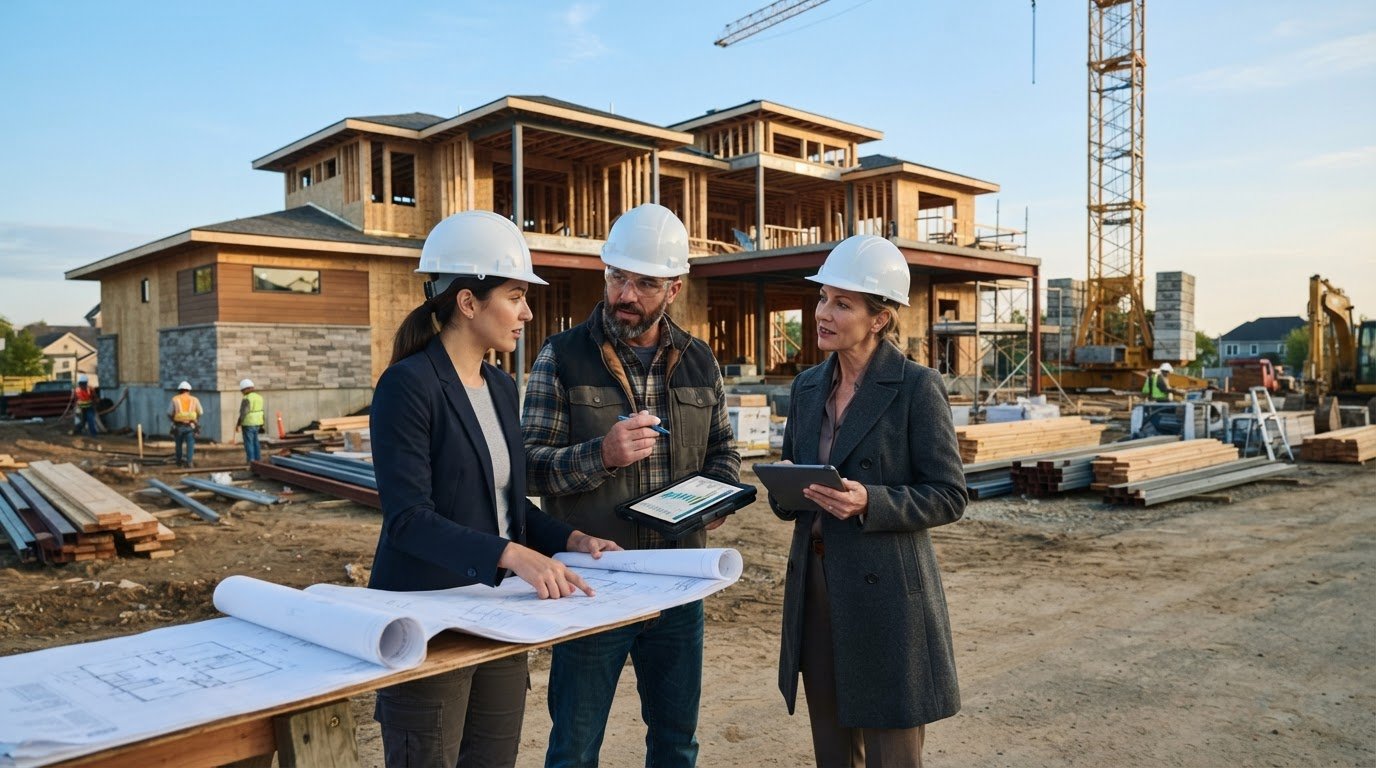
Explore new construction financing options for builders and investors. Compare loan structures, draw schedules, and tips to prepare your project package.
A ground-up project can lose momentum when funding does not match the work on site. New construction financing is more than securing capital upfront: the loan structure and release schedule need to align with the plans, budget, and construction progress.
If you are weighing a construction loan against a bridge, fix-and-flip, or rental loan, start with what the property needs next and how you plan to use it. A clear project package can help a lending partner assess the plan. KC Home Offers LLC connects real estate investors with lending partners for business-purpose financing. Loan approval is subject to the lending partner.
This guide explains how construction financing differs from other investor loan options, what project details to prepare, and how milestone-based draws may make funds available as work advances. Use it to compare financing routes and organize the information for a focused project discussion.
Key Takeaways
- Match the financing route to the project: ground-up construction, acquisition, renovation, or a completed rental property each has different funding needs.
- Plan around clear project stages. Draw timing and inspection conditions depend on the lending partner’s agreement.
- Prepare a concise project package covering the site, scope, budget, schedule, and intended exit or operating plan.
- New construction financing can support a ground-up build as part of an investor’s broader capital plan.
- KC Home Offers connects investors with lending partners for business-purpose construction loans. Approval is subject to the lending partner.
Table of Contents
- What New Construction Financing Covers in a Ground-Up Project
- How Construction Loan Funding and Draws Can Follow Project Milestones
- Which Financing Route Fits: Construction, Bridge, Fix-and-Flip, or DSCR?
- How to Prepare a Ground-Up Project for a Financing Discussion
- Explore New Construction Financing Through KC Home Offers
What New Construction Financing Covers in a Ground-Up Project
New construction financing provides capital for developing a property from the ground up, rather than purchasing a completed home. For an investor, it can support a business-purpose project to build a property for sale or rental. The site’s status, planned scope, funding structure, and lending-partner requirements shape the financing discussion.
This differs from financing a completed property. A conventional owner-occupied mortgage is generally structured around buying or refinancing a home for personal use. Ground-up construction funding is tied to a proposed build, so the plans, expected costs, and work ahead are central to reviewing the project.
What counts as a ground-up construction project?
A ground-up project starts with vacant land or a cleared site and creates a new property. It may include site preparation, building the foundation and structure, and completing interior and exterior work. Renovating an existing structure is different: the building is already there, and the project improves or reconfigures it. That distinction can help identify whether to discuss construction financing or a renovation-focused option.
Site readiness and scope provide a practical starting point. Be ready to describe the property’s current condition and what must happen before and during construction. A cleared parcel with a defined build plan, for example, presents different project details from land that still needs substantial preparation. Plans, budget assumptions, and the intended use of the finished property help explain those differences.
How construction financing differs from a standard mortgage
A standard purchase mortgage finances the acquisition of a completed property. Construction financing is organized around creating an asset that is not yet finished. Depending on the lending partner’s agreement, funds may be released in stages as work progresses. The draw schedule, required documentation, and any inspection conditions are set by that agreement, so do not assume every project follows the same process.
This structure makes project planning part of the financing conversation. The build sequence, anticipated expenses, and schedule need to fit together in a clear account of how the project will move from site to completion. For a broader introduction to project-based funding, see Project finance. A real estate construction loan has its own terms and should not be assumed to follow every structure described in general project-finance discussions.
KC Home Offers connects real estate investors with lending partners for business-purpose loans, including new construction financing. KC Home Offers is not a direct lender, and any loan is subject to the lending partner’s approval. The project’s intended use and build plan help frame the discussion, while the lending partner determines the requirements and available structure for the specific project.
How Construction Loan Funding and Draws Can Follow Project Milestones
A construction loan draw schedule connects funding requests to project progress. Rather than assuming all capital will be available at once, plan for how funding needs may change as work advances. For a ground-up build, this connection can help coordinate cash flow, contractors, and documentation. The actual schedule and release conditions depend on the lending partner’s agreement.
What is a construction loan draw schedule?
A draw schedule outlines how construction funds may be requested during a build. It can identify project milestones, the work associated with each stage, and the documentation supporting a request. A milestone might cover a defined portion of construction, but there is no universal sequence, number of draws, or funding percentage for every project.
Treat the schedule as a coordination tool, not a promise of automatic access to funds. Before work begins, compare the project scope and expected expenses with the proposed funding structure. Keep records that show what work is complete and which costs relate to each request. The AGC Guide to Construction Financing offers additional perspective on construction financing from the contractor’s side.
What happens between a draw request and funding?
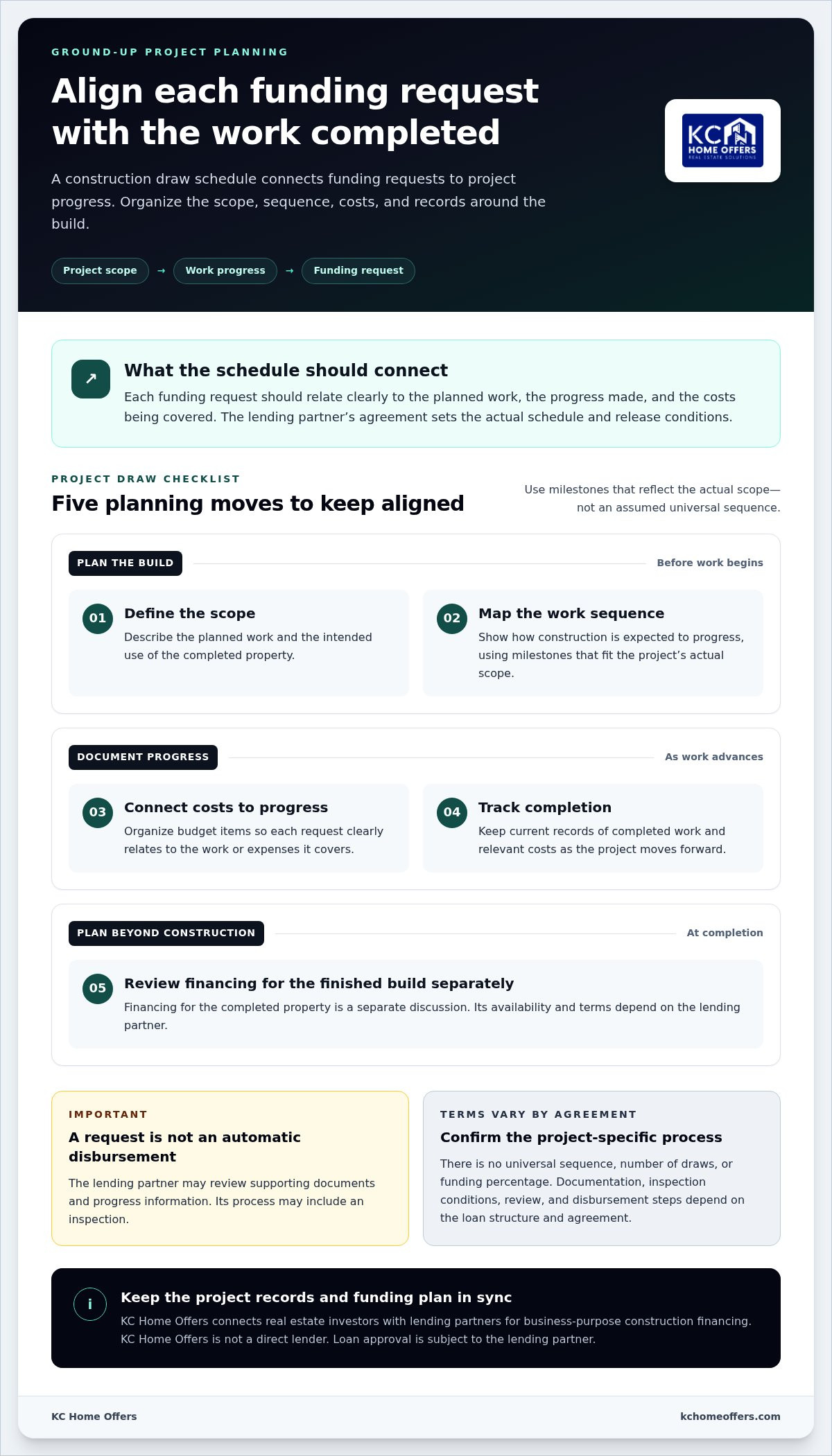
A draw request is a request for funds, not an automatic disbursement. The lending partner may review supporting documents and progress information, and its process may include an inspection. Review, approval, and disbursement steps vary by loan structure and agreement. Plan around the specific process in the agreement rather than assuming a standard turnaround or inspection method.
This planning sequence can help keep project records and funding requests aligned:
- Define the scope. Describe the planned work and the intended use of the completed property.
- Map the work sequence. Show how construction is expected to progress, using milestones that reflect the actual scope.
- Connect costs to progress. Organize budget items so it is clear which work or expenses each funding request covers.
- Track completion. Keep current records of completed work and relevant costs as the project advances.
- Review the completed build. Treat financing for the finished property as a separate discussion. Its availability and terms depend on the lending partner.
Clear records make it easier to explain why funds are being requested and how the request relates to completed work. They can also help you identify a mismatch between the build sequence, budget, and planned funding before it causes avoidable friction. KC Home Offers connects investors with lending partners for business-purpose construction loans, subject to the lending partner’s approval. To discuss how your project scope and milestones fit a financing conversation, discuss a construction financing project.
Which Financing Route Fits: Construction, Bridge, Fix-and-Flip, or DSCR?
The property’s current phase is a useful starting point for comparing investor loan types. Choose a financing conversation based on what the property needs next, not on a blanket claim that one loan is best. A vacant site, an existing property that needs work, and a completed rental each have different funding needs.
Construction financing
Project stage: Ground-up development.
Intended use: Build a property to sell or hold.
Asset status: The finished property does not yet exist. New construction financing addresses the build itself, with the structure and funding subject to the lending partner’s terms.
Bridge financing
Project stage: A short-term transition or funding gap, often connected to an acquisition.
Intended use: Support a temporary stage in an investment plan.
Asset status: Underwriting is based on the property’s current value rather than a construction or renovation draw schedule. Terms depend on the lending partner.
Fix-and-flip financing
Project stage: Renovation of an existing property.
Intended use: Improve a property for resale.
Asset status: The building already exists, and renovation funding may be released in draws as work is completed. This is distinct from ground-up construction funding.
DSCR financing
Project stage: Rental-property financing.
Intended use: Hold a property as a rental.
Asset status: The property is considered in relation to its rental income and ability to cover debt payments. This is not financing for the building work itself.
Construction financing versus fix-and-flip financing
The key difference is the starting asset. A ground-up project creates a new building on a site; a fix-and-flip project improves an existing one. Building a new rental on vacant land points to a construction financing discussion, while updating an acquired house for resale points to renovation funding. The scope and schedule also differ: a defined build plan is not the same as a renovation plan for an existing structure. KC Home Offers connects investors with lending partners for both business-purpose loan categories, subject to partner approval.
When bridge or DSCR financing may enter the plan
Bridge financing may suit a temporary transition between stages, such as addressing an acquisition need before a longer-term plan is in place. It is not automatically a construction loan or a substitute for renovation funding. Terms vary by lending partner. Once a property is operating as a rental, DSCR financing may be relevant because the focus is rental cash flow and debt coverage, not construction milestones.
Before comparing routes, map the property’s status, immediate funding need, and intended next step. This helps keep the financing discussion focused on the work ahead.
How to Prepare a Ground-Up Project for a Financing Discussion
A clear project snapshot links the property, proposed build, funding needs, and intended outcome. Before discussing new construction financing, organize the information so a reviewer can understand what exists today, what you plan to build, and how you expect to use the completed property. This preparation supports a focused conversation, but it does not guarantee approval or replace the lending partner’s review.
Build a clear project and budget snapshot
Start with the site. Summarize its current status, any preparation it may need, and whether you control it or are still pursuing it. Then describe the intended use, such as building for resale or holding the completed property as a rental. Add a concise scope of work and a realistic timeline, including major stages and dependencies that could affect the schedule.
Organize the budget into understandable categories. Hard costs are expenses directly tied to physical construction, such as labor and building materials. Soft costs are project expenses not directly tied to physical work, such as design or other professional services. Use estimates that reflect the current plan, and label assumptions clearly so preliminary figures are not mistaken for final costs.
Include a contingency approach. Site conditions, pricing, or scheduling may change as a project develops. Note the assumptions behind estimates and identify where the plan has flexibility, rather than relying on an arbitrary reserve amount. Make sure the schedule accounts for dependencies, such as completing one phase before the next can begin.
Prepare the documents that support project review
Useful materials may include site information, architectural plans, a detailed budget, a construction schedule, and general contractor details. These documents add context to the scope and show how the project is expected to progress. Keep versions current and make sure the budget and timeline describe the same plan. If a document is still in development, label its status so preliminary information is not mistaken for a final version.
The lending partner determines which documents are required and how it evaluates eligibility. Requirements may vary with the project and loan structure, so use a preparation list to organize the discussion, not as a universal approval checklist.
- Site: Current status and relevant property information.
- Scope: Plans or a clear description of the proposed build.
- Budget: Cost categories, estimates, and key assumptions.
- Schedule: Anticipated phases and timing considerations.
- Plan after completion: Whether you intend to sell, rent, or otherwise operate the property.
A well-organized package makes it easier to discuss how the scope, budget, and timeline fit together. KC Home Offers connects real estate investors with lending partners for business-purpose construction loans, with approval subject to the lending partner. Discuss your construction financing project with the project basics organized.
Explore New Construction Financing Through KC Home Offers
A productive financing conversation starts with a clear picture of the project, not a stack of unexplained estimates. KC Home Offers connects real estate investors with lending partners for business-purpose construction loans. An initial discussion focuses on the build and its current stage, helping frame the project for consideration through a lending partner. KC Home Offers is not a direct lender.
What to expect when discussing a construction project
Be ready to summarize what you plan to build and where the project stands. Is the site under consideration, secured, or ready for development? What does the proposed scope include? What budget and timeline are you working from? Is the finished property intended for sale or rental operation? A concise overview keeps the discussion focused on the project’s financing needs.
Explain how the site, scope, budget, and schedule relate to one another. If an estimate is preliminary or a plan is still being developed, say so. Clear assumptions distinguish established details from working estimates and help identify information that may be needed for the next stage of review.
The lending partner handles underwriting and determines eligibility, loan terms, rates, and approval. Those decisions depend on its review of the specific project. Starting a conversation does not guarantee loan approval, a particular rate or term, or a funding timeline.
Choose the next step for your project
Before discussing financing, gather the core details in one place. A short project brief can cover:
- Project type: What you intend to build and how you plan to use the finished property.
- Site status: Whether the land is being evaluated, secured, or prepared for construction.
- Scope and budget: The proposed work, estimated costs, and assumptions behind those estimates.
- Timeline: The anticipated sequence of major project phases and any known dependencies.
This snapshot does not need to answer every underwriting question. It gives the conversation a useful starting point and helps identify where the plan may need more detail. As the project develops, keep the scope, costs, and schedule aligned so changes are easy to explain.
Use the information to discuss whether new construction financing may fit the project’s current phase and intended outcome. The financing structure and next steps remain subject to the lending partner’s review. Revisit how the project scope and funding needs connect as you refine the plan.
When you are ready to discuss your project type, site status, scope, budget, and timeline, start a construction financing conversation with KC Home Offers.
Put Your Build Plan in Motion
A ground-up investment is easier to evaluate when the financing approach fits the property’s intended role after construction. Decide what you want the completed asset to do, then use that objective to guide the financing discussion. A clear investment plan gives the funding conversation context beyond the construction itself.
KC Home Offers connects real estate investors with lending partners for business-purpose construction financing. This is one capital option to consider as you shape a build strategy, not a promise of funding. The lending partner reviews the project and determines whether to approve a loan and what rates, terms, or funding structure may apply.
Bring the project’s current stage and intended outcome into the conversation. Then focus on whether the proposed financing path aligns with the plan and what steps may follow. Discuss your ground-up construction financing project with KC Home Offers.
Frequently Asked Questions
Can investors finance land and construction together?
It may be possible, but whether one loan can cover both land acquisition and construction depends on the lending partner’s program and project review. Distinguish land you already own from land you still plan to purchase, since these are different starting points for the financing discussion. Include the site status, proposed use, and build scope to show how the pieces fit together.
How are construction loan funds disbursed?
Construction funds may be released through draws tied to project progress rather than delivered as one lump sum. The lending partner’s agreement determines the draw process, including what information or progress review may be required. For practical tracking, match each request to the relevant work and keep invoices, records, and current project updates organized. A draw request does not guarantee that funds will be released.
What happens if a construction project runs over schedule?
If work falls behind, update the project timeline and budget assumptions, then review how the change affects the financing plan. The loan agreement governs deadlines, extension options, and other consequences. These can vary by lending partner and loan structure. Record what caused the delay and the revised path to completion. Do not assume an extension or additional funding is automatic.
Can a construction loan be used for an owner-occupied home?
KC Home Offers connects investors with lending partners for business-purpose construction loans intended for investment projects rather than a standard owner-occupied home purchase. The planned use of the finished property matters. If you expect to live in the home, that changes the project’s purpose and financing discussion. Loan options and eligibility depend on the lending partner’s review and applicable terms.
Do I need approved plans before discussing construction financing?
You can organize a project discussion before every plan is final. A preliminary scope, site information, early budget, and estimated timeline can help explain the opportunity and show what remains undecided. The lending partner determines which plans and other documents are required for review and approval. Label drafts clearly, and update them as design decisions, estimates, or project assumptions change.
How is interest handled during construction?
Interest calculation and payment timing depend on the loan agreement, so do not assume one approach applies to every construction project. The agreement should explain how interest is calculated, when payments are due, and whether interest treatment changes during the project. Include these payment obligations in cash-flow planning alongside construction expenses. The lending partner determines the applicable terms as part of its review and approval.
Frequently asked
What counts as a ground-up construction project?
A ground-up project starts with vacant land or a cleared site and creates a new property. It may include site preparation, building the foundation and structure, and completing interior and exterior work. Renovating an existing structure is different: the building is already there, and the project improves or reconfigures it. That distinction can help identify whether to discuss construction financing or a renovation-focused option. Site readiness and scope provide a practical starting point. Be ready to describe the property’s current condition and what must happen before and during construction. A cleared parcel with a defined build plan, for example, presents different project details from land that still needs substantial preparation. Plans, budget assumptions, and the intended use of the finished property help explain those differences.
What is a construction loan draw schedule?
A draw schedule outlines how construction funds may be requested during a build. It can identify project milestones, the work associated with each stage, and the documentation supporting a request. A milestone might cover a defined portion of construction, but there is no universal sequence, number of draws, or funding percentage for every project. Treat the schedule as a coordination tool, not a promise of automatic access to funds. Before work begins, compare the project scope and expected expenses with the proposed funding structure. Keep records that show what work is complete and which costs relate to each request. The AGC Guide to Construction Financing offers additional perspective on construction financing from the contractor’s side.
What happens between a draw request and funding?
A draw request is a request for funds, not an automatic disbursement. The lending partner may review supporting documents and progress information, and its process may include an inspection. Review, approval, and disbursement steps vary by loan structure and agreement. Plan around the specific process in the agreement rather than assuming a standard turnaround or inspection method. This planning sequence can help keep project records and funding requests aligned: Clear records make it easier to explain why funds are being requested and how the request relates to completed work. They can also help you identify a mismatch between the build sequence, budget, and planned funding before it causes avoidable friction. KC Home Offers connects investors with lending partners for business-purpose construction loans, subject to the lending partner’s approval. To discuss how your project scope and milestones fit a financing conversation, discuss a construction financing project. The property’s current phase is a useful starting point for comparing investor loan types. Choose a financing conversation based on what the property needs next, not on a blanket claim that one loan is best. A vacant site, an existing property that needs work, and a completed rental each have different funding needs. Construction financingProject stage: Ground-up development.Intended use: Build a property to sell or hold.Asset status: The finished property does not yet exist. New construction financing addresses the build itself, with the structure and funding subject to the lending partner’s terms. Bridge financingProject stage: A short-term transition or funding gap, often connected to an acquisition.Intended use: Support a temporary stage in an investment plan.Asset status: Underwriting is based on the property’s current value rather than a construction or renovation draw schedule. Terms depend on the lending partner. Fix-and-flip financingProject stage: Renovation of an existing property.Intended use: Improve a property for resale.Asset status: The building already exists, and renovation funding may be released in draws as work is completed. This is distinct from ground-up construction funding. DSCR financingProject stage: Rental-property financing.Intended use: Hold a property as a rental.Asset status: The property is considered in relation to its rental income and ability to cover debt payments. This is not financing for the building work itself.
Can investors finance land and construction together?
It may be possible, but whether one loan can cover both land acquisition and construction depends on the lending partner’s program and project review. Distinguish land you already own from land you still plan to purchase, since these are different starting points for the financing discussion. Include the site status, proposed use, and build scope to show how the pieces fit together.
How are construction loan funds disbursed?
Construction funds may be released through draws tied to project progress rather than delivered as one lump sum. The lending partner’s agreement determines the draw process, including what information or progress review may be required. For practical tracking, match each request to the relevant work and keep invoices, records, and current project updates organized. A draw request does not guarantee that funds will be released.
What happens if a construction project runs over schedule?
If work falls behind, update the project timeline and budget assumptions, then review how the change affects the financing plan. The loan agreement governs deadlines, extension options, and other consequences. These can vary by lending partner and loan structure. Record what caused the delay and the revised path to completion. Do not assume an extension or additional funding is automatic.
Can a construction loan be used for an owner-occupied home?
KC Home Offers connects investors with lending partners for business-purpose construction loans intended for investment projects rather than a standard owner-occupied home purchase. The planned use of the finished property matters. If you expect to live in the home, that changes the project’s purpose and financing discussion. Loan options and eligibility depend on the lending partner’s review and applicable terms.
Do I need approved plans before discussing construction financing?
You can organize a project discussion before every plan is final. A preliminary scope, site information, early budget, and estimated timeline can help explain the opportunity and show what remains undecided. The lending partner determines which plans and other documents are required for review and approval. Label drafts clearly, and update them as design decisions, estimates, or project assumptions change.
How is interest handled during construction?
Interest calculation and payment timing depend on the loan agreement, so do not assume one approach applies to every construction project. The agreement should explain how interest is calculated, when payments are due, and whether interest treatment changes during the project. Include these payment obligations in cash-flow planning alongside construction expenses. The lending partner determines the applicable terms as part of its review and approval.
Need financing on a deal like this?
DSCR, fix & flip and new construction loans, underwritten on the deal rather than your tax returns. Soft credit pull only.
Apply in 5 minutes