Guides › Private lending
Selling a House with Foundation Problems: 2026 Guide

Wondering how to sell a house with foundation problems? Learn smart repair options, disclosure rules, and fast cash sale strategies in our complete 2026 guide.
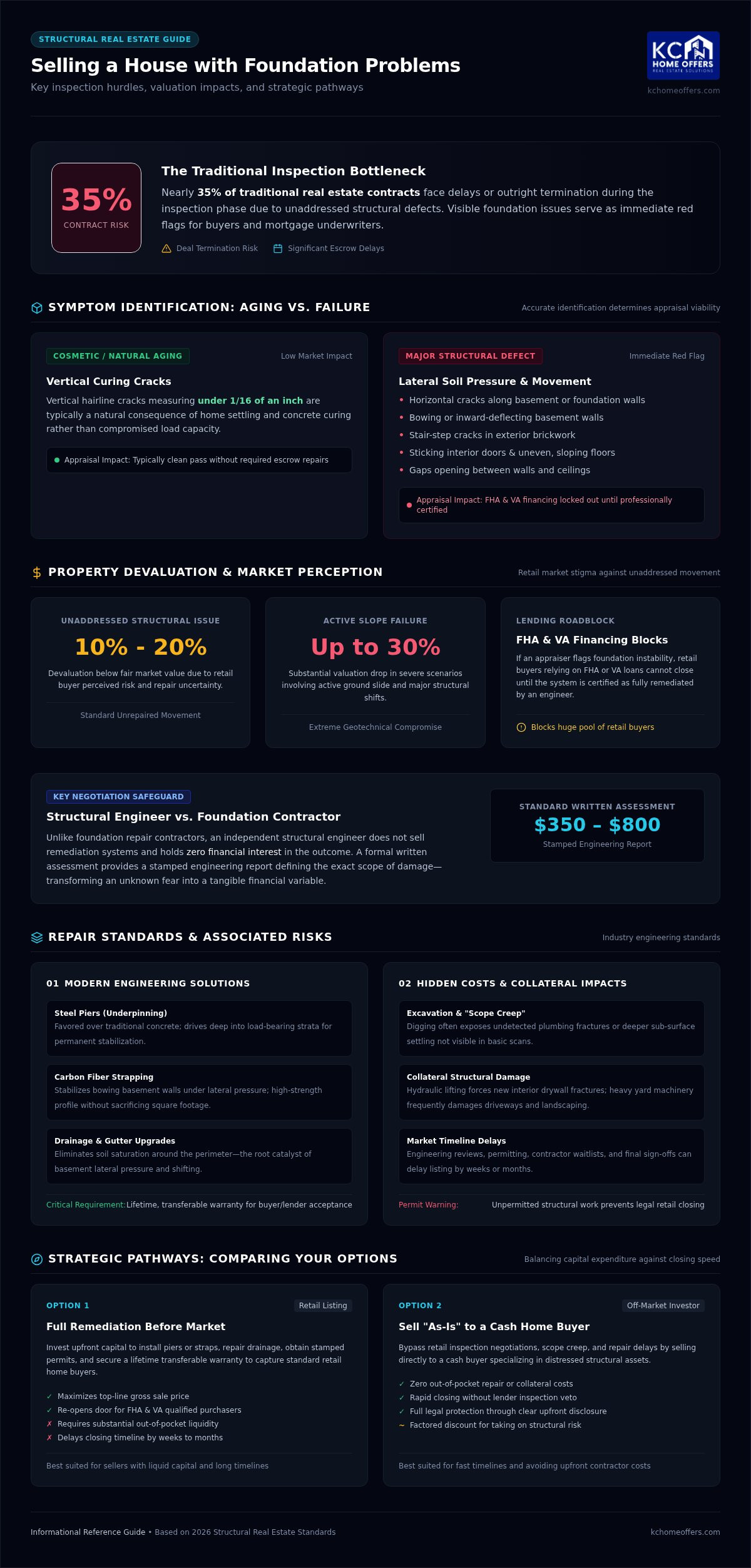
Did you know that nearly 35% of traditional real estate contracts face delays or outright termination during the inspection phase due to unaddressed structural defects? If you are wondering how to sell a house with foundation problems, you're likely feeling the weight of massive potential repair bills and the anxiety of legal disclosure requirements. It's frustrating to watch qualified buyers walk away the moment an inspector identifies a stair-step crack or a bowing basement wall, but you aren't stuck.
This 2026 guide provides the roadmap you need to navigate these complex structural issues with confidence. We'll explore the most effective strategies for your property, from the logistics of professional repairs to securing a fast cash exit. You'll gain a clear understanding of repair costs versus your final sale price, ensuring a hassle-free closing and full legal protection through proper disclosure. Whether you choose to invest in stabilization or sell the property as-is, you can move forward with a transparent plan that protects your financial health and your timeline. We're here to help you turn a distressed asset into a successful closing.
Key Takeaways
- Identify the critical differences between minor cosmetic cracks and major structural failures that impact your property's appraisal.
- Evaluate the benefits of professional remediation and transferable warranties when preparing a distressed home for the retail market.
- Discover how to sell a house with foundation problems by connecting with cash home buyers who specialize in distressed assets.
- Learn why FHA and VA financing hurdles often make traditional sales impossible for homes with significant structural damage.
- Balance your potential repair costs against your desired closing speed to choose the most profitable path forward for your situation.
Table of Contents
- Identifying Foundation Issues and Their Impact on Home Value
- Option 1: Professional Repairs Before Listing
- Option 2: Selling "As-Is" to a Cash Home Buyer
- Disclosure Laws and Financing Hurdles
- Choosing Your Path: Repair vs. Fast Exit
Identifying Foundation Issues and Their Impact on Home Value
Spotting the early warning signs of a failing foundation is the first step in understanding how to sell a house with foundation problems. While some issues are merely cosmetic, others indicate serious structural instability. Keep a close eye on horizontal cracks in basement walls, stair-step cracks in exterior brickwork, and interior doors that suddenly stick or fail to latch. If you notice floors that feel uneven or gaps appearing between the wall and the ceiling, you're likely dealing with more than just normal house settling.
It's vital to distinguish between minor curing cracks and true structural failure. Vertical hairline cracks under 1/16 of an inch are often part of a home's natural aging process. However, horizontal cracks or bowing walls suggest lateral soil pressure that requires immediate intervention. When a traditional appraiser visits, these visible defects act as immediate red flags. If the foundation is flagged as unstable, most retail buyers using FHA or VA financing will be unable to secure their loan until the issues are certified as repaired by a professional.
The Structural Engineer vs. Foundation Contractor
Before you call a repair company, hire an independent structural engineer. Unlike a foundation contractor, an engineer doesn't have a financial interest in selling you a specific repair system. They provide an unbiased assessment of the home's integrity. A formal written assessment typically ranges from $350 to $800, providing a stamped engineering report that outlines the exact scope of damage. This document is your most powerful negotiation tool. It proves to skeptical buyers that you aren't guessing about the property's condition, which can prevent deals from falling through during the inspection phase.
Market Perception and Property Devaluation
Structural issues carry a heavy stigma in the retail market. Even when a seller is transparent, many buyers will walk away simply because they don't want the perceived risk. Data shows that unaddressed foundation problems can devalue a property by 10% to 20% below fair market value. In severe cases involving active slope failure, that hit can reach 30%. While this sounds discouraging, transparency is your best defense. Disclosing the issues upfront and providing an engineer's report builds trust. It shifts the conversation from a scary unknown to a manageable financial variable, allowing you to find the right buyer at a realistic price point.
Option 1: Professional Repairs Before Listing
If you have the capital and the time, repairing structural issues before hitting the market can maximize your final sale price. Retail buyers usually avoid properties with active movement, especially when seeking move-in-ready homes. Choosing to fix the issues allows you to market the home as fully stabilized, which is a significant advantage when considering how to sell a house with foundation problems to traditional families. Success in this path depends on your ability to provide a clean bill of health from both contractors and engineers.
Modern Foundation Repair Technologies
Current 2026 industry standards favor steel piers over traditional concrete because they reach deeper load-bearing strata, offering superior long-term stability. For basement walls that have begun to bow under lateral pressure, carbon fiber straps provide a low-profile, high-strength solution that doesn't eat up square footage. No repair is complete without addressing the root cause. Upgrading your drainage and gutter systems is essential to prevent soil saturation, which is the primary driver of foundation failure. These technologies, when combined with a professional installation, create a permanent fix that satisfies most mortgage underwriters.
The Hidden Costs of Fixing It Yourself
Homeowners often underestimate the total financial and time commitment required for structural remediation. Once a contractor begins excavation, "scope creep" is a common reality; you might discover plumbing leaks or additional settling that wasn't visible in the initial assessment. Beyond the foundation itself, you must budget for collateral damage. Lifting a house often causes new interior drywall cracks, and heavy machinery will likely destroy your landscaping or driveway. These repairs take time, often delaying your market entry by weeks or even months. If the projected ROI doesn't make sense for your budget, you can always sell your house fast to an investor who specializes in distressed assets.
The ultimate goal of pre-sale repairs is securing a lifetime, transferable warranty. Without this document, retail buyers and lenders will remain skeptical regardless of how much you spent on the project. Proper permits and final inspections are non-negotiable to ensure the work is legally recognized during the title transfer. By handling these details upfront, you remove the friction that typically causes deals to fall apart during the final stages of a sale.
Option 2: Selling "As-Is" to a Cash Home Buyer
Selling a property "as-is" is the most direct solution for homeowners who lack the time or liquid capital for major remediation. In this scenario, you aren't responsible for fixing horizontal cracks or stabilizing bowing walls. You simply walk away from the liability. For many, this is the most efficient answer for how to sell a house with foundation problems without the stress of managing a construction site. It's about optimizing your exit and moving on to your next chapter without the burden of a distressed asset.
How Investors Evaluate Foundation Risk
Professional investors view structural distress as an opportunity rather than a deal-breaker. They operate with specialized knowledge and scaled crews that can perform repairs at a lower cost than a typical homeowner. These buyers often utilize fix and flip funding to acquire and renovate distressed assets. Because they don't rely on traditional residential mortgages, they aren't subject to the strict FHA or VA property standards that frequently kill retail deals. They see the potential in the land and the structure, factoring the repair costs directly into their offer to ensure the deal remains profitable for everyone involved.
Comparing Net Proceeds: Retail vs. Cash Sale
It's a mistake to look only at the gross offer price. A retail sale requires you to pay 6% in agent commissions, 2% to 3% in closing costs, and potentially tens of thousands in structural repairs. You also have to cover holding costs like taxes, insurance, and utilities while the house sits on the market for months. A cash sale eliminates these drains on your equity. You get a transparent, direct offer with no hidden fees and a closing timeline that fits your schedule. The speed advantage is undeniable. You can close in as little as 7 to 21 days, providing immediate liquidity and absolute peace of mind. By removing the friction of inspections and appraisals, you secure a guaranteed result in a fraction of the time.
Disclosure Laws and Financing Hurdles
Mastering how to sell a house with foundation problems requires a deep understanding of your legal obligations. You can't simply hide structural defects behind a fresh coat of paint or a strategic furniture arrangement. In every U.S. jurisdiction, sellers are legally mandated to reveal known material defects that could affect the property's value or safety. Failing to provide a transparent disclosure statement opens you to post-closing litigation and claims of fraudulent concealment. Honesty isn't just a moral choice; it's your primary strategy for legal protection.
The biggest hurdle in a retail sale isn't just finding a buyer, it's getting their bank to approve the loan. Most retail buyers rely on FHA, VA, or USDA financing, all of which have strict Minimum Property Standards. Underwriters for these programs follow guidelines like the HUD Handbook 4000.1, which requires the property to be structurally sound. If an appraiser notes horizontal cracking, stair-step cracks, or significant settlement, the loan will be denied until a licensed engineer certifies that the issues have been fully remediated. This is the primary reason why retail deals for distressed assets often collapse during the final weeks of escrow.
Why Traditional Buyers Struggle to Close
Lenders prioritize the safety and soundness of their collateral above all else. When a foundation is compromised, the bank sees a liability instead of a secure asset. You might hear real estate agents suggest a "repair escrow," where funds are held back at closing to cover fixes. However, these rarely work for structural issues. Because foundation work often involves "scope creep," where contractors find more damage once they begin excavation, the final costs are too unpredictable for most banks to stomach. This uncertainty makes underwriters nervous, leading to immediate loan rejections. If you want to bypass these financing roadblocks and move forward without delay, you should work with direct home buyers who use their own capital.
Protecting Yourself from Future Liability
Being a "straight shooter" is your best defense against future headaches. An "as-is" clause in your contract is a powerful tool, but it only waives your obligation to pay for repairs; it doesn't grant you permission to withhold information. Draft a comprehensive disclosure statement that lists every known issue, including previous repairs and soil movement reports. If the damage is extensive, consult a real estate attorney to ensure your paperwork is airtight. Transparency builds the necessary trust to reach a secure closing, while concealment only leads to a courtroom. By providing all the facts upfront, you shift the risk to the buyer and protect your financial future.
Choosing Your Path: Repair vs. Fast Exit
Deciding between a full structural remediation and a direct sale is a high-stakes strategic choice. You need to weigh your available equity against the projected costs and the high probability of the construction delays we discussed earlier. If you're trying to figure out how to sell a house with foundation problems, you must be honest about your timeline. A professional repair job can sideline your property for months, whereas a direct exit provides immediate liquidity. Beyond the balance sheet, consider the emotional cost. Managing a major structural project involves constant oversight, contractor disputes, and the stress of living in a construction zone.
For many homeowners, the most pragmatic solution is to bypass the mess entirely. You can sell my house fast by working with specialized investors who possess the infrastructure to handle heavy lifting. This path eliminates the friction of traditional listings and allows you to reallocate your time toward more productive ventures. It's about optimizing your results while minimizing your risk exposure in a volatile market.
The Decision Matrix
Choosing the right path depends on three primary variables: equity, damage severity, and market momentum. Use this framework to guide your strategy:
- Repair and List: This is best if you have high equity, the damage is relatively minor (such as simple settling), and the local retail market is experiencing high demand.
- Sell As-Is: This is the superior choice if you have low equity, the damage requires extensive piering, or you have an urgent need to relocate.
- The Middle Ground: Secure a professional repair bid to understand the true cost, then use that data to negotiate a fair price with a cash buyer.
Taking the First Step Toward a Sale
The smartest move you can make is to establish a "floor" price for your property. Request a no-obligation cash offer before you commit to a single contractor or sign a listing agreement. This offer serves as your baseline, representing the guaranteed liquidity you can access without spending a dime on repairs. Once you have this number, compare it against a "fix and list" estimate that accounts for repair costs, agent commissions, and holding expenses. By looking at the net proceeds rather than the gross sale price, you'll have the clarity needed for a successful 2026 closing. Transparency and data are your best allies in navigating a complex structural sale.
Secure Your Property Exit Strategy Today
Foundation issues don't have to be a permanent roadblock to your financial goals. The key is choosing a strategy that aligns with your specific timeline and equity position. Whether you invest in professional stabilization to satisfy retail lenders or opt for a direct exit, transparency remains your best legal defense. Understanding how to sell a house with foundation problems effectively means removing the friction that traditionally causes deals to collapse during the inspection phase.
If you're ready to bypass the stress of contractors and construction delays, you can move forward immediately. We provide fast, transparent cash offers for properties in any condition, allowing you to skip the cleaning and expensive structural repairs. You can close on your timeline and walk away with absolute peace of mind. Don't let a distressed asset hold you back from your next investment or move. You have the power to turn a complex situation into a clean break.
Get a Fair Cash Offer for Your House As-Is—Foundation Problems and All
Frequently Asked Questions
Can you sell a house with a cracked foundation?
Yes, you can absolutely sell a property with a cracked foundation, though your choice of buyer will depend on the damage severity. While retail buyers often struggle with financing for structural issues, professional investors specialize in these distressed assets. Successfully learning how to sell a house with foundation problems involves choosing between a time-intensive repair process or a fast, cash-based exit that shifts the repair liability to the new owner.
How much does foundation repair devalue a home in 2026?
Unaddressed structural issues typically devalue a property by 10% to 20% below its fair market value. In cases of severe settlement or active slope failure, the price reduction can reach 30%. This stigma discount accounts for the risk a buyer takes on and the potential for cost overruns during remediation. Even after repairs are completed, some buyers may still demand a lower price unless you provide a stamped engineer's report and a transferable warranty.
Do I have to disclose foundation repairs if they were fixed years ago?
Yes, you must disclose previous foundation repairs even if they occurred decades ago. Most state laws require sellers to reveal any known material defects or past structural work that could impact the home's integrity. Providing documentation of the fix, such as permits and warranty paperwork, builds trust with potential buyers. Concealing this history puts you at significant risk for post-closing litigation and claims of fraudulent concealment, so transparency is always the safest legal strategy.
Is it better to fix a foundation or sell the house as-is?
The choice depends on your equity position and your required closing timeline. Fixing the foundation can maximize your retail sale price but requires significant liquid capital and months of construction management. Selling as-is to direct home buyers is often the superior path if you need a fast exit or lack the funds for repairs. This approach eliminates the friction of inspections and appraisals, providing a guaranteed result without the stress of a major construction project.
Will a bank finance a home with known foundation problems?
Traditional banks rarely finance properties with active structural movement or significant cracking. FHA, VA, and USDA loans have strict Minimum Property Standards that require a home to be structurally sound before funding. If an appraiser flags foundation defects, the loan is typically denied until repairs are certified by a licensed structural engineer. This is why many sellers choose to work with cash buyers who bypass the rigid requirements of residential mortgage underwriters.
How much does it typically cost to fix a foundation before selling?
National data shows that typical foundation repairs range from $2,224 to $8,134, though comprehensive structural remediation involving extensive piering often exceeds $20,000. These figures vary based on soil conditions and the specific repair technology used. Beyond the direct costs, you must also budget for collateral damage to landscaping, driveways, and interior drywall. Understanding these financial variables is a critical part of knowing how to sell a house with foundation problems successfully.
What happens if I don't disclose foundation issues to a buyer?
Failing to disclose structural issues can lead to severe legal consequences, including lawsuits for fraud and breach of contract. If a buyer discovers unrevealed damage after closing, they may seek damages for the cost of repairs or even attempt to rescind the sale entirely. Modern insurance reports and municipal permit records make it easy for buyers to uncover hidden history. Being a straight shooter is the only way to ensure a secure, permanent transfer of property.
How do cash home buyers calculate their offer for a house with structural issues?
Professional cash home buyers typically use a formula based on the After-Repair Value (ARV). They calculate a percentage of the potential market value, then subtract the estimated costs for structural stabilization and cosmetic renovations. This calculation accounts for the financial risk they assume and the speed of the transaction. Because they use private capital, they can close within 7 to 21 days, providing you with a transparent, no-fee exit regardless of the property's current condition.
Frequently asked
Can you sell a house with a cracked foundation?
Yes, you can absolutely sell a property with a cracked foundation, though your choice of buyer will depend on the damage severity. While retail buyers often struggle with financing for structural issues, professional investors specialize in these distressed assets. Successfully learning how to sell a house with foundation problems involves choosing between a time-intensive repair process or a fast, cash-based exit that shifts the repair liability to the new owner.
How much does foundation repair devalue a home in 2026?
Unaddressed structural issues typically devalue a property by 10% to 20% below its fair market value. In cases of severe settlement or active slope failure, the price reduction can reach 30%. This stigma discount accounts for the risk a buyer takes on and the potential for cost overruns during remediation. Even after repairs are completed, some buyers may still demand a lower price unless you provide a stamped engineer's report and a transferable warranty.
Do I have to disclose foundation repairs if they were fixed years ago?
Yes, you must disclose previous foundation repairs even if they occurred decades ago. Most state laws require sellers to reveal any known material defects or past structural work that could impact the home's integrity. Providing documentation of the fix, such as permits and warranty paperwork, builds trust with potential buyers. Concealing this history puts you at significant risk for post-closing litigation and claims of fraudulent concealment, so transparency is always the safest legal strategy.
Is it better to fix a foundation or sell the house as-is?
The choice depends on your equity position and your required closing timeline. Fixing the foundation can maximize your retail sale price but requires significant liquid capital and months of construction management. Selling as-is to direct home buyers is often the superior path if you need a fast exit or lack the funds for repairs. This approach eliminates the friction of inspections and appraisals, providing a guaranteed result without the stress of a major construction project.
Will a bank finance a home with known foundation problems?
Traditional banks rarely finance properties with active structural movement or significant cracking. FHA, VA, and USDA loans have strict Minimum Property Standards that require a home to be structurally sound before funding. If an appraiser flags foundation defects, the loan is typically denied until repairs are certified by a licensed structural engineer. This is why many sellers choose to work with cash buyers who bypass the rigid requirements of residential mortgage underwriters.
How much does it typically cost to fix a foundation before selling?
National data shows that typical foundation repairs range from $2,224 to $8,134, though comprehensive structural remediation involving extensive piering often exceeds $20,000. These figures vary based on soil conditions and the specific repair technology used. Beyond the direct costs, you must also budget for collateral damage to landscaping, driveways, and interior drywall. Understanding these financial variables is a critical part of knowing how to sell a house with foundation problems successfully.
What happens if I don't disclose foundation issues to a buyer?
Failing to disclose structural issues can lead to severe legal consequences, including lawsuits for fraud and breach of contract. If a buyer discovers unrevealed damage after closing, they may seek damages for the cost of repairs or even attempt to rescind the sale entirely. Modern insurance reports and municipal permit records make it easy for buyers to uncover hidden history. Being a straight shooter is the only way to ensure a secure, permanent transfer of property.
How do cash home buyers calculate their offer for a house with structural issues?
Professional cash home buyers typically use a formula based on the After-Repair Value (ARV). They calculate a percentage of the potential market value, then subtract the estimated costs for structural stabilization and cosmetic renovations. This calculation accounts for the financial risk they assume and the speed of the transaction. Because they use private capital, they can close within 7 to 21 days, providing you with a transparent, no-fee exit regardless of the property's current condition.
Need financing on a deal like this?
DSCR, fix & flip and new construction loans, underwritten on the deal rather than your tax returns. Soft credit pull only.
Apply in 5 minutes