Guides › Private lending
How to Sell Your House Without an Agent and Save Money

Want to sell my house without an agent and save money? Learn the essential steps, from pricing and paperwork to closing, to maximize your net proceeds today.
What if skipping an agent saves you a commission but leaves you with more work and risk than expected? If you’re asking, “Sell my house without an agent,” the answer is yes, you can manage the sale yourself. You’ll also take the lead on pricing, marketing, buyer conversations, negotiations, and paperwork. Whether you save money depends on the final numbers, not just the commission you avoid.
Selling by owner can give you more control, but it also means making careful decisions about your asking price, attracting qualified buyers, meeting disclosure requirements, and keeping the transaction on schedule. A missed contract requirement or deadline can complicate a sale, so know when to research carefully and when to seek professional help.
This guide walks you through the FSBO process, from preparing your home to closing. It highlights where the work and risks arise and how to compare likely net proceeds with other options. You’ll also see how a direct sale to a home buyer differs from listing your property, so you can weigh simplicity, control, and potential proceeds against your priorities.
Key Takeaways
- To sell your house without an agent, plan to handle more than marketing: pricing, buyer communication, negotiations, and transaction coordination all need your attention.
- Follow a clear sequence, from assessing your readiness and preparing the property to reviewing the contract and closing. Check local requirements along the way.
- Compare likely net proceeds, not just the commission you may avoid. Marketing, professional help, and other transaction expenses can affect the final amount.
- Use comparable sales, property condition, and buyer feedback to inform your price. Verify which disclosures and forms apply to your situation.
- Consider a direct sale if you prefer a different level of involvement, but compare the terms and trade-offs rather than assuming one route guarantees a better outcome.
Table of Contents
- Sell My House Without an Agent: What FSBO Means and What You Take On
- How to Sell Your House Without an Agent: A Step-by-Step Plan
- FSBO Pros and Cons: Compare Control, Workload, and Net Proceeds
- Price, Disclosures, and Paperwork: Reduce Avoidable FSBO Surprises
- When FSBO Is Not the Best Fit: Compare a Direct Home Sale
Sell My House Without an Agent: What FSBO Means and What You Take On
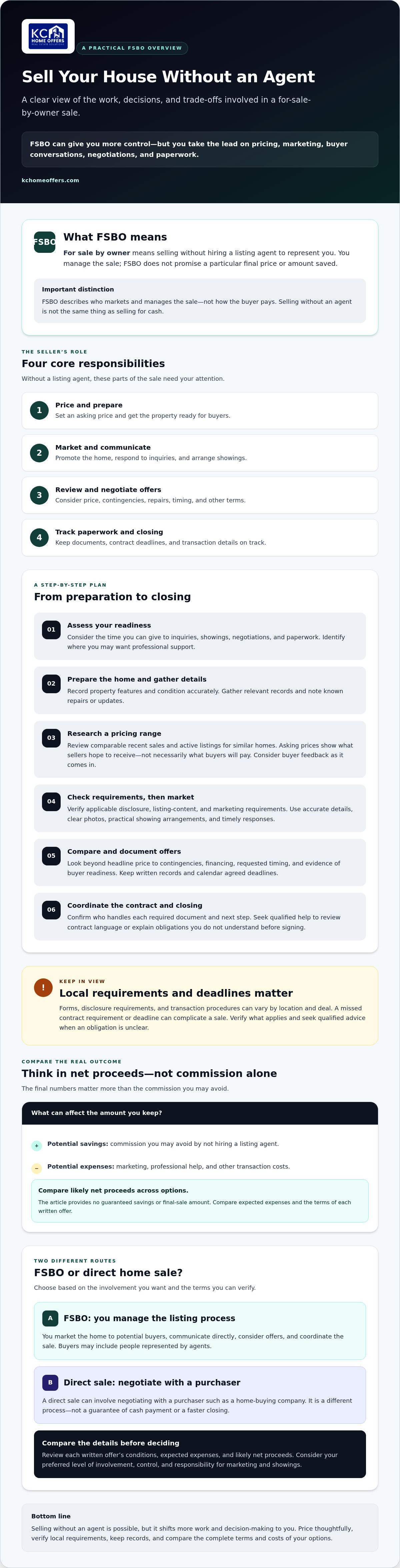
For sale by owner (FSBO) means selling a property without hiring a listing agent to represent you. The seller takes the lead in preparing and marketing the home, communicating with potential buyers, and managing the sale. FSBO describes the seller’s approach, not a promise about the final price or the amount saved. For a foundational overview, see For sale by owner (FSBO).
This approach can give you more control over decisions and direct communication with buyers. But skipping a listing agent doesn’t remove the need to price thoughtfully, review offers, meet applicable disclosure requirements, or track contract and closing steps. You may also choose to pay for specific professional help. Compare those potential expenses with your expected proceeds before deciding whether FSBO makes financial sense.
Which selling tasks become yours in a FSBO sale?
You’ll coordinate the core work of the sale, including:
- Setting an asking price and preparing the property for buyers.
- Marketing the home, responding to inquiries, and arranging showings.
- Reviewing offers and discussing price, contingencies, repairs, and other terms.
- Keeping paperwork, deadlines, and closing details on track.
Professional support doesn’t have to mean full-service agent representation. Depending on your needs and local requirements, you can seek qualified advice on specific matters, such as reviewing documents or understanding closing procedures. Confirm what applies to your transaction before relying on a form or verbal guidance.
Is selling without an agent the same as selling for cash?
No. FSBO describes who markets and manages the sale; it doesn’t specify how the buyer will pay. An owner can market a home to potential buyers, including buyers represented by agents, and consider different offers. A direct sale instead involves negotiating with a purchaser directly, such as a home-buying company. That’s a different process, not a guarantee of cash payment or a faster closing.
Choose based on the involvement you want and the terms you can verify. Compare each written offer’s conditions, expected expenses, and likely net proceeds. If you prefer less responsibility for marketing and showings, a direct buyer may be worth comparing with FSBO, but review the details before deciding.
How to Sell Your House Without an Agent: A Step-by-Step Plan
If you’re asking, “Sell my house without an agent,” start with a workable plan, not a listing. The steps below help you organize decisions and records from preparation through closing. Local forms, deadlines, and transaction procedures can vary, so verify what applies to your property and get qualified advice when an obligation is unclear.
- Assess your readiness. Decide how much time you can give to buyer inquiries, showings, negotiations, and paperwork. Identify where you may want professional support before a deadline is pressing.
- Prepare the home and gather details. Record the property’s features and condition accurately. List known repairs or updates, and gather relevant records so you can answer buyer questions consistently.
- Research a pricing range. Review comparable recent sales and active listings for homes with similar features and condition. Asking prices show what sellers hope to receive, not necessarily what buyers will pay. Adjust your view as you receive market feedback.
- Confirm rules, then market. Before advertising the property, check applicable requirements for disclosures, listing content, and marketing. Use clear photos and accurate details, set practical showing arrangements, and respond promptly to inquiries.
- Compare and document offers. Look beyond the headline price. Review contingencies, financing, requested timing, and available evidence of buyer readiness. Keep written copies of offers, counteroffers, and communications, and calendar agreed deadlines.
- Coordinate the contract and closing. Track required documents and next steps with the relevant transaction professionals. Procedures can differ by location and deal, so confirm who handles each item. Ask a qualified professional to review contract language or explain obligations you don’t understand before signing.
How should you prepare and market a home yourself?
Be precise and consistent. Confirm details such as room count and property features before using them in an advertisement, and choose photos that represent the home clearly. Decide how buyers will request a showing and who will respond if you’re unavailable. For broader Sell My House Fast options, you can also compare a direct sale with managing a listing yourself.
How do you manage offers through closing?
Create one organized record for buyer communication, offer versions, signed documents, and deadlines. Cornell Law School’s Legal Information Institute outlines FSBO paperwork responsibilities and related legal requirements for FSBO. Confirm local rules with authoritative sources, and seek professional review if a term or responsibility is unclear. Clear records make it easier to see what’s agreed and what still needs attention.
FSBO Pros and Cons: Compare Control, Workload, and Net Proceeds
Selling without an agent can increase your control, but it also shifts more work to you. The key question isn’t just which fee you might avoid. It’s what you’re likely to keep after transaction expenses, concessions, and any professional support you choose to use.
The National Association of REALTORS® 2025 Profile of Home Buyers and Sellers reported that FSBO sales accounted for 5% of home sales in 2025. That figure offers context, not a verdict on whether FSBO is right for your property. Results depend on the home, buyer demand, preparation, and how effectively you manage the sale.
| Factor | Potential FSBO advantage | Trade-off to consider |
|---|---|---|
| Control | You set the schedule, communicate directly, and make decisions about offers. | You’re responsible for staying responsive and weighing each decision. |
| Workload | You choose how to prepare and market the property. | Pricing, inquiries, showings, negotiations, and coordination take time. |
| Exposure | You can select how to reach prospective buyers. | You’ll need to assess whether your marketing is reaching qualified buyers. |
| Costs and net proceeds | You may avoid paying for some listing-agent services. | Other expenses, buyer concessions, or targeted professional help may affect your net. |
What can an owner gain, and what work comes with it?
Direct control can suit sellers who want to handle buyer conversations themselves and can make time for showings and follow-up. But control comes with responsibility: you’ll need to evaluate offers and keep the transaction moving. Avoid assuming an agent-free sale will automatically produce a higher price or larger savings. Estimate your net proceeds under each route using the same expected sale price, then account for relevant costs and concessions.
When might professional help be worth considering?
Complex property circumstances, limited availability, or discomfort negotiating may make support valuable. You don’t necessarily have to choose between doing everything alone and hiring full-service representation. Identify the specific task that needs attention, then seek qualified help where appropriate. Sellers comparing direct purchasers can also review the Cash Home Buyers: 2026 Comparison Guide to understand what to assess across buyer types. FSBO leaves you in charge, but it doesn’t require you to handle every legal or closing detail without advice.
Price, Disclosures, and Paperwork: Reduce Avoidable FSBO Surprises
A sound FSBO sale depends on more than choosing an asking price. You also need a clear basis for that price, accurate property information, and a reliable way to track documents and deadlines. If you’re deciding whether to sell your house without an agent, treat these as connected tasks: pricing influences buyer interest, while complete paperwork helps keep an accepted offer on track.
How can you set and reassess an asking price?
Use recent completed sales of comparable homes as evidence of what buyers have paid. Consider differences in condition, features, and location, then compare those sales with similar active listings. An asking price is a seller’s target, not proof of market value. An active listing shows competition, not a completed transaction.
After marketing begins, assess the response rather than relying on guesswork. If inquiries or showings are limited, review the price alongside the property’s presentation and competing listings. If buyers consistently raise the same concern, factor that feedback into your next decision. When the available comparisons don’t provide a clear picture, seek independent valuation guidance before making a major adjustment.
What should you verify before signing or accepting an offer?
Disclosure duties and required forms vary by state and by the circumstances of the property and sale. Check authoritative state-specific sources, and ask a qualified legal or transaction professional when you’re unsure what applies. Don’t assume a form used in another sale is sufficient for yours.
Before accepting an offer or signing a contract, confirm that you understand:
- Contingencies: What conditions must be met and how they affect the agreement.
- Dates and deadlines: The timing for signatures, required documents, and agreed next steps.
- Included items: Which fixtures, appliances, or other items are part of the sale.
- Responsibilities: What you and the buyer have agreed to do, and when.
Keep a central file of disclosures, signed documents, amendments, and written communications. Track deadlines on a calendar, and confirm that required signatures are complete. If contract language is unclear, get qualified help before agreeing to it. For another route to compare, explore a direct home sale and review the terms alongside your FSBO estimate.
When FSBO Is Not the Best Fit: Compare a Direct Home Sale
FSBO gives you control, but that control takes time and hands you the work of marketing, answering inquiries, arranging access, and coordinating the sale. If your schedule is tight, the property needs work, or you’re unsure about managing negotiations and paperwork, compare other routes before committing. A direct sale may involve fewer seller-managed marketing steps, but it isn’t automatically faster, simpler, or more profitable. The right choice depends on your priorities and the written terms.
How does a direct buyer route differ from FSBO?
With FSBO, you market the home to potential buyers and manage incoming interest. With a direct sale, you discuss a purchase with a specific buyer rather than marketing broadly. KC Home Offers LLC buys residential properties directly, but offer terms, property eligibility, and timing must be confirmed for each situation. For more on the investor route, review information about selling your house to an investor and compare it with the FSBO process.
Before choosing, weigh what matters most to you:
- Control: Do you want to manage marketing and showings yourself, or discuss a sale directly with a purchaser?
- Time and involvement: Can you respond to inquiries, arrange access, and track next steps?
- Property condition: How will its current condition affect preparation, buyer interest, and the terms offered?
- Certainty: What conditions could change or prevent a transaction from proceeding?
- Net proceeds: What do you expect to retain after relevant expenses and concessions?
What should you ask before choosing a sale path?
Get clear answers about who handles communication, property access, paperwork coordination, and closing arrangements. Ask for written terms, including conditions, responsibilities, and any assumptions that could affect the agreement. Confirm how the proposed timing works for your needs, and have unclear contract language reviewed by a qualified professional. Compare the written offer with a realistic FSBO estimate, not just an asking price.
There’s no need to choose a route based on a promise of a better result. KC Home Offers LLC describes its approach as tailored and transparent. If a direct purchase is worth comparing for your circumstances, explore a direct home-sale option and review the specific terms before deciding.
Choose the Sale Path That Fits Your Priorities
Selling your home without an agent can give you more control, but it also makes you responsible for pricing, buyer communication, negotiations, and keeping the transaction organized. If you’re weighing whether to Sell my house without an agent, compare realistic net proceeds and the work involved, not just the listing-agent fee you might avoid.
Set your asking price using completed sales, property condition, and buyer feedback, and verify the disclosures, contract terms, and deadlines that apply to your sale. If the time or responsibility feels like too much, a direct sale is another route to evaluate. It’s a different process, not a guaranteed better outcome, so review written terms and expected proceeds carefully.
KC Home Offers directly acquires residential properties and describes its home-sale solutions as tailored and transparent. If you’d like to compare that option with managing an FSBO sale, explore a direct home-sale option and consider which approach best matches your needs. With clear information and a careful comparison, you can move forward with confidence.
Frequently Asked Questions
Can I sell my house without an agent?
Yes, you can manage the marketing and sale without hiring a listing agent. If you decide to sell your house without an agent, you’ll take responsibility for key decisions and coordination, including pricing, sharing accurate property information, responding to buyers, negotiating, and tracking paperwork. Requirements vary by state and situation. Check the rules that apply to your property, and ask a qualified professional for help if you’re unsure about a document or obligation.
Do I need a lawyer to sell my house without a real estate agent?
Not every home sale follows the same process, and whether an attorney is required or advisable depends on the property’s location and transaction details. A lawyer may help you understand contract language, disclosure questions, or unusual circumstances before you agree to terms. Check authoritative state-specific requirements rather than relying on a general online checklist. If an obligation or clause is unclear, get qualified legal advice for your specific sale.
How do I price my house if I sell it myself?
Start by comparing recent completed sales with current listings for similar properties. Account for differences in condition, features, and location. An asking price shows what a seller hopes to receive, while a completed sale offers evidence of what a buyer paid. If the available comparisons don’t provide a clear range, consider independent valuation guidance. Reassess using qualified buyer feedback and competing listings, not one inquiry or an unsupported estimate.
Do I save money by selling my house without an agent?
You may avoid paying for some listing-agent services, but that doesn’t guarantee higher net proceeds. Marketing, preparation, professional assistance, transaction expenses, or buyer concessions may affect what you keep, depending on the sale. Compare realistic estimates of proceeds and responsibilities for each route, and account for the time you’ll spend handling tasks yourself. The useful comparison is the likely amount left after relevant costs, not simply the fee you may avoid.
What paperwork do I need to sell my house without an agent?
Paperwork may include an offer or purchase agreement, property information, applicable seller disclosures, and closing documents. The exact forms depend on your state and transaction, so confirm requirements before marketing the property or accepting an offer. Keep organized copies of buyer communications, signed documents, and any changes to the agreement. If you don’t understand a clause or disclosure, ask a qualified professional what it means before signing or completing it.
Is selling directly to a home buyer the same as selling without an agent?
No. Selling without an agent describes how you manage and market the sale, while selling directly describes the route of negotiating with a specific purchaser. An owner can market a property independently to potential buyers or discuss a sale directly with a home buyer. Neither route automatically means a faster closing or a better financial result. Compare written terms, conditions, responsibilities, and expected net proceeds before choosing.
What happens if a buyer backs out of a FSBO sale?
The outcome depends on the signed agreement, its contingencies and deadlines, and applicable law. Read the contract carefully rather than assuming the buyer can withdraw without consequences or must complete the purchase. Keep communications in writing, preserve relevant documents, and seek qualified legal or transaction guidance if the buyer cancels or disputes an obligation. Before accepting an offer, make sure you understand its conditions and how changes or cancellation are addressed.
Frequently asked
Which selling tasks become yours in a FSBO sale?
You’ll coordinate the core work of the sale, including: Professional support doesn’t have to mean full-service agent representation. Depending on your needs and local requirements, you can seek qualified advice on specific matters, such as reviewing documents or understanding closing procedures. Confirm what applies to your transaction before relying on a form or verbal guidance.
Is selling without an agent the same as selling for cash?
No. FSBO describes who markets and manages the sale; it doesn’t specify how the buyer will pay. An owner can market a home to potential buyers, including buyers represented by agents, and consider different offers. A direct sale instead involves negotiating with a purchaser directly, such as a home-buying company. That’s a different process, not a guarantee of cash payment or a faster closing. Choose based on the involvement you want and the terms you can verify. Compare each written offer’s conditions, expected expenses, and likely net proceeds. If you prefer less responsibility for marketing and showings, a direct buyer may be worth comparing with FSBO, but review the details before deciding. If you’re asking, “Sell my house without an agent,” start with a workable plan, not a listing. The steps below help you organize decisions and records from preparation through closing. Local forms, deadlines, and transaction procedures can vary, so verify what applies to your property and get qualified advice when an obligation is unclear.
How should you prepare and market a home yourself?
Be precise and consistent. Confirm details such as room count and property features before using them in an advertisement, and choose photos that represent the home clearly. Decide how buyers will request a showing and who will respond if you’re unavailable. For broader Sell My House Fast options, you can also compare a direct sale with managing a listing yourself.
How do you manage offers through closing?
Create one organized record for buyer communication, offer versions, signed documents, and deadlines. Cornell Law School’s Legal Information Institute outlines FSBO paperwork responsibilities and related legal requirements for FSBO. Confirm local rules with authoritative sources, and seek professional review if a term or responsibility is unclear. Clear records make it easier to see what’s agreed and what still needs attention. Selling without an agent can increase your control, but it also shifts more work to you. The key question isn’t just which fee you might avoid. It’s what you’re likely to keep after transaction expenses, concessions, and any professional support you choose to use. The National Association of REALTORS® 2025 Profile of Home Buyers and Sellers reported that FSBO sales accounted for 5% of home sales in 2025. That figure offers context, not a verdict on whether FSBO is right for your property. Results depend on the home, buyer demand, preparation, and how effectively you manage the sale.
What can an owner gain, and what work comes with it?
Direct control can suit sellers who want to handle buyer conversations themselves and can make time for showings and follow-up. But control comes with responsibility: you’ll need to evaluate offers and keep the transaction moving. Avoid assuming an agent-free sale will automatically produce a higher price or larger savings. Estimate your net proceeds under each route using the same expected sale price, then account for relevant costs and concessions.
When might professional help be worth considering?
Complex property circumstances, limited availability, or discomfort negotiating may make support valuable. You don’t necessarily have to choose between doing everything alone and hiring full-service representation. Identify the specific task that needs attention, then seek qualified help where appropriate. Sellers comparing direct purchasers can also review the Cash Home Buyers: 2026 Comparison Guide to understand what to assess across buyer types. FSBO leaves you in charge, but it doesn’t require you to handle every legal or closing detail without advice. A sound FSBO sale depends on more than choosing an asking price. You also need a clear basis for that price, accurate property information, and a reliable way to track documents and deadlines. If you’re deciding whether to sell your house without an agent, treat these as connected tasks: pricing influences buyer interest, while complete paperwork helps keep an accepted offer on track.
How can you set and reassess an asking price?
Use recent completed sales of comparable homes as evidence of what buyers have paid. Consider differences in condition, features, and location, then compare those sales with similar active listings. An asking price is a seller’s target, not proof of market value. An active listing shows competition, not a completed transaction. After marketing begins, assess the response rather than relying on guesswork. If inquiries or showings are limited, review the price alongside the property’s presentation and competing listings. If buyers consistently raise the same concern, factor that feedback into your next decision. When the available comparisons don’t provide a clear picture, seek independent valuation guidance before making a major adjustment.
What should you verify before signing or accepting an offer?
Disclosure duties and required forms vary by state and by the circumstances of the property and sale. Check authoritative state-specific sources, and ask a qualified legal or transaction professional when you’re unsure what applies. Don’t assume a form used in another sale is sufficient for yours. Before accepting an offer or signing a contract, confirm that you understand: Keep a central file of disclosures, signed documents, amendments, and written communications. Track deadlines on a calendar, and confirm that required signatures are complete. If contract language is unclear, get qualified help before agreeing to it. For another route to compare, explore a direct home sale and review the terms alongside your FSBO estimate. FSBO gives you control, but that control takes time and hands you the work of marketing, answering inquiries, arranging access, and coordinating the sale. If your schedule is tight, the property needs work, or you’re unsure about managing negotiations and paperwork, compare other routes before committing. A direct sale may involve fewer seller-managed marketing steps, but it isn’t automatically faster, simpler, or more profitable. The right choice depends on your priorities and the written terms.
How does a direct buyer route differ from FSBO?
With FSBO, you market the home to potential buyers and manage incoming interest. With a direct sale, you discuss a purchase with a specific buyer rather than marketing broadly. KC Home Offers buys residential properties directly, but offer terms, property eligibility, and timing must be confirmed for each situation. For more on the investor route, review information about selling your house to an investor and compare it with the FSBO process. Before choosing, weigh what matters most to you:
What should you ask before choosing a sale path?
Get clear answers about who handles communication, property access, paperwork coordination, and closing arrangements. Ask for written terms, including conditions, responsibilities, and any assumptions that could affect the agreement. Confirm how the proposed timing works for your needs, and have unclear contract language reviewed by a qualified professional. Compare the written offer with a realistic FSBO estimate, not just an asking price. There’s no need to choose a route based on a promise of a better result. KC Home Offers describes its approach as tailored and transparent. If a direct purchase is worth comparing for your circumstances, explore a direct home-sale option and review the specific terms before deciding. Selling your home without an agent can give you more control, but it also makes you responsible for pricing, buyer communication, negotiations, and keeping the transaction organized. If you’re weighing whether to Sell my house without an agent, compare realistic net proceeds and the work involved, not just the listing-agent fee you might avoid. Set your asking price using completed sales, property condition, and buyer feedback, and verify the disclosures, contract terms, and deadlines that apply to your sale. If the time or responsibility feels like too much, a direct sale is another route to evaluate. It’s a different process, not a guaranteed better outcome, so review written terms and expected proceeds carefully. KC Home Offers directly acquires residential properties and describes its home-sale solutions as tailored and transparent. If you’d like to compare that option with managing an FSBO sale, explore a direct home-sale option and consider which approach best matches your needs. With clear information and a careful comparison, you can move forward with confidence.
Can I sell my house without an agent?
Yes, you can manage the marketing and sale without hiring a listing agent. If you decide to sell your house without an agent, you’ll take responsibility for key decisions and coordination, including pricing, sharing accurate property information, responding to buyers, negotiating, and tracking paperwork. Requirements vary by state and situation. Check the rules that apply to your property, and ask a qualified professional for help if you’re unsure about a document or obligation.
Do I need a lawyer to sell my house without a real estate agent?
Not every home sale follows the same process, and whether an attorney is required or advisable depends on the property’s location and transaction details. A lawyer may help you understand contract language, disclosure questions, or unusual circumstances before you agree to terms. Check authoritative state-specific requirements rather than relying on a general online checklist. If an obligation or clause is unclear, get qualified legal advice for your specific sale.
How do I price my house if I sell it myself?
Start by comparing recent completed sales with current listings for similar properties. Account for differences in condition, features, and location. An asking price shows what a seller hopes to receive, while a completed sale offers evidence of what a buyer paid. If the available comparisons don’t provide a clear range, consider independent valuation guidance. Reassess using qualified buyer feedback and competing listings, not one inquiry or an unsupported estimate.
Do I save money by selling my house without an agent?
You may avoid paying for some listing-agent services, but that doesn’t guarantee higher net proceeds. Marketing, preparation, professional assistance, transaction expenses, or buyer concessions may affect what you keep, depending on the sale. Compare realistic estimates of proceeds and responsibilities for each route, and account for the time you’ll spend handling tasks yourself. The useful comparison is the likely amount left after relevant costs, not simply the fee you may avoid.
What paperwork do I need to sell my house without an agent?
Paperwork may include an offer or purchase agreement, property information, applicable seller disclosures, and closing documents. The exact forms depend on your state and transaction, so confirm requirements before marketing the property or accepting an offer. Keep organized copies of buyer communications, signed documents, and any changes to the agreement. If you don’t understand a clause or disclosure, ask a qualified professional what it means before signing or completing it.
Is selling directly to a home buyer the same as selling without an agent?
No. Selling without an agent describes how you manage and market the sale, while selling directly describes the route of negotiating with a specific purchaser. An owner can market a property independently to potential buyers or discuss a sale directly with a home buyer. Neither route automatically means a faster closing or a better financial result. Compare written terms, conditions, responsibilities, and expected net proceeds before choosing.
What happens if a buyer backs out of a FSBO sale?
The outcome depends on the signed agreement, its contingencies and deadlines, and applicable law. Read the contract carefully rather than assuming the buyer can withdraw without consequences or must complete the purchase. Keep communications in writing, preserve relevant documents, and seek qualified legal or transaction guidance if the buyer cancels or disputes an obligation. Before accepting an offer, make sure you understand its conditions and how changes or cancellation are addressed.
Need financing on a deal like this?
DSCR, fix & flip and new construction loans, underwritten on the deal rather than your tax returns. Soft credit pull only.
Apply in 5 minutes