Guides › Private lending
Fix and Flip Loans: Fast Financing for Your Next Project

Explore how fix and flip loans work, evaluate lender terms, and secure fast financing tailored to your renovation timeline and investment property exit plan.
What if the fastest financing offer puts your flip behind before renovations even begin? Fix and flip loans can help investors purchase a property and fund improvements, but the headline rate alone won’t tell you whether a loan fits your plan. The funding structure, process, and repayment deadline matter too.
Speed can matter when a promising deal is on the line. But financing should also match the project’s full timeline, from acquisition and renovation through resale. A delay or a gap in renovation funding can put pressure on your budget and exit plan.
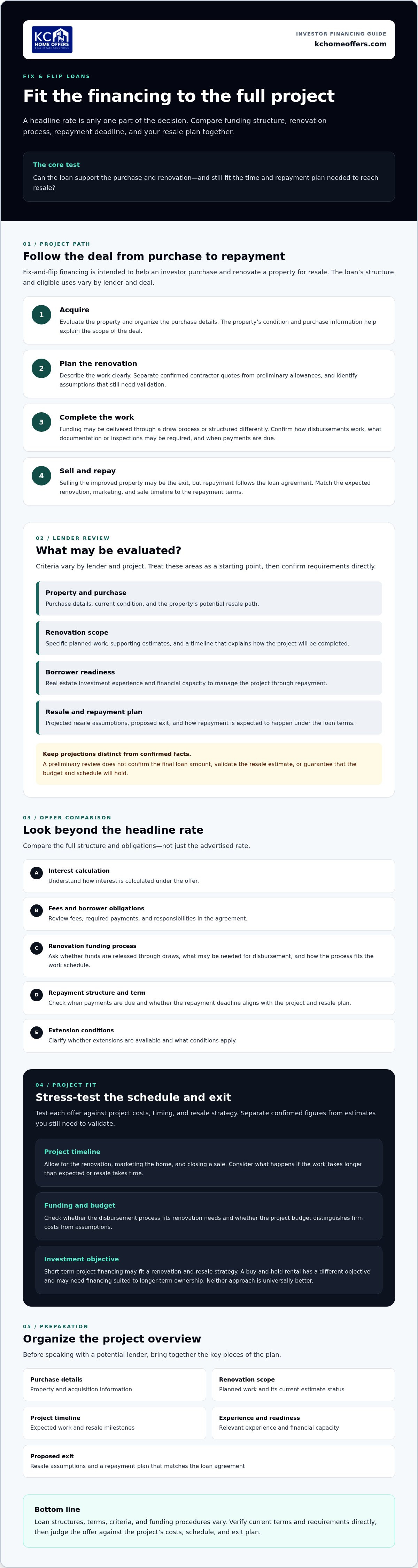
This guide explains common fix-and-flip loan structures and what lenders may evaluate, including the property, your experience, and your financial readiness. You’ll learn how to compare offers by reviewing interest calculations, fees, renovation draw procedures, repayment terms, and extension options. Use the framework to test each offer against your project costs, schedule, and resale strategy before you commit. KC Home Offers LLC provides investor-focused fix-and-flip financing. Discuss current terms and eligibility on a project-specific basis.
Key Takeaways
- Understand how Fix and flip loans can support an investment property purchase and renovation, while recognizing that loan structures and terms vary.
- Prepare for lender review by connecting the property’s condition, renovation scope, and resale plan in a clear project overview.
- Compare offers beyond the headline rate: check repayment structure, term, extension conditions, fees, and borrower obligations.
- Test financing against your project timeline and exit plan, separating confirmed figures from estimates you still need to validate.
- Before contacting a potential lender, organize your purchase details, renovation scope, timeline, experience, and proposed exit.
Table of Contents
- What Are Fix and Flip Loans, and When Can They Fit a Project?
- What Do Lenders Evaluate for Fix and Flip Loans?
- How to Compare Fix and Flip Loan Offers Beyond the Headline Rate
- How to Test Whether a Fix and Flip Loan Fits Your Deal
- How to Explore a Fix and Flip Loan With KC Home Offers
What Are Fix and Flip Loans, and When Can They Fit a Project?
Fix and flip loans are financing intended to help an investor purchase and renovate a property for resale. The approach follows the real estate meaning of Flipping: acquiring an asset, improving or repositioning it, then selling it. The loan is connected to a project plan, but its structure, terms, and eligible uses vary by lender and deal.
How does a fix-and-flip loan generally work?
The process typically starts with an investor evaluating a property, estimating the work, and developing a resale plan. A lender may review the property, proposed renovations, borrower experience, and anticipated repayment or exit strategy. If financing is approved, the investor proceeds with the purchase and renovation under the agreed terms, then repays according to the contract. The exit may involve selling the improved property, but the repayment structure depends on the lender and loan agreement.
Don’t assume renovation funds will be provided all at once. Some lenders use a draw process, while others structure funding differently. Ask how disbursements work, what documentation or inspections may be required, and when payments are due. A lender’s project review does not confirm that your budget, schedule, or resale assumptions will hold up.
When might investors consider this type of financing?
This financing may fit when renovation and resale are central to the investment strategy and the project timeline aligns with the loan’s repayment terms. For example, an investor planning to update a property before listing it should compare the expected renovation schedule with the time available to complete the work, market the home, and close a sale.
A buy-and-hold plan has a different objective. An investor intending to keep a property as a rental may need financing suited to longer-term ownership, rather than short-term project financing. Neither approach is universally better. The fit depends on the property, investment goals, cash flow plan, and available financing.
Before treating an offer as a green light, map the repayment plan against a realistic project timeline. Consider what happens if renovations take longer than expected or the resale takes time. For broader context on financing options, review this fix-and-flip funding guide. KC Home Offers provides investor-focused fix-and-flip financing. Discuss your project and verify current terms, criteria, and funding procedures directly before deciding whether it fits.
What Do Lenders Evaluate for Fix and Flip Loans?
A lender may assess both the property and your ability to carry the project through to repayment. Criteria vary: Fix and flip loans can be evaluated differently by each lender and for each project. Treat any checklist as a starting point, then confirm requirements directly.
How can the property and renovation scope affect review?
Purchase details, the property’s current condition, and the planned work help a lender understand the deal’s scope and potential resale path. A specific renovation plan is more useful than a broad estimate. Break the work into items, such as repairing a roof, updating a kitchen, or addressing outdated systems. Mark assumptions that still need contractor input so preliminary estimates aren’t mistaken for confirmed bids.
Connect each planned improvement to the resale strategy. If the project depends on extensive repairs, explain how you expect the work to affect the property and why the proposed timeline is realistic. A lender may review projected value after repairs, but valuation methods and financing limits depend on its criteria and the deal. Don’t assume a preliminary review confirms the final loan amount or that your resale estimate will be accepted.
What borrower information may a lender request?
Alongside property details, a lender may ask about your real estate investment experience, financial capacity to manage the project, and proposed exit. Supporting materials could include purchase information, a renovation scope, project timeline, and resale assumptions, but requirements vary. Ask each lender for its current document checklist. Clarify whether it needs contractor estimates, property reports, or other project records before you apply.
Typical evaluation areas, lender-dependent: Property condition, purchase details, renovation scope, projected resale plan, borrower experience, financial capacity, and repayment strategy.
Separate confirmed facts from projections. For example, label a contractor’s confirmed quote differently from a preliminary allowance, and identify timeline milestones that depend on permits, material availability, or completed work. This makes gaps easier to spot and shows the lender which assumptions underpin your plan.
For a focused discussion of possible eligibility considerations, review the fix-and-flip loan requirements checklist. If you’re exploring project-specific financing, you can also contact KC Home Offers about fix-and-flip financing and confirm current criteria and documentation needs directly.
How to Compare Fix and Flip Loan Offers Beyond the Headline Rate
A low advertised rate or fast estimated close doesn’t show what a loan will require over the life of your project. Compare written offers against the same purchase, renovation, timeline, and exit assumptions. For background on loan structures, see What are fix and flip loans, then use each lender’s term sheet for a side-by-side review.
Which loan terms should investors compare?
Start with the full repayment obligation, not one attractive feature. Confirm whether the rate is fixed or variable, how interest accrues, when payments are due, and what triggers final repayment. Ask whether interest applies only to funds already disbursed or also to committed renovation funds that haven’t been drawn. Review the maturity date, disclosed fees, extension conditions, and default provisions. If a term is unclear or verbal, request a written explanation before relying on it.
| Compare | Lender A | Lender B |
|---|---|---|
| Rate type and interest calculation | Enter written terms | Enter written terms |
| Payment schedule and maturity | Enter written terms | Enter written terms |
| Fees and borrower obligations | Enter disclosed terms | Enter disclosed terms |
| Extension conditions and default terms | Enter written terms | Enter written terms |
| Renovation funding and draw process | Confirm with lender | Confirm with lender |
Keep the comparison consistent. If one offer lists a term and another leaves it blank, mark it “not confirmed” rather than assuming the terms match. That makes missing information visible before you choose.
How do funding draws affect renovation planning?
Some financing structures release renovation funds in stages; others work differently. Ask each lender how to request a draw, what proof of completed work is required, whether inspections apply, and what steps affect processing time. Check whether you’ll need to cover work before a draw is released, since that could affect contractor scheduling and available project cash.
Then test each offer against your ability to execute the plan. A structure that looks favorable on paper may not fit if its draw process conflicts with the renovation sequence or its maturity leaves little room for resale delays. The right fit supports the project while leaving a workable path to repayment. For broader renovation-funding context, see this rehab loans guide.
How to Test Whether a Fix and Flip Loan Fits Your Deal
A loan can support a project, but it can’t eliminate renovation, market, or resale risk. Before committing, test the financing against the deal from acquisition through exit. Keep confirmed figures separate from estimates, and revisit assumptions that could change your repayment plan.
- Assess the property. Document its condition, purchase details, and known repair needs. Flag items that require inspection or specialist input.
- Build the project budget. Include acquisition, renovation, holding, financing, and disposition categories. Label confirmed quotes separately from allowances and estimates.
- Map the timeline. Sequence the work and identify dependencies, such as contractor availability or materials. Ask qualified professionals to validate the scope and schedule.
- Compare financing offers. Match each written offer to the same project assumptions. Check repayment obligations, funding procedures, maturity, and any conditions that could affect the plan.
- Choose an exit and backup. Estimate the resale path, then decide what you would do if the project takes longer or the sale proceeds differ from expectations.
What should go into a project budget and timeline?
Account for the full project, not just the purchase and visible repairs. Include holding expenses during the work and sale period, financing obligations, and costs associated with preparing the property for sale. Set aside a contingency for scope changes or delays, but don’t treat it as guaranteed funding. Have contractors or relevant professionals review your work list and timing assumptions before relying on them.
How should investors stress-test the exit plan?
Run at least two scenarios: one based on your expected schedule and resale, and another where renovations take longer or the sale is less favorable. Ask whether you can still meet repayment obligations in the less favorable case. Identify a backup, such as adjusting the sale strategy, and understand what new financing or other obligations that option could involve before closing.
A fix-and-flip loan doesn’t make an uncertain deal safe. If the project only works when every estimate, milestone, and resale assumption goes perfectly, pause and reassess. For a deeper look at potential challenges, read this house-flipping risk analysis.
Once your scope, timeline, and exit plan are organized, discuss your fix-and-flip project with KC Home Offers. Confirm current terms and requirements directly, then decide whether the financing aligns with your deal.
How to Explore a Fix and Flip Loan With KC Home Offers
KC Home Offers provides investor-focused fix-and-flip financing and may be a financing contact for your project. A conversation is an opportunity to discuss the deal and confirm whether current terms and criteria could fit. It isn’t a guarantee of approval or a promise that every project will qualify. Arrive prepared, ask direct questions, and evaluate any written offer against your plan.
What information should investors prepare before contacting a lender?
Bring a concise project summary so the financing discussion can focus on the details that shape the deal:
- Property and acquisition: Share the property details, purchase status, and planned acquisition structure.
- Renovation scope: Outline the work, note what contractors have confirmed, and flag estimates or open questions.
- Timeline: Map expected project stages, including renovation and anticipated resale timing.
- Experience and exit: Summarize relevant investing experience and explain how you plan to repay the loan, including your proposed resale strategy.
- Questions: Ask about current eligibility criteria, repayment terms, fees, conditions, renovation-fund procedures, and how the lender communicates during the project.
Have relevant project documents available, but confirm the lender’s exact checklist instead of assuming which records it needs. Clear information can surface gaps early, such as a work estimate that still needs contractor review or a schedule that depends on an unconfirmed milestone.
What happens after an initial financing conversation?
Next steps depend on the lender and project. The lender may request more information, review the property and proposed work, or provide written terms for consideration. Ask it to confirm current availability, qualifying criteria, fees, repayment conditions, and funding procedures in writing. If renovation funds involve draws, verify the request process, documentation, and any inspection steps before relying on those funds in your schedule.
Read any written offer against your budget, timeline, and exit assumptions. Check that the repayment plan still works if the work takes longer or resale timing changes. Fix and flip loans should support a workable project plan, not substitute for one.
Have your project details ready? Discuss a fix-and-flip financing inquiry with KC Home Offers and confirm whether its current offering may fit your deal.
Move Forward With a Clear Project Plan
Strong financing decisions start with a realistic deal, not a headline rate. Assess Fix and flip loans against the full project: property condition, renovation scope, repayment terms, timeline, and exit strategy. Compare written offers using the same assumptions, and confirm how funding procedures and conditions could affect your schedule.
KC Home Offers provides fix-and-flip loans for real estate investors and describes its approach as transparent, with flexible financing terms. Current terms, criteria, fees, and funding procedures can vary, so confirm the details directly and decide whether they fit your project before committing.
Have your purchase details, renovation plan, timeline, and proposed exit ready. Discuss your fix-and-flip project with KC Home Offers to explore whether its financing may suit your deal. Careful preparation and clear answers can help you move forward with a better understanding of the financing.
Frequently Asked Questions
What is a fix-and-flip loan?
A fix-and-flip loan is financing intended to help purchase and renovate an investment property planned for resale. The loan may cover acquisition, renovation, or both, depending on the lender’s written terms. Before relying on it, confirm eligible costs, repayment structure, maturity, and approval conditions. Then compare the financing with a realistic project budget and exit plan, including what you would do if the work or sale takes longer than expected.
How do fix-and-flip loans work?
Fix and flip loans generally begin with a lender reviewing property and project information, followed, if approved, by funding under the agreed terms. The investor uses funds for approved purposes, completes the renovation, and repays according to the agreement. Funding mechanics vary: renovation money may be released through staged draws or another process. Ask about supporting documents, inspections, payment timing, maturity, and conditions before closing.
Who can qualify for a fix-and-flip loan?
Qualification depends on the lender and the specific transaction, so there’s no universal checklist or guaranteed approval standard. A lender may consider the property, planned repairs, your relevant investment experience, financial capacity, and how you expect to repay. Ask for current criteria and required documents in writing. Then assess whether you can meet them and manage the project if costs, timing, or resale assumptions change.
Can you use a fix-and-flip loan to buy and renovate a property?
Yes, some fix-and-flip financing is structured to support both a property purchase and renovation, but coverage depends on the particular loan. Confirm which acquisition and repair expenses may be financed, whether renovation funds are released upfront or in stages, and what documentation or inspections apply. Build your budget around confirmed terms. Don’t assume every repair, change order, or project expense is eligible for funding.
How are renovation funds disbursed with a fix-and-flip loan?
Renovation-fund disbursement depends on the lender and loan agreement. Some arrangements release funds in stages after progress checks, documentation, or inspections; others may use a different process. Before closing, ask how to request each disbursement, what evidence is required, and what steps affect processing. Confirm how the process fits contractor payment schedules so funding procedures don’t create an unexpected gap in your renovation plan.
What should I compare when choosing a fix-and-flip loan?
Compare each written offer’s repayment structure, term, fees, conditions, extension provisions, and default consequences. Also confirm how renovation funds are accessed and what the lender expects during the project. Use the same budget, timeline, and exit assumptions to assess every offer. A headline rate or advertised approval claim doesn’t show the full repayment obligation. Ask for unclear terms in writing before you commit.
Are fix-and-flip loans the same as hard money loans?
The terms can overlap in real estate lending, but labels don’t establish exactly how a loan works. Lender practices and structures vary, including underwriting, collateral, repayment, and funding procedures. Review the actual agreement rather than relying on a category name. Ask the lender to explain unfamiliar language, then check whether the loan’s purpose, requirements, and repayment terms align with your renovation plan and intended exit.
What happens if a fix-and-flip project takes longer than expected?
A delay may affect holding expenses, repayment timing, and your planned sale. Before closing, review the loan’s maturity date and any extension conditions, and ask what steps apply if the schedule changes. Build contingencies for construction and resale uncertainty, and identify a backup plan. Don’t assume an extension will be available or approved; rely only on terms confirmed in writing by the lender.
Frequently asked
How does a fix-and-flip loan generally work?
The process typically starts with an investor evaluating a property, estimating the work, and developing a resale plan. A lender may review the property, proposed renovations, borrower experience, and anticipated repayment or exit strategy. If financing is approved, the investor proceeds with the purchase and renovation under the agreed terms, then repays according to the contract. The exit may involve selling the improved property, but the repayment structure depends on the lender and loan agreement. Don’t assume renovation funds will be provided all at once. Some lenders use a draw process, while others structure funding differently. Ask how disbursements work, what documentation or inspections may be required, and when payments are due. A lender’s project review does not confirm that your budget, schedule, or resale assumptions will hold up.
When might investors consider this type of financing?
This financing may fit when renovation and resale are central to the investment strategy and the project timeline aligns with the loan’s repayment terms. For example, an investor planning to update a property before listing it should compare the expected renovation schedule with the time available to complete the work, market the home, and close a sale. A buy-and-hold plan has a different objective. An investor intending to keep a property as a rental may need financing suited to longer-term ownership, rather than short-term project financing. Neither approach is universally better. The fit depends on the property, investment goals, cash flow plan, and available financing. Before treating an offer as a green light, map the repayment plan against a realistic project timeline. Consider what happens if renovations take longer than expected or the resale takes time. For broader context on financing options, review this fix-and-flip funding guide. KC Home Offers provides investor-focused fix-and-flip financing. Discuss your project and verify current terms, criteria, and funding procedures directly before deciding whether it fits. A lender may assess both the property and your ability to carry the project through to repayment. Criteria vary: Fix and flip loans can be evaluated differently by each lender and for each project. Treat any checklist as a starting point, then confirm requirements directly.
How can the property and renovation scope affect review?
Purchase details, the property’s current condition, and the planned work help a lender understand the deal’s scope and potential resale path. A specific renovation plan is more useful than a broad estimate. Break the work into items, such as repairing a roof, updating a kitchen, or addressing outdated systems. Mark assumptions that still need contractor input so preliminary estimates aren’t mistaken for confirmed bids. Connect each planned improvement to the resale strategy. If the project depends on extensive repairs, explain how you expect the work to affect the property and why the proposed timeline is realistic. A lender may review projected value after repairs, but valuation methods and financing limits depend on its criteria and the deal. Don’t assume a preliminary review confirms the final loan amount or that your resale estimate will be accepted.
What borrower information may a lender request?
Alongside property details, a lender may ask about your real estate investment experience, financial capacity to manage the project, and proposed exit. Supporting materials could include purchase information, a renovation scope, project timeline, and resale assumptions, but requirements vary. Ask each lender for its current document checklist. Clarify whether it needs contractor estimates, property reports, or other project records before you apply. Typical evaluation areas, lender-dependent: Property condition, purchase details, renovation scope, projected resale plan, borrower experience, financial capacity, and repayment strategy. Separate confirmed facts from projections. For example, label a contractor’s confirmed quote differently from a preliminary allowance, and identify timeline milestones that depend on permits, material availability, or completed work. This makes gaps easier to spot and shows the lender which assumptions underpin your plan. For a focused discussion of possible eligibility considerations, review the fix-and-flip loan requirements checklist. If you’re exploring project-specific financing, you can also contact KC Home Offers about fix-and-flip financing and confirm current criteria and documentation needs directly. A low advertised rate or fast estimated close doesn’t show what a loan will require over the life of your project. Compare written offers against the same purchase, renovation, timeline, and exit assumptions. For background on loan structures, see What are fix and flip loans, then use each lender’s term sheet for a side-by-side review.
Which loan terms should investors compare?
Start with the full repayment obligation, not one attractive feature. Confirm whether the rate is fixed or variable, how interest accrues, when payments are due, and what triggers final repayment. Ask whether interest applies only to funds already disbursed or also to committed renovation funds that haven’t been drawn. Review the maturity date, disclosed fees, extension conditions, and default provisions. If a term is unclear or verbal, request a written explanation before relying on it. Keep the comparison consistent. If one offer lists a term and another leaves it blank, mark it “not confirmed” rather than assuming the terms match. That makes missing information visible before you choose.
How do funding draws affect renovation planning?
Some financing structures release renovation funds in stages; others work differently. Ask each lender how to request a draw, what proof of completed work is required, whether inspections apply, and what steps affect processing time. Check whether you’ll need to cover work before a draw is released, since that could affect contractor scheduling and available project cash. Then test each offer against your ability to execute the plan. A structure that looks favorable on paper may not fit if its draw process conflicts with the renovation sequence or its maturity leaves little room for resale delays. The right fit supports the project while leaving a workable path to repayment. For broader renovation-funding context, see this rehab loans guide. A loan can support a project, but it can’t eliminate renovation, market, or resale risk. Before committing, test the financing against the deal from acquisition through exit. Keep confirmed figures separate from estimates, and revisit assumptions that could change your repayment plan.
What should go into a project budget and timeline?
Account for the full project, not just the purchase and visible repairs. Include holding expenses during the work and sale period, financing obligations, and costs associated with preparing the property for sale. Set aside a contingency for scope changes or delays, but don’t treat it as guaranteed funding. Have contractors or relevant professionals review your work list and timing assumptions before relying on them.
How should investors stress-test the exit plan?
Run at least two scenarios: one based on your expected schedule and resale, and another where renovations take longer or the sale is less favorable. Ask whether you can still meet repayment obligations in the less favorable case. Identify a backup, such as adjusting the sale strategy, and understand what new financing or other obligations that option could involve before closing. A fix-and-flip loan doesn’t make an uncertain deal safe. If the project only works when every estimate, milestone, and resale assumption goes perfectly, pause and reassess. For a deeper look at potential challenges, read this house-flipping risk analysis. Once your scope, timeline, and exit plan are organized, discuss your fix-and-flip project with KC Home Offers. Confirm current terms and requirements directly, then decide whether the financing aligns with your deal. KC Home Offers provides investor-focused fix-and-flip financing and may be a financing contact for your project. A conversation is an opportunity to discuss the deal and confirm whether current terms and criteria could fit. It isn’t a guarantee of approval or a promise that every project will qualify. Arrive prepared, ask direct questions, and evaluate any written offer against your plan.
What information should investors prepare before contacting a lender?
Bring a concise project summary so the financing discussion can focus on the details that shape the deal: Have relevant project documents available, but confirm the lender’s exact checklist instead of assuming which records it needs. Clear information can surface gaps early, such as a work estimate that still needs contractor review or a schedule that depends on an unconfirmed milestone.
What happens after an initial financing conversation?
Next steps depend on the lender and project. The lender may request more information, review the property and proposed work, or provide written terms for consideration. Ask it to confirm current availability, qualifying criteria, fees, repayment conditions, and funding procedures in writing. If renovation funds involve draws, verify the request process, documentation, and any inspection steps before relying on those funds in your schedule. Read any written offer against your budget, timeline, and exit assumptions. Check that the repayment plan still works if the work takes longer or resale timing changes. Fix and flip loans should support a workable project plan, not substitute for one. Have your project details ready? Discuss a fix-and-flip financing inquiry with KC Home Offers and confirm whether its current offering may fit your deal. Strong financing decisions start with a realistic deal, not a headline rate. Assess Fix and flip loans against the full project: property condition, renovation scope, repayment terms, timeline, and exit strategy. Compare written offers using the same assumptions, and confirm how funding procedures and conditions could affect your schedule. KC Home Offers provides fix-and-flip loans for real estate investors and describes its approach as transparent, with flexible financing terms. Current terms, criteria, fees, and funding procedures can vary, so confirm the details directly and decide whether they fit your project before committing. Have your purchase details, renovation plan, timeline, and proposed exit ready. Discuss your fix-and-flip project with KC Home Offers to explore whether its financing may suit your deal. Careful preparation and clear answers can help you move forward with a better understanding of the financing.
What is a fix-and-flip loan?
A fix-and-flip loan is financing intended to help purchase and renovate an investment property planned for resale. The loan may cover acquisition, renovation, or both, depending on the lender’s written terms. Before relying on it, confirm eligible costs, repayment structure, maturity, and approval conditions. Then compare the financing with a realistic project budget and exit plan, including what you would do if the work or sale takes longer than expected.
How do fix-and-flip loans work?
Fix and flip loans generally begin with a lender reviewing property and project information, followed, if approved, by funding under the agreed terms. The investor uses funds for approved purposes, completes the renovation, and repays according to the agreement. Funding mechanics vary: renovation money may be released through staged draws or another process. Ask about supporting documents, inspections, payment timing, maturity, and conditions before closing.
Who can qualify for a fix-and-flip loan?
Qualification depends on the lender and the specific transaction, so there’s no universal checklist or guaranteed approval standard. A lender may consider the property, planned repairs, your relevant investment experience, financial capacity, and how you expect to repay. Ask for current criteria and required documents in writing. Then assess whether you can meet them and manage the project if costs, timing, or resale assumptions change.
Can you use a fix-and-flip loan to buy and renovate a property?
Yes, some fix-and-flip financing is structured to support both a property purchase and renovation, but coverage depends on the particular loan. Confirm which acquisition and repair expenses may be financed, whether renovation funds are released upfront or in stages, and what documentation or inspections apply. Build your budget around confirmed terms. Don’t assume every repair, change order, or project expense is eligible for funding.
How are renovation funds disbursed with a fix-and-flip loan?
Renovation-fund disbursement depends on the lender and loan agreement. Some arrangements release funds in stages after progress checks, documentation, or inspections; others may use a different process. Before closing, ask how to request each disbursement, what evidence is required, and what steps affect processing. Confirm how the process fits contractor payment schedules so funding procedures don’t create an unexpected gap in your renovation plan.
What should I compare when choosing a fix-and-flip loan?
Compare each written offer’s repayment structure, term, fees, conditions, extension provisions, and default consequences. Also confirm how renovation funds are accessed and what the lender expects during the project. Use the same budget, timeline, and exit assumptions to assess every offer. A headline rate or advertised approval claim doesn’t show the full repayment obligation. Ask for unclear terms in writing before you commit.
Are fix-and-flip loans the same as hard money loans?
The terms can overlap in real estate lending, but labels don’t establish exactly how a loan works. Lender practices and structures vary, including underwriting, collateral, repayment, and funding procedures. Review the actual agreement rather than relying on a category name. Ask the lender to explain unfamiliar language, then check whether the loan’s purpose, requirements, and repayment terms align with your renovation plan and intended exit.
What happens if a fix-and-flip project takes longer than expected?
A delay may affect holding expenses, repayment timing, and your planned sale. Before closing, review the loan’s maturity date and any extension conditions, and ask what steps apply if the schedule changes. Build contingencies for construction and resale uncertainty, and identify a backup plan. Don’t assume an extension will be available or approved; rely only on terms confirmed in writing by the lender.
Need financing on a deal like this?
DSCR, fix & flip and new construction loans, underwritten on the deal rather than your tax returns. Soft credit pull only.
Apply in 5 minutes