Guides › Private lending
Cash for Houses: How to Secure a Fast, Reliable Offer

Explore how cash for houses works, evaluate buyer offers, compare net proceeds, and secure a fast, reliable closing on your home without feeling rushed.
What if the strongest cash offer isn’t the one with the biggest number at the top? With Cash for houses, speed can be appealing, but it’s reasonable to ask how the buyer arrived at the offer, what conditions apply, and how much you’ll actually receive.
A direct cash sale can streamline the process, but convenience only matters if the terms work for you. A buyer may estimate the home’s resale value, then account for repairs, holding and selling costs, and an expected return. The property’s condition and the contract details matter alongside the offer amount.
This guide explains how cash home sales work and how to evaluate an offer without feeling rushed. You’ll learn what can shape a buyer’s number, which terms and conditions to review, and how to compare estimated net proceeds with a traditional sale. You’ll also find practical steps for checking that a buyer is prepared to follow through. Understanding the trade-offs can help you decide whether a cash sale suits your situation.
Key Takeaways
- Understand what a Cash for houses transaction involves and how a direct purchase differs from a sale dependent on mortgage approval.
- Learn which property details and investment assumptions may shape an offer, and why the headline amount isn’t the same as your estimated net proceeds.
- Compare a direct sale, an agent-assisted listing, and selling without an agent using the factors that matter to your situation.
- Use a practical review sequence to check the buyer, written terms, conditions, and closing arrangements before signing.
- Prepare basic property information and your preferred timing so you can explore a possible sale without committing to accept an offer.
Table of Contents
- Cash for houses: what direct cash sales mean for homeowners
- How cash home buyers assess a property and shape an offer
- Cash offer vs. listing: compare the full terms, not just speed
- How to review a cash offer and protect your interests
- Get a cash offer for your house: practical next steps
Cash for houses: what direct cash sales mean for homeowners
A shorter, simpler sale can be appealing when you’re planning a move, managing an empty property, or trying to avoid the disruption of showings. But speed alone doesn’t make an offer dependable. Before moving forward, understand who you’re dealing with, what the agreement requires, and what must happen before closing.
A direct cash offer is a proposal to buy a home without relying on the buyer’s mortgage approval to fund the purchase. That can remove one source of uncertainty found in a financed transaction, but “cash” doesn’t mean instant, unconditional, or risk-free. The offer still needs to be in writing, both sides must agree to its terms, and closing arrangements need to be confirmed.
Clarify who will actually purchase the property. Some real estate investors use real estate wholesaling, where a party contracts to buy a home and may assign that contract to another buyer. If an offer mentions an assignment or a different closing party, ask who is responsible for completing the purchase and make sure the agreement explains the arrangement.
How a direct cash home sale typically works
The process generally begins when you share the property address and basic details. The buyer reviews the information and may ask about the home’s condition and your circumstances before presenting a written offer. If you decide to proceed, both sides review and sign a contract, followed by the steps needed to complete closing. The process and conditions vary by buyer and agreement.
Condition matters. A buyer may consider visible repairs, updates, and other property details, along with your preferred timing or circumstances. Ask which terms could affect the offer or closing. Don’t assume repairs are unnecessary, costs are covered, or a particular closing date is available unless the written agreement confirms it.
Who may consider selling a house for cash
A cash sale may be worth comparing if you want fewer showings, simpler selling logistics, or a way to explore selling a property as-is. It may also be an option to investigate for an inherited, vacant, or repair-needing home. These are situations to discuss, not a guarantee that a buyer will accept the property or make a particular offer.
The right route depends on your priorities and the full terms, not the label “cash.” A direct buyer may offer a more streamlined process, while another selling method may better suit your plans. Treat Cash for houses as one option to weigh against alternatives, and take time to understand the written agreement before deciding.
How cash home buyers assess a property and shape an offer
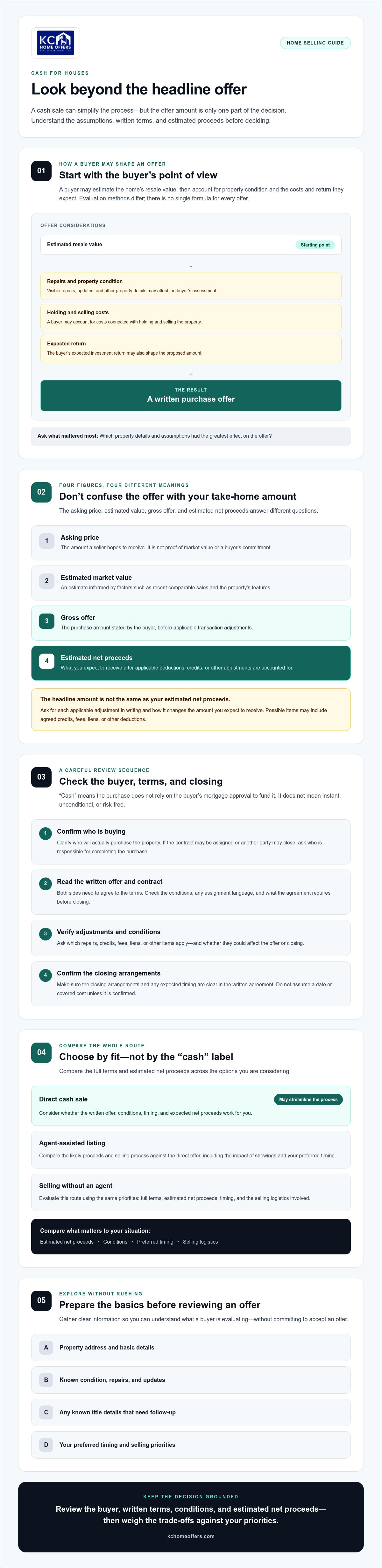
A cash offer reflects the buyer’s view of the property and the assumptions behind a possible purchase. Buyers may consider the home’s condition, comparable sales, repair scope, and plans for resale or investment. Evaluation methods differ, so there isn’t one formula that explains every offer.
It helps to distinguish four figures that can sound similar:
- Asking price: The amount a seller hopes to receive, not proof of market value or a buyer’s commitment.
- Estimated market value: An estimate informed by factors such as recent comparable sales and the property’s features.
- Gross offer: The purchase amount stated by the buyer before applicable transaction adjustments.
- Estimated net proceeds: The amount you expect to receive after applicable deductions, credits, or other adjustments are accounted for.
The offer amount alone doesn’t show what you’ll take away from the sale. Review the written adjustments and estimated net proceeds as well.
What information can affect a cash offer
A buyer may ask about the property’s location, size, current condition, known updates, and title details. Be accurate. Sharing that a major system needs attention or that there’s a known title concern can clarify what the buyer is evaluating and what needs follow-up.
Comparable sales provide context, not a guaranteed price. A nearby home may differ in condition, layout, or features, and a buyer may use different resale or investment assumptions. Ask which property details and assumptions had the greatest effect on the offer. In Cash for houses discussions, clear questions are more useful than trying to guess how the buyer calculated the amount.
How to understand gross offer versus net proceeds
The gross offer is the stated purchase amount before applicable transaction adjustments. Estimated net proceeds account for items that may affect what you receive, such as agreed credits, fees, liens, or other deductions, if applicable. Don’t assume a particular adjustment applies. Ask the buyer to identify each one in writing and explain how it changes the expected proceeds.
Compare the breakdown with the contract, not just a verbal summary. If a deduction is unclear, ask what it covers, how it was calculated, and whether it could change before closing. A clear explanation makes it easier to assess the terms. If you’re considering a direct purchase, you can discuss your property with a direct buyer and ask how its details inform the evaluation.
Cash offer vs. listing: compare the full terms, not just speed
A direct cash sale, an agent-assisted listing, and a sale without an agent come with different trade-offs. Don’t compare a cash offer’s purchase amount with a listing’s asking price as though they were equivalent. Estimate what you may receive after applicable expenses and adjustments, then weigh that against preparation, coordination, uncertainty, and contract terms.
Assess each route using the same factors. The details depend on your property, the market, the buyer, and your priorities.
| Factor | Direct cash sale | Agent-assisted listing | Selling without an agent |
|---|---|---|---|
| Potential exposure | Usually discussed directly with a buyer; confirm how the buyer intends to proceed. | May reach a broader pool of potential buyers through marketing. | You manage how the property is marketed and who sees it. |
| Preparation and showings | Ask what condition, preparation, and access the offer requires. | Preparation and showings may be part of the selling process; clarify expectations. | You coordinate presentation, inquiries, and access yourself. |
| Net proceeds | Review the written offer and every applicable adjustment. | Estimate proceeds after expected transaction costs and negotiated terms. | Account for expected costs and the time you’ll spend managing the sale. |
| Timing and uncertainty | Check the proposed closing schedule and all conditions. | Timing may depend on buyer interest, negotiations, and financing or other conditions. | You manage buyer discussions and evaluate each proposed contract. |
Make a property-specific estimate for each option. Use written terms where possible, and label assumptions such as preparation work, expected deductions, or a possible closing date. A projected number isn’t a guarantee. Review the contract conditions too, including what happens if a buyer doesn’t meet an obligation or requests a change.
When a direct cash offer may fit the seller’s priorities
A direct offer may be worth considering if reducing coordination, showings, or property preparation matters more to you than reaching the widest possible pool of buyers. Treat these as possibilities to confirm, not automatic benefits. Check the offer for requirements, conditions, and adjustments. For more context on this route, see the sell my house fast guide.
When listing or another sale route may be worth comparing
If wider market exposure and interest from multiple buyers are priorities, compare listing options as well. Selling without an agent may also be worth evaluating if you’re prepared to manage the process. Set each route beside the others: estimated net proceeds, seller obligations, likely preparation, showings, negotiation, timing assumptions, and contract conditions. The cash home buyer comparison guide can help you assess buyer options. The strongest choice is the one whose written terms and trade-offs fit your situation, not simply the one that sounds fastest.
How to review a cash offer and protect your interests
A written offer is a starting point, not a reason to rush. Before accepting a Cash for houses proposal, check who’s buying, what the contract requires, and how the stated price translates into estimated proceeds. Pause if you’re pressured to sign before you’ve had a fair chance to read the agreement and ask questions.
Use this review sequence:
- Confirm the buyer’s identity. Check that the legal name on the contract matches the buyer you’ve been communicating with. Ask who will take title and whether another party may be involved before closing.
- Read the complete written terms. Review the purchase price, deadlines, access requests, contingencies, cancellation rights, and seller responsibilities. Don’t rely on verbal explanations for terms that should appear in the agreement.
- Clarify conditions. Ask what property facts and assumptions shaped the offer, what inspection rights apply, and whether any condition could change the price or affect completion.
- Verify closing arrangements. Confirm who coordinates closing, how documents will be handled, and how funds are expected to be delivered. Ask for unclear steps to be explained in writing.
- Compare the numbers before signing. Review the contract price alongside any credits, fees, liens, or other applicable deductions. Request an itemized estimate of your net proceeds and ask about any adjustment you don’t understand.
Questions to ask before accepting a cash offer
Ask the buyer which property details and assumptions informed the offer. Clarify which contract provisions cover inspections, contingencies, access, and your responsibilities as the seller. Find out who handles closing and how funds and documents will be managed. The answers should match the written agreement. If they don’t, ask for clarification before proceeding.
Compare buyers and agreements side by side
If you’re reviewing more than one proposal, compare each buyer’s legal identity, who will take title, offer terms, contingencies, requested access, and cancellation rights. Review the complete agreements rather than comparing headline prices alone. For a deeper framework, use this max cash offer checklist.
If contract language, title concerns, or seller obligations remain unclear, consider asking an independent real estate attorney or other qualified professional to review them. A buyer’s preference for a quick decision shouldn’t prevent you from understanding the deal. Take time to get clear answers, then discuss your property with a direct buyer if you want to explore a tailored sale option.
Get a cash offer for your house: practical next steps
If you’re exploring Cash for houses, a little preparation can make the first conversation more useful. You don’t need to resolve every detail before asking questions. Start with what you know, note what you want to clarify, and use any written offer to decide whether its terms fit your plans.
What to prepare before requesting a property review
Gather basic information that can help describe the home and your priorities. These details are useful starting points, not a claim that any particular document is required:
- Property address and basic facts such as size, layout, and occupancy, if known.
- Condition notes, including visible repair needs and updates or repairs you can describe. Available records may help, but don’t assume they’re mandatory.
- Ownership or title concerns you already know about, such as questions about who can sign or an unresolved matter connected to the property.
- Your preferred timing and any practical circumstances that could affect a sale.
- Questions for the buyer about contract conditions, requested access, deductions, and estimated proceeds.
Accurate details help frame a property review. If something is uncertain, say so rather than guessing. You can ask the buyer what information would help clarify it.
What to expect when discussing a direct sale
KC Home Offers LLC directly acquires residential properties and describes its homeowner solutions as tailored and transparent. A discussion gives you a chance to explain the property and your circumstances, ask how the buyer evaluates them, and consider whether a direct sale is worth exploring. Sharing information starts a conversation; it doesn’t obligate you to accept an offer.
If the buyer provides written terms, review the purchase price, possible adjustments, conditions, seller responsibilities, and proposed closing arrangements. Ask for unclear points to be explained before deciding. Don’t assume a specific offer amount, closing date, repair arrangement, or outcome. Confirm any terms that matter to you in writing.
A useful next step is to organize the property details you have, identify your priorities, and list your questions. If you’d like to discuss your property and review possible next steps, contact KC Home Offers LLC about a direct home sale.
Make Your Next Move With Confidence
A cash sale can offer a more direct path, but the headline number tells only part of the story. Look at the buyer’s assumptions, review every written condition, and compare estimated net proceeds with the other ways you could sell. The right choice depends on your property, priorities, and comfort with the terms.
Cash for houses is an option to evaluate, not a decision you need to make under pressure. Confirm who’s buying, understand the contract, and ask about anything that could affect your proceeds or responsibilities.
KC Home Offers directly acquires residential properties and describes its homeowner solutions as tailored and transparent. If a direct sale may fit your plans, discuss your property and explore a clear next step. Start a conversation, review the information, and decide what works for you.
Frequently Asked Questions
What does cash for houses mean?
Cash for houses usually refers to a direct purchase that doesn’t depend on the buyer getting mortgage approval. A buyer reviews information about the property and may present a written offer for the seller to consider. “Cash” doesn’t mean the sale is instant or free of conditions. Review the contract, confirm who the buyer is, and check the closing arrangements before deciding whether to proceed.
Do cash home buyers pay fair market value?
Not necessarily. A cash buyer’s offer may differ from estimated market value because the buyer may consider the home’s condition, comparable sales, repair needs, and resale or investment assumptions. “Fair” depends on your priorities and the complete terms. Compare the written offer and estimated net proceeds with realistic alternatives, including preparation, transaction adjustments, showings, timing, and contract conditions. Don’t judge by the purchase amount alone.
How do cash buyers determine an offer for a house?
Cash buyers may review the property’s size, condition, known updates, title details, and comparable sales. They may also estimate repair scope and consider plans for resale or investment. Methods vary, so don’t assume every buyer uses the same formula. Share accurate information, then ask which facts and assumptions had the greatest effect on the proposed price and whether any terms could change.
Can I sell my house for cash if it needs repairs?
Possibly. Some direct buyers consider homes that need repairs, but the property’s condition can affect the buyer’s evaluation, offer, or contract terms. Don’t assume a buyer will accept the home as-is or that repairs won’t be requested. Describe known issues accurately and ask what the written offer requires, including inspection rights, access requests, seller responsibilities, or conditions tied to the property’s condition.
How long does it take to sell a house for cash?
Timing depends on the buyer, property, contract conditions, title details, and closing arrangements. Some cash sales may close in about 7 to 14 days, according to iBuyer.com, but that’s a general estimate, not a promise for a particular transaction. Ask the buyer for a proposed schedule and clarify what must happen before closing. Confirm the agreed dates and any conditions in the written contract.
Are cash offers for houses legitimate?
Some are, but verify the buyer and agreement rather than relying on the word “cash.” Confirm the buyer’s legal identity, check that it matches the contract, and clarify who will take title and coordinate closing. Review the price, deductions, conditions, cancellation rights, and seller obligations. Ask about unclear terms, and consider independent professional review if contract language or title issues are difficult to assess.
Should I accept a cash offer or list my house?
It depends on your priorities, property, and local market. A direct sale may reduce coordination or preparation, while listing may provide broader exposure to potential buyers. Compare estimated net proceeds, timing assumptions, showings, preparation, negotiation, and contract conditions for each route. Use written, property-specific terms where possible. A listing price isn’t guaranteed proceeds, and a cash offer’s headline amount isn’t your final net.
Frequently asked
What does cash for houses mean?
Cash for houses usually refers to a direct purchase that doesn’t depend on the buyer getting mortgage approval. A buyer reviews information about the property and may present a written offer for the seller to consider. “Cash” doesn’t mean the sale is instant or free of conditions. Review the contract, confirm who the buyer is, and check the closing arrangements before deciding whether to proceed.
Do cash home buyers pay fair market value?
Not necessarily. A cash buyer’s offer may differ from estimated market value because the buyer may consider the home’s condition, comparable sales, repair needs, and resale or investment assumptions. “Fair” depends on your priorities and the complete terms. Compare the written offer and estimated net proceeds with realistic alternatives, including preparation, transaction adjustments, showings, timing, and contract conditions. Don’t judge by the purchase amount alone.
How do cash buyers determine an offer for a house?
Cash buyers may review the property’s size, condition, known updates, title details, and comparable sales. They may also estimate repair scope and consider plans for resale or investment. Methods vary, so don’t assume every buyer uses the same formula. Share accurate information, then ask which facts and assumptions had the greatest effect on the proposed price and whether any terms could change.
Can I sell my house for cash if it needs repairs?
Possibly. Some direct buyers consider homes that need repairs, but the property’s condition can affect the buyer’s evaluation, offer, or contract terms. Don’t assume a buyer will accept the home as-is or that repairs won’t be requested. Describe known issues accurately and ask what the written offer requires, including inspection rights, access requests, seller responsibilities, or conditions tied to the property’s condition.
How long does it take to sell a house for cash?
Timing depends on the buyer, property, contract conditions, title details, and closing arrangements. Some cash sales may close in about 7 to 14 days, according to iBuyer.com, but that’s a general estimate, not a promise for a particular transaction. Ask the buyer for a proposed schedule and clarify what must happen before closing. Confirm the agreed dates and any conditions in the written contract.
Are cash offers for houses legitimate?
Some are, but verify the buyer and agreement rather than relying on the word “cash.” Confirm the buyer’s legal identity, check that it matches the contract, and clarify who will take title and coordinate closing. Review the price, deductions, conditions, cancellation rights, and seller obligations. Ask about unclear terms, and consider independent professional review if contract language or title issues are difficult to assess.
Should I accept a cash offer or list my house?
It depends on your priorities, property, and local market. A direct sale may reduce coordination or preparation, while listing may provide broader exposure to potential buyers. Compare estimated net proceeds, timing assumptions, showings, preparation, negotiation, and contract conditions for each route. Use written, property-specific terms where possible. A listing price isn’t guaranteed proceeds, and a cash offer’s headline amount isn’t your final net.
Need financing on a deal like this?
DSCR, fix & flip and new construction loans, underwritten on the deal rather than your tax returns. Soft credit pull only.
Apply in 5 minutes