Guides › Private lending
Ashley Abbott Investor: Strategies for Real Estate Success

Explore the facts behind Ashley Abbott Investor and KC Home Offers. Learn proven real estate strategies, deal assessment frameworks, and smart loan options.
What can an investor’s work tell you, and what does the public record actually prove? Searching “Ashley Abbott Investor” can blur the line between a person, a business, and a home-buying service. Before drawing conclusions about anyone’s investment strategy, separate confirmed business information from claims that need verification.
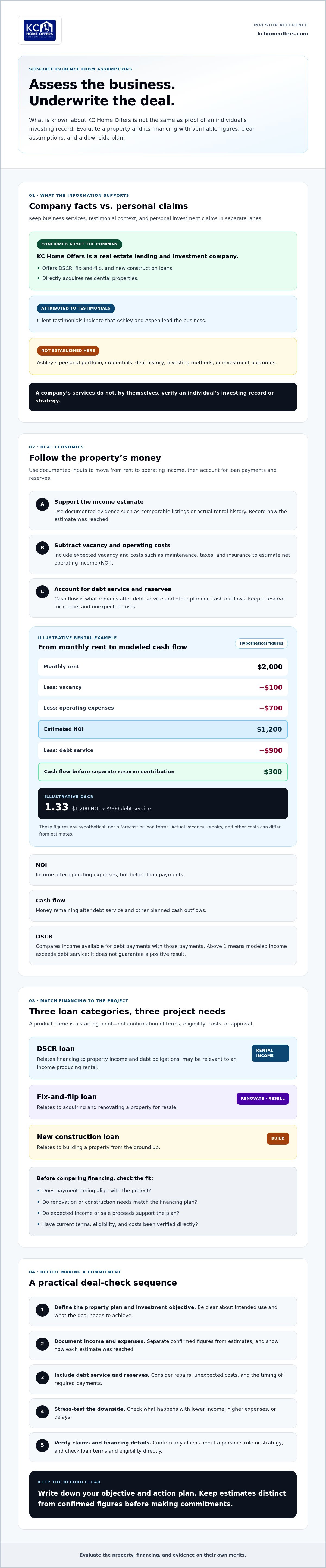
KC Home Offers is a real estate lending and investment company. It offers DSCR, fix-and-flip, and new construction loans, and it also directly acquires residential properties. Client testimonials indicate that Ashley and Aspen lead the business. That context alone doesn’t establish Ashley’s personal portfolio, deal history, or investing methods.
This article distinguishes confirmed company services from unverified personal claims, then provides a practical framework for assessing a property’s income, expenses, debt service, potential returns, and risks. Use it to identify what to confirm about a deal, loan terms, and any strategy attributed to Ashley before deciding on your next step.
Key Takeaways
- Searches for Ashley Abbott Investor can refer to different things. Distinguish verified details about KC Home Offers from unconfirmed claims about Ashley’s personal investing approach.
- Assess the property plan, income, expenses, reserves, and downside scenarios before deciding whether financing fits.
- Compare cash flow, the money left after property income covers expenses, with debt service coverage ratio, a measure of income relative to loan payments.
- Document your investment objective and action plan, keeping estimates separate from confirmed figures before making commitments.
- KC Home Offers lists DSCR, fix-and-flip, and new construction loans. Check current terms and eligibility to see whether a category aligns with your project.
Table of Contents
- Who Is Ashley Abbott as a Real Estate Investor?
- How Real Estate Investors Connect Deal Economics to Financing
- How to Evaluate an Investment Deal Before Choosing Financing
- How Investors Can Turn a Deal Thesis Into an Action Plan
- How KC Home Offers May Fit an Investor's Financing Plan
Who Is Ashley Abbott as a Real Estate Investor?
The name Ashley Abbott may lead to questions about an individual investor, a business, or a home-buying service. Those are different questions, and one kind of information shouldn’t be used to answer another. Here’s what’s confirmed about KC Home Offers, and what requires verification about Ashley’s personal investment activity.
What is confirmed about Ashley Abbott and KC Home Offers?
KC Home Offers is a real estate lending and investment company. It offers DSCR, fix-and-flip, and new construction loans, and directly acquires residential properties. Client testimonials indicate that Ashley and Aspen lead the business. Testimonials provide context about leadership, but they don’t establish Ashley’s personal credentials, portfolio, deal history, or investment performance.
What does the search term 'Ashley Abbott Investor' mean?
Someone searching “Ashley Abbott Investor” may be looking for a personal investor profile, financing information, or details about KC Home Offers. A business that offers loans to investors doesn’t, by itself, verify an individual’s investment record or strategy. For general background, Real estate investing explains the broader subject, but it isn’t evidence about Ashley specifically.
To distinguish company information from personal claims, look for clear confirmation from the business. Verify Ashley’s role and any claimed investing methods, completed deals, or results directly with the company. Apply the same care to testimonials: they can describe a customer’s experience, but they aren’t proof of a broader track record.
- Confirmed: KC Home Offers offers DSCR, fix-and-flip, and new construction loans, and directly acquires residential properties.
- Attributed to testimonials: Ashley and Aspen lead the business.
- Not established here: Ashley’s personal portfolio, credentials, strategy, or investment outcomes.
This distinction matters because company services don’t reveal how an individual evaluates or executes deals. Assess the property and financing on their own merits, using verifiable information rather than assumptions about someone’s approach.
How Real Estate Investors Connect Deal Economics to Financing
A property’s potential depends on more than projected rent. Income, operating costs, vacancy, reserves, debt payments, and loan terms all affect whether a deal supports your plan. Start with the property and intended use, then test whether the financing matches the project’s timing and risk.
How should investors assess rental-property cash flow?
Build a rental estimate using documented evidence, such as comparable listings or actual rental history, and record how you reached the figure. Subtract expected vacancy and operating costs, including maintenance, taxes, and insurance, to estimate net operating income (NOI). NOI is income after operating expenses but before loan payments.
Cash flow is what remains after debt service, or required loan payments, and other planned cash outflows. Also account for reserves for repairs and unexpected costs. For example, assume monthly rent of $2,000, vacancy of $100, operating expenses of $700, and debt service of $900. Estimated NOI is $1,200. Subtracting debt service leaves $300 before any separate reserve contribution. The illustrative DSCR is 1.33 ($1,200 divided by $900). These figures are hypothetical, not a forecast or loan terms.
A debt service coverage ratio (DSCR) compares a property’s income available for debt payments with those payments. A ratio above 1 means income exceeds debt service in the model, but it doesn’t guarantee a positive result. Actual vacancy, repairs, and other costs can differ from estimates.
How do DSCR, fix-and-flip, and construction loans differ?
Each loan category relates to a different project need. A DSCR loan assesses financing in relation to property income and debt obligations, so it may be relevant to an income-producing rental. A fix-and-flip loan relates to acquiring and renovating a property for resale. A new construction loan relates to building a property from the ground up. The product name alone doesn’t confirm terms, eligibility, costs, or approval, so verify those details directly.
Underwrite the project before comparing financing. Check whether payment timing, renovation or construction needs, and expected income or sale proceeds align. Keep assumptions separate from confirmed figures, and stress-test the deal against lower income, higher expenses, or delays. The University of Akron’s research offers broader discussion of real estate financing strategies, which can provide context when comparing funding approaches.
For readers researching “Ashley Abbott Investor,” the practical takeaway is to judge financing by how it fits the deal, not by assumptions about an individual investor’s methods. Once your numbers and project plan are clear, review KC Home Offers’ investor loan categories and verify current terms with the company.
How to Evaluate an Investment Deal Before Choosing Financing
Start with the property and your plan, not a loan offer. Financing can’t make weak deal assumptions reliable. Decide whether you intend to hold the property as a rental, renovate it for resale, or build. Then test the project’s economics and risks before comparing loan categories.
What should an investor verify about the property?
Build a diligence file that supports each major assumption. Review the property’s condition and ownership information, and compare your rent or resale estimate with relevant market evidence. For a renovation, define the work, support contractor estimates, and allow for unknown conditions or delays. For construction, document the planned work and the assumptions behind the budget and schedule.
Check applicable requirements for the property and its intended use with appropriate sources. Keep evidence alongside your model, such as inspection findings, comparable rental or sale information, written estimates, tax and insurance figures, and available property records. If an estimate has no clear source, label it as an assumption rather than a confirmed cost or likely outcome.
What should investors compare across financing options?
Once the project is defined, compare financing against its purpose and timeline. A rental hold, a purchase-and-renovation plan, and ground-up construction have different funding needs. A DSCR loan, fix-and-flip loan, or new construction loan may fit different project types, but no category is automatically right for every property or borrower.
- Repayment and term: Confirm when payments are due, how repayment is structured, and whether the term fits the expected hold or project schedule.
- Total costs and collateral: Review written information about fees and what secures the loan. Don’t compare options using a headline rate alone.
- Eligibility and timing: Ask what borrower and property criteria apply, what documentation is required, and whether the stated process aligns with your deadlines.
- Downside scenarios: Recalculate the plan for vacancy, construction delays, higher costs, or a slower sale. Check whether available reserves can cover the shortfall.
Keep lender-provided terms separate from your own estimates. Confirm eligibility, costs, and timing in writing before making commitments. A useful decision record includes the project plan, evidence behind each assumption, a conservative scenario, and the financing terms you’ve verified.
For anyone researching “Ashley Abbott Investor,” this process helps assess a deal without treating an individual’s strategy as a template. Let documented property facts and your investment objective guide the financing conversation, then revisit the numbers if terms or project assumptions change.
How Investors Can Turn a Deal Thesis Into an Action Plan
A deal thesis is useful when it leads to clear decisions. Define what you want the property to do, how long you expect to hold or improve it, and what would cause you to sell, refinance, or change course. Test those assumptions before making commitments. This keeps the financing conversation grounded in the project rather than an optimistic projection.
How can an investor test a strategy before committing?
Write down your objective and timeline first. For a rental, define the intended hold and income plan. For a renovation, specify the work and expected exit. For construction, outline the build plan and how you expect to complete or use the property. Identify the main assumptions, including income or sale proceeds, expenses, project duration, and financing needs at each stage.
Model conservative, expected, and adverse scenarios, and state what changes in each. The adverse case might account for a longer vacancy, repairs beyond the initial estimate, construction delays, or a slower sale. Record which figures are supported by property records, written estimates, or market evidence, and which remain assumptions. Consider consulting qualified legal, tax, insurance, and lending professionals when their expertise applies to your project.
What belongs on a pre-financing checklist?
Prepare a project file before discussing terms. The lender’s requested documents will vary, so confirm the applicable list directly. Organize available property and borrower information, income and expense assumptions, supporting rental or resale evidence, and a scope of work with contractor estimates if the project involves renovation or construction.
- Clarify the project: Document the intended use, timeline, hold or exit plan, and major milestones.
- Separate facts from estimates: Label confirmed figures and assumptions, and note the evidence or source for each.
- Plan for contingencies: Identify how delays, vacancies, repairs, and changing costs could affect cash needs and repayment.
- Ask specific financing questions: Confirm repayment structure, fees, any draw process, deadlines, eligibility, and required documentation in writing.
If rental income is central to your plan, a DSCR loan investor guide can offer a focused starting point, while an investment property loan guide can provide broader financing context. Treat either as general information, then confirm product terms and eligibility for your specific project. Readers searching for “Ashley Abbott Investor” can use the same discipline: verify claims and document the deal rather than assuming one person’s approach applies to every investor.
Once your objective, assumptions, and questions are organized, review investor loan options as one step in the financing process.
How KC Home Offers May Fit an Investor's Financing Plan
Once the investment objective and project numbers are clear, evaluate financing against the work the property requires. KC Home Offers lists three investor loan categories: DSCR, fix-and-flip, and new construction. Each relates to a different type of plan, but the category name alone doesn’t confirm availability, eligibility, approval, or suitability. Confirm current pricing and terms directly before using them in your projections.
Which KC Home Offers financing category may fit the project?
A DSCR loan may be relevant to an income-producing rental plan, where property income and debt obligations are part of the financing assessment. A fix-and-flip loan may align with acquiring and renovating a property. A new construction loan may relate to a ground-up development plan. These are broad use cases, not promises that a particular project or borrower qualifies.
Check how the lender defines eligible projects and evaluates each loan category. Compare written terms with your expected hold period, construction or renovation schedule, and repayment plan. If the project changes, revisit the financing fit rather than assuming the original option still works.
What should investors prepare before a financing conversation?
Bring a concise summary of the property, intended use, investment objective, and expected timeline. Include documented income and expense figures, project scope and cost assumptions, and any supporting property information you have. Clearly label estimates that haven’t been confirmed. This gives you a sound basis for asking whether a financing category could suit the plan.
- Eligibility: Ask what borrower, property, and project criteria apply.
- Documentation: Confirm which records and project materials are required.
- Costs and repayment: Request current written information on pricing, fees, repayment structure, and any conditions that affect the total financing plan.
- Timing and project terms: Ask how the process, deadlines, and any draw arrangements apply to your specific project.
For readers searching “Ashley Abbott Investor,” keep company financing services separate from claims about Ashley’s personal investment history or methods. KC Home Offers’ confirmed loan categories can inform a financing discussion, but your decision should rest on verified terms and the economics of your own deal.
Have a project in mind? Discuss your investment financing options and review how the available loan categories may fit your plan. Confirm the details directly before making a commitment.
Put Your Next Real Estate Deal on Firmer Ground
Strong investing starts with a clear property plan, documented assumptions, and financing that fits the project. Test expected income and costs against less favorable scenarios, then confirm eligibility, repayment, fees, and timing directly with the lender before committing.
Searches for “Ashley Abbott Investor” may point to KC Home Offers, where client testimonials indicate Ashley and Aspen lead the business. The company lists DSCR, fix-and-flip, and new construction loans, and also directly acquires residential properties. Those services provide business context, not proof of Ashley’s individual investment record or methods.
If you’ve defined your objective and gathered the core deal information, discuss how financing categories may align with your project. Discuss your investment financing options with KC Home Offers, and confirm current terms and eligibility before making a decision. A disciplined plan gives you a clearer basis for moving forward.
Frequently Asked Questions
Who is Ashley Abbott in real estate investing?
Client testimonials identify Ashley Abbott as one of the leaders of KC Home Offers, alongside Aspen. The company is a real estate lending and investment business that offers investor loan categories and directly acquires residential properties. Those facts establish business context, not Ashley’s personal investing history, portfolio, credentials, strategy, or results. Verify biographical details or claims about individual deals directly with the company before relying on them.
What does Ashley Abbott Investor refer to?
“Ashley Abbott Investor” is a search phrase that may reflect interest in an individual’s investing profile, financing, or KC Home Offers. The company connection offers context, but it doesn’t establish Ashley’s personal investment record or methods. To assess a deal, focus on verifiable property information, documented income and costs, your investment objective, and confirmed financing terms. Keep company services distinct from claims about an individual’s investing activity.
How do real estate investors evaluate a rental property?
Investors evaluate a rental by estimating realistic income, subtracting operating costs, and checking whether the remaining income can support debt payments and reserves. Document the basis for rent estimates, then include vacancy, maintenance, taxes, insurance, and other relevant expenses. Review the property’s condition and compare assumptions with available rental evidence. Model less favorable scenarios too. Projected cash flow is an estimate, not a guarantee of future performance.
What is a DSCR loan, and how does it relate to rental income?
A DSCR loan is a financing category assessed in relation to a property’s income and debt obligations. DSCR means debt service coverage ratio: it compares income available for debt payments with those payments. Investors can use this measure to assess whether projected rental income supports the financing plan. Loan criteria and terms vary, so confirm how a lender calculates income and debt service, along with current eligibility requirements.
Can investors use different loans for rentals, renovations, and new construction?
Yes. Different financing categories may align with different project plans. A DSCR loan may relate to an income-producing rental, a fix-and-flip loan to acquisition and renovation, and a new construction loan to building a property. These are general project connections, not promises of suitability or approval. Compare written terms with the project’s timeline, budget, repayment plan, and exit strategy, and confirm eligibility directly with the lender.
What should I verify before accepting real estate investment financing?
Review the written terms before committing. Confirm eligibility, repayment structure, fees, term, collateral, documentation requirements, and any project deadlines or draw processes. Check that the financing timeline matches your purchase, renovation, construction, or rental plan. Stress-test assumptions for delays, vacancies, repairs, higher costs, or a slower sale. Keep lender-confirmed figures separate from your estimates, and seek qualified legal, tax, insurance, or lending advice when appropriate.
Does KC Home Offers guarantee approval or investment returns?
No approval or investment-return guarantee is established by the available company information. KC Home Offers lists DSCR, fix-and-flip, and new construction loans, but that doesn’t mean every borrower or project qualifies or will produce a particular result. Confirm loan availability, eligibility, pricing, and terms directly with the company. Evaluate the property independently, account for potential risks, and don’t treat projected income or returns as assured outcomes.
Frequently asked
What is confirmed about Ashley Abbott and KC Home Offers?
KC Home Offers is a real estate lending and investment company. It offers DSCR, fix-and-flip, and new construction loans, and directly acquires residential properties. Client testimonials indicate that Ashley and Aspen lead the business. Testimonials provide context about leadership, but they don’t establish Ashley’s personal credentials, portfolio, deal history, or investment performance.
What does the search term 'Ashley Abbott Investor' mean?
Someone searching “Ashley Abbott Investor” may be looking for a personal investor profile, financing information, or details about KC Home Offers. A business that offers loans to investors doesn’t, by itself, verify an individual’s investment record or strategy. For general background, Real estate investing explains the broader subject, but it isn’t evidence about Ashley specifically. To distinguish company information from personal claims, look for clear confirmation from the business. Verify Ashley’s role and any claimed investing methods, completed deals, or results directly with the company. Apply the same care to testimonials: they can describe a customer’s experience, but they aren’t proof of a broader track record. This distinction matters because company services don’t reveal how an individual evaluates or executes deals. Assess the property and financing on their own merits, using verifiable information rather than assumptions about someone’s approach. A property’s potential depends on more than projected rent. Income, operating costs, vacancy, reserves, debt payments, and loan terms all affect whether a deal supports your plan. Start with the property and intended use, then test whether the financing matches the project’s timing and risk.
How should investors assess rental-property cash flow?
Build a rental estimate using documented evidence, such as comparable listings or actual rental history, and record how you reached the figure. Subtract expected vacancy and operating costs, including maintenance, taxes, and insurance, to estimate net operating income (NOI). NOI is income after operating expenses but before loan payments. Cash flow is what remains after debt service, or required loan payments, and other planned cash outflows. Also account for reserves for repairs and unexpected costs. For example, assume monthly rent of $2,000, vacancy of $100, operating expenses of $700, and debt service of $900. Estimated NOI is $1,200. Subtracting debt service leaves $300 before any separate reserve contribution. The illustrative DSCR is 1.33 ($1,200 divided by $900). These figures are hypothetical, not a forecast or loan terms. A debt service coverage ratio (DSCR) compares a property’s income available for debt payments with those payments. A ratio above 1 means income exceeds debt service in the model, but it doesn’t guarantee a positive result. Actual vacancy, repairs, and other costs can differ from estimates.
How do DSCR, fix-and-flip, and construction loans differ?
Each loan category relates to a different project need. A DSCR loan assesses financing in relation to property income and debt obligations, so it may be relevant to an income-producing rental. A fix-and-flip loan relates to acquiring and renovating a property for resale. A new construction loan relates to building a property from the ground up. The product name alone doesn’t confirm terms, eligibility, costs, or approval, so verify those details directly. Underwrite the project before comparing financing. Check whether payment timing, renovation or construction needs, and expected income or sale proceeds align. Keep assumptions separate from confirmed figures, and stress-test the deal against lower income, higher expenses, or delays. The University of Akron’s research offers broader discussion of real estate financing strategies, which can provide context when comparing funding approaches. For readers researching “Ashley Abbott Investor,” the practical takeaway is to judge financing by how it fits the deal, not by assumptions about an individual investor’s methods. Once your numbers and project plan are clear, review KC Home Offers’ investor loan categories and verify current terms with the company. Start with the property and your plan, not a loan offer. Financing can’t make weak deal assumptions reliable. Decide whether you intend to hold the property as a rental, renovate it for resale, or build. Then test the project’s economics and risks before comparing loan categories.
What should an investor verify about the property?
Build a diligence file that supports each major assumption. Review the property’s condition and ownership information, and compare your rent or resale estimate with relevant market evidence. For a renovation, define the work, support contractor estimates, and allow for unknown conditions or delays. For construction, document the planned work and the assumptions behind the budget and schedule. Check applicable requirements for the property and its intended use with appropriate sources. Keep evidence alongside your model, such as inspection findings, comparable rental or sale information, written estimates, tax and insurance figures, and available property records. If an estimate has no clear source, label it as an assumption rather than a confirmed cost or likely outcome.
What should investors compare across financing options?
Once the project is defined, compare financing against its purpose and timeline. A rental hold, a purchase-and-renovation plan, and ground-up construction have different funding needs. A DSCR loan, fix-and-flip loan, or new construction loan may fit different project types, but no category is automatically right for every property or borrower. Keep lender-provided terms separate from your own estimates. Confirm eligibility, costs, and timing in writing before making commitments. A useful decision record includes the project plan, evidence behind each assumption, a conservative scenario, and the financing terms you’ve verified. For anyone researching “Ashley Abbott Investor,” this process helps assess a deal without treating an individual’s strategy as a template. Let documented property facts and your investment objective guide the financing conversation, then revisit the numbers if terms or project assumptions change. A deal thesis is useful when it leads to clear decisions. Define what you want the property to do, how long you expect to hold or improve it, and what would cause you to sell, refinance, or change course. Test those assumptions before making commitments. This keeps the financing conversation grounded in the project rather than an optimistic projection.
How can an investor test a strategy before committing?
Write down your objective and timeline first. For a rental, define the intended hold and income plan. For a renovation, specify the work and expected exit. For construction, outline the build plan and how you expect to complete or use the property. Identify the main assumptions, including income or sale proceeds, expenses, project duration, and financing needs at each stage. Model conservative, expected, and adverse scenarios, and state what changes in each. The adverse case might account for a longer vacancy, repairs beyond the initial estimate, construction delays, or a slower sale. Record which figures are supported by property records, written estimates, or market evidence, and which remain assumptions. Consider consulting qualified legal, tax, insurance, and lending professionals when their expertise applies to your project.
What belongs on a pre-financing checklist?
Prepare a project file before discussing terms. The lender’s requested documents will vary, so confirm the applicable list directly. Organize available property and borrower information, income and expense assumptions, supporting rental or resale evidence, and a scope of work with contractor estimates if the project involves renovation or construction. If rental income is central to your plan, a DSCR loan investor guide can offer a focused starting point, while an investment property loan guide can provide broader financing context. Treat either as general information, then confirm product terms and eligibility for your specific project. Readers searching for “Ashley Abbott Investor” can use the same discipline: verify claims and document the deal rather than assuming one person’s approach applies to every investor. Once your objective, assumptions, and questions are organized, review investor loan options as one step in the financing process. Once the investment objective and project numbers are clear, evaluate financing against the work the property requires. KC Home Offers lists three investor loan categories: DSCR, fix-and-flip, and new construction. Each relates to a different type of plan, but the category name alone doesn’t confirm availability, eligibility, approval, or suitability. Confirm current pricing and terms directly before using them in your projections.
Which KC Home Offers financing category may fit the project?
A DSCR loan may be relevant to an income-producing rental plan, where property income and debt obligations are part of the financing assessment. A fix-and-flip loan may align with acquiring and renovating a property. A new construction loan may relate to a ground-up development plan. These are broad use cases, not promises that a particular project or borrower qualifies. Check how the lender defines eligible projects and evaluates each loan category. Compare written terms with your expected hold period, construction or renovation schedule, and repayment plan. If the project changes, revisit the financing fit rather than assuming the original option still works.
What should investors prepare before a financing conversation?
Bring a concise summary of the property, intended use, investment objective, and expected timeline. Include documented income and expense figures, project scope and cost assumptions, and any supporting property information you have. Clearly label estimates that haven’t been confirmed. This gives you a sound basis for asking whether a financing category could suit the plan. For readers searching “Ashley Abbott Investor,” keep company financing services separate from claims about Ashley’s personal investment history or methods. KC Home Offers’ confirmed loan categories can inform a financing discussion, but your decision should rest on verified terms and the economics of your own deal. Have a project in mind? Discuss your investment financing options and review how the available loan categories may fit your plan. Confirm the details directly before making a commitment. Strong investing starts with a clear property plan, documented assumptions, and financing that fits the project. Test expected income and costs against less favorable scenarios, then confirm eligibility, repayment, fees, and timing directly with the lender before committing. Searches for “Ashley Abbott Investor” may point to KC Home Offers, where client testimonials indicate Ashley and Aspen lead the business. The company lists DSCR, fix-and-flip, and new construction loans, and also directly acquires residential properties. Those services provide business context, not proof of Ashley’s individual investment record or methods. If you’ve defined your objective and gathered the core deal information, discuss how financing categories may align with your project. Discuss your investment financing options with KC Home Offers, and confirm current terms and eligibility before making a decision. A disciplined plan gives you a clearer basis for moving forward.
Who is Ashley Abbott in real estate investing?
Client testimonials identify Ashley Abbott as one of the leaders of KC Home Offers, alongside Aspen. The company is a real estate lending and investment business that offers investor loan categories and directly acquires residential properties. Those facts establish business context, not Ashley’s personal investing history, portfolio, credentials, strategy, or results. Verify biographical details or claims about individual deals directly with the company before relying on them.
What does Ashley Abbott Investor refer to?
“Ashley Abbott Investor” is a search phrase that may reflect interest in an individual’s investing profile, financing, or KC Home Offers. The company connection offers context, but it doesn’t establish Ashley’s personal investment record or methods. To assess a deal, focus on verifiable property information, documented income and costs, your investment objective, and confirmed financing terms. Keep company services distinct from claims about an individual’s investing activity.
How do real estate investors evaluate a rental property?
Investors evaluate a rental by estimating realistic income, subtracting operating costs, and checking whether the remaining income can support debt payments and reserves. Document the basis for rent estimates, then include vacancy, maintenance, taxes, insurance, and other relevant expenses. Review the property’s condition and compare assumptions with available rental evidence. Model less favorable scenarios too. Projected cash flow is an estimate, not a guarantee of future performance.
What is a DSCR loan, and how does it relate to rental income?
A DSCR loan is a financing category assessed in relation to a property’s income and debt obligations. DSCR means debt service coverage ratio: it compares income available for debt payments with those payments. Investors can use this measure to assess whether projected rental income supports the financing plan. Loan criteria and terms vary, so confirm how a lender calculates income and debt service, along with current eligibility requirements.
Can investors use different loans for rentals, renovations, and new construction?
Yes. Different financing categories may align with different project plans. A DSCR loan may relate to an income-producing rental, a fix-and-flip loan to acquisition and renovation, and a new construction loan to building a property. These are general project connections, not promises of suitability or approval. Compare written terms with the project’s timeline, budget, repayment plan, and exit strategy, and confirm eligibility directly with the lender.
What should I verify before accepting real estate investment financing?
Review the written terms before committing. Confirm eligibility, repayment structure, fees, term, collateral, documentation requirements, and any project deadlines or draw processes. Check that the financing timeline matches your purchase, renovation, construction, or rental plan. Stress-test assumptions for delays, vacancies, repairs, higher costs, or a slower sale. Keep lender-confirmed figures separate from your estimates, and seek qualified legal, tax, insurance, or lending advice when appropriate.
Does KC Home Offers guarantee approval or investment returns?
No approval or investment-return guarantee is established by the available company information. KC Home Offers lists DSCR, fix-and-flip, and new construction loans, but that doesn’t mean every borrower or project qualifies or will produce a particular result. Confirm loan availability, eligibility, pricing, and terms directly with the company. Evaluate the property independently, account for potential risks, and don’t treat projected income or returns as assured outcomes.
Need financing on a deal like this?
DSCR, fix & flip and new construction loans, underwritten on the deal rather than your tax returns. Soft credit pull only.
Apply in 5 minutes